International legal pursuit sparks debate over transitional justice in Burkina Faso
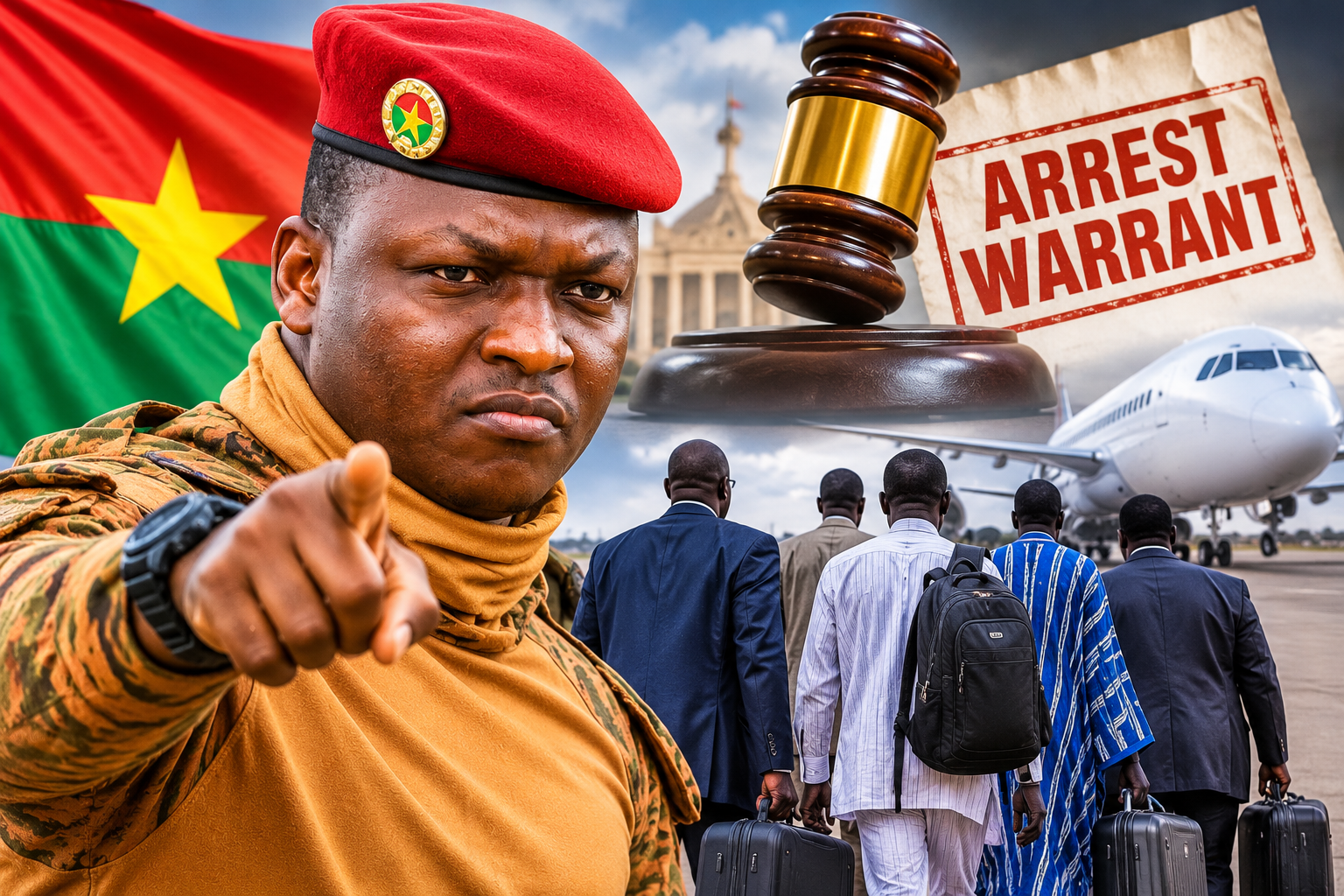
The judicial campaign against former Burkinabè officials, military leaders, and journalists now living abroad has intensified, raising serious questions about the motives behind Burkina Faso’s transitional authorities. While exile was once seen as a safeguard against political persecution, recent legal maneuvers including arrest warrants, prosecutions, and extradition requests suggest that the pursuit of these individuals extends far beyond national borders. The unfolding developments have ignited a contentious debate: Is this a legitimate pursuit of justice, or an attempt to silence dissent through legal means?
The shifting boundaries between justice and political retaliation
No legal system can function without accountability. However, when legal proceedings appear to target former associates, critics, and political opponents regardless of their physical location the line between justice and retribution becomes increasingly blurred. Public figures who once held power in Burkina Faso now face a barrage of legal challenges in foreign jurisdictions, a strategy that some argue reflects deeper ambitions beyond mere judicial fairness.
The case of Ibrahim Traoré’s transitional government raises a critical question: Does this relentless pursuit serve a higher purpose, or does it represent a calculated effort to consolidate power by discrediting former rivals? The absence of these individuals in Burkina Faso has not diminished their legal exposure, prompting concerns about the independence and impartiality of the judicial process.
Legal tools beyond borders: a matter of principle or strategy?
International extradition requests are not inherently problematic; they serve as a mechanism for accountability when crimes cross national boundaries. Yet, the manner in which Burkina Faso is deploying these tools against exiles has drawn scrutiny. The insistence on pursuing figures who reside in countries that have granted them asylum underscores a fundamental tension: Can justice be effectively served when the pursuit itself seems motivated by political considerations rather than legal merit?
Legal scholars and observers warn that such an approach risks undermining the credibility of Burkina Faso’s justice system. When prosecutions appear to be driven by vendetta rather than evidence, the very institutions meant to uphold the rule of law may become instruments of control.
Political repercussions: silencing dissent or defending legitimacy?
In any political transition, the balance between justice and reconciliation is delicate. A government that claims to represent progress must be prepared to justify its actions through transparency and due process not through the relentless suppression of perceived opponents. The decision to pursue exiles sends a clear message: dissent will not be tolerated, even from afar.
This stance has broader implications for Burkina Faso’s democratic future. A leadership that prioritizes the persecution of former adversaries over addressing pressing national challenges such as security threats, economic instability, and humanitarian crises risks alienating both domestic and international audiences. Citizens deserve leaders who address root causes of instability rather than fixating on past grievances.
The risk of perpetual political cycles
History shows that nations that allow judicial processes to be weaponized against former governments often entrench cycles of vengeance. If each transition of power results in the systematic targeting of those associated with the previous regime, Burkina Faso could find itself trapped in a loop of retaliation with no end in sight. Such a dynamic not only destabilizes institutions but also erodes public trust in the justice system.
For Ibrahim Traoré’s government, the stakes could not be higher. Will the pursuit of justice be conducted with integrity, ensuring that legal proceedings are fair, transparent, and free from political interference? Or will these efforts be perceived as little more than an extension of internal power struggles?
The way forward: restoring faith in Burkina Faso’s justice system
Accountability is essential in any society, but it must be pursued with fairness and impartiality. The international community and Burkinabè citizens alike will be watching closely to see whether these legal actions are rooted in genuine wrongdoing or political expediency. A government’s strength is not measured by the number of former opponents it manages to prosecute, but by its ability to build a justice system that serves all citizens equitably.
The coming months will reveal whether Burkina Faso’s transitional authorities can strike the right balance or whether the pursuit of exiles will further deepen divisions within the country and beyond.
By Aïcha Abdou — Journalist