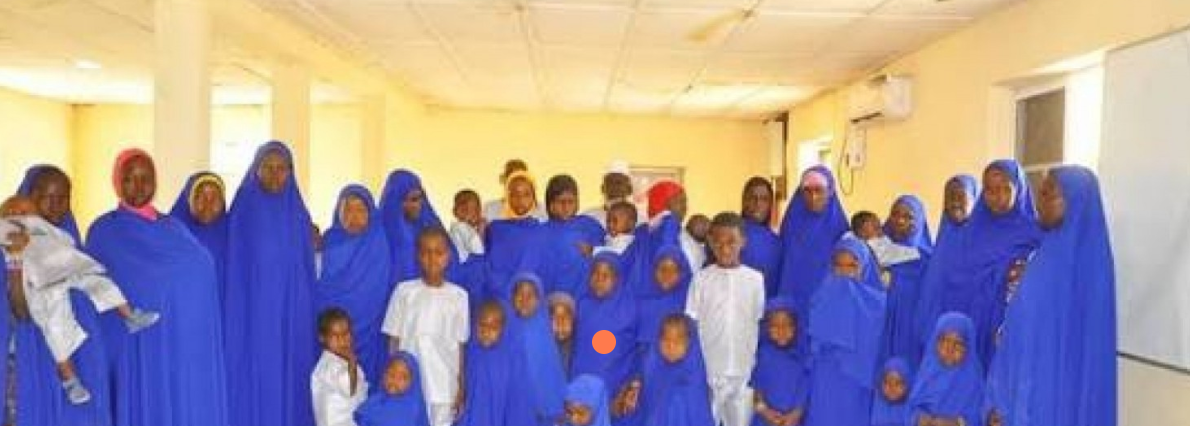
The Nigerian military has successfully executed a daring rescue operation, liberating 47 civilians—predominantly women and children—from the clutches of the Islamic State’s West Africa Province (ISWAP). This critical breakthrough unfolded in the volatile Kangarwa locality, part of Borno State and situated near the strategic Lake Chad basin, marking a significant milestone in the ongoing counter-terrorism campaign.
Coordinated military offensive secures Kangarwa
The operation was not a stroke of luck but the culmination of meticulously planned military maneuvers. Nigerian armed forces, leveraging both ground and aerial superiority, launched an intensive assault on ISWAP strongholds in Kukawa Local Government Area, particularly around Kangarwa. This region has long served as a critical sanctuary for the insurgent group, exploiting the area’s rugged terrain and porous borders to execute abductions and conceal hostages.
According to military sources, the operation combined the precision of airstrikes with the relentless advance of ground troops under Operation Hadin Kai. The insurgents, overwhelmed by the dual pressure, were compelled to abandon their fortified positions, creating a critical opportunity for the captives to escape. For many of these individuals, freedom came after enduring months of unimaginable hardship.
Women and children: the most vulnerable victims
The profile of those rescued—overwhelmingly women and children—underscores the brutal tactics employed by ISWAP and its predecessor, Boko Haram. These extremist factions systematically target vulnerable communities during raids on remote settlements, subjecting survivors to forced labor, human shields, or coerced marriages. The physical and psychological toll on these victims is immense, necessitating immediate medical and psychological intervention.
Upon liberation, the survivors were swiftly transported to secure medical facilities, where they received emergency care, comprehensive health assessments, and trauma counseling. Military authorities are collaborating closely with humanitarian agencies and Borno State officials to streamline logistical support and facilitate family reunifications.
Lake Chad basin: a regional security flashpoint
This successful rescue is part of a broader military strategy aimed at dismantling ISWAP’s operational networks in the Lake Chad basin. The Nigerian military, often in coordination with regional allies in the Multinational Joint Task Force (MNJTF), is adopting a more aggressive approach, conducting deep incursions into insurgent-held territories rather than confining operations to urban defensive postures.
While these achievements are commendable, security analysts caution that the path to lasting stability remains fraught with challenges. ISWAP’s ability to launch asymmetric counterattacks and deploy improvised explosive devices continues to pose a grave threat to civilians and the resettlement of internally displaced persons (IDPs) across the region.
A turning point in Borno’s fight against terrorism
The liberation of 47 hostages in Kangarwa highlights the Nigerian military’s enhanced air-ground coordination and tactical prowess in Borno State. For the rescued individuals, this operation signifies the end of a harrowing ordeal and the beginning of a challenging journey toward healing and reintegration. For Nigeria, it reaffirms the nation’s commitment to reclaiming territories under insurgent control, even as the transition from military victory to sustainable peace demands sustained political and humanitarian efforts.