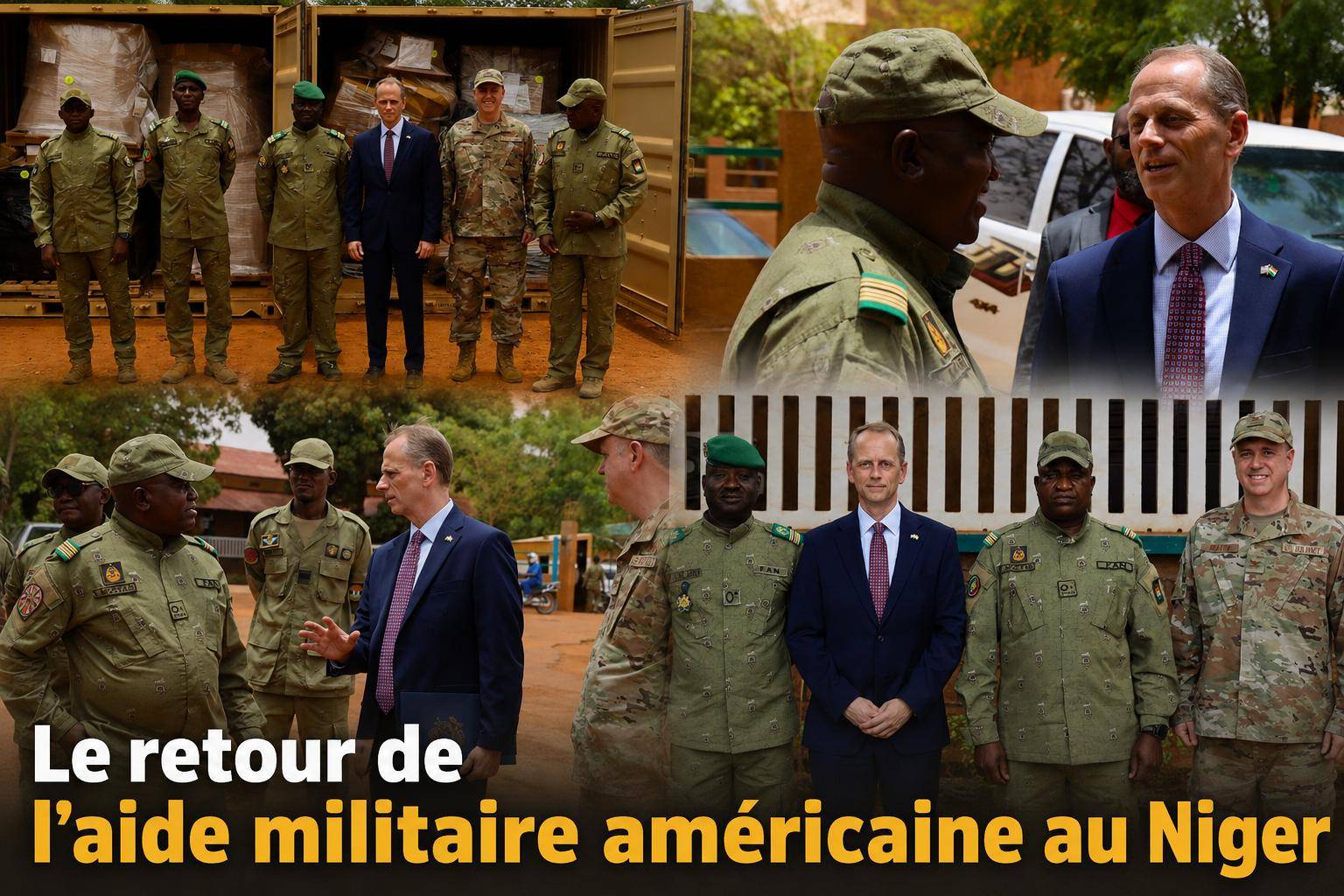
The Nigerien Armed Forces (FAN) logistics center in Niamey recently marked a pivotal moment in the country’s evolving security strategy. On May 26, 2026, nine large shipping containers filled with advanced American military equipment were officially handed over to Nigerian military authorities. This substantial donation represents a significant boost to the operational capabilities of Nigerien troops in their ongoing fight against terrorism and transnational crime.
A strategic military enhancement for Nigerien troops
The ceremony held at the FAN logistics center wasn’t just a routine handover—it was a clear statement of intent. The delivered equipment includes critical spare parts, tactical communication devices, personal protective gear, and first-level maintenance tools. Military logistics officers confirmed that these assets will immediately enhance the resilience and combat effectiveness of Nigerien units deployed in high-risk zones.
In asymmetric warfare, where enemy forces move swiftly and unpredictably, the ability to rapidly repair equipment and maintain secure communications can determine the outcome of operations. This American donation directly addresses these operational realities, giving Nigerien soldiers the technological edge needed to counter evolving threats.
Strengthening security against regional threats
This military support aligns with the broader security cooperation between Niger and the United States, targeting the persistent regional security crisis. The Sahel has become a hotspot for violent extremism, particularly in the volatile “three-border region” shared by Niger, Mali, and Burkina Faso, as well as around Lake Chad.
The Nigerien Ministry of Defense emphasized that the newly acquired equipment will be deployed without delay. Its primary missions include bolstering counterterrorism operations, disrupting organized transnational crime networks, and securing the nation’s extensive borders. For soldiers stationed in remote rural areas, this assistance provides much-needed technical support to protect vulnerable communities.
Diplomatic recalibration with Washington
Beyond its immediate military benefits, this equipment transfer signals a significant shift in Niger’s foreign policy. Just two years ago, Niamey took a firm stance against Western military presence, citing national sovereignty. The withdrawal of American and French troops from Nigerien soil—including the closure of the Agadez drone base—was presented as a victory for self-determination.
Yet the harsh realities of regional instability have compelled a pragmatic reassessment. The return of American military support, albeit in a reduced and logistically focused form, demonstrates that diplomatic channels remained active despite public posturing. This move underscores how security imperatives can outweigh ideological declarations when national survival is at stake.
A balancing act in international partnerships
Regional observers note that Niger is carefully diversifying its security partnerships rather than aligning exclusively with one bloc. While maintaining close cooperation with new allies such as Russia, Turkey, and Iran, Niamey is also re-engaging with Washington on practical terms.
The United States, for its part, appears equally pragmatic. After temporarily suspending aid following political changes in 2023, Washington is now re-establishing a presence in the Sahel—not through troop deployments, but through targeted logistical support. This donation of equipment serves as a clear indication of both nations’ willingness to rebuild trust, prioritizing operational efficiency over large-scale military engagement.
As stated in an internal memo from the FAN logistics center: “In defense matters, operational effectiveness on the ground is the only rule that matters.”
Security realities shape new alliances
The arrival of these American-supplied containers at the FAN logistics center represents more than just a military upgrade—it symbolizes Niger’s return to pragmatic engagement with former partners. By accepting this support, Niamey acknowledges that absolute sovereignty must sometimes yield to strategic compromises when national security demands it. In the face of shared threats along its borders, diversifying material partnerships has become essential for the survival of the Nigerien state.