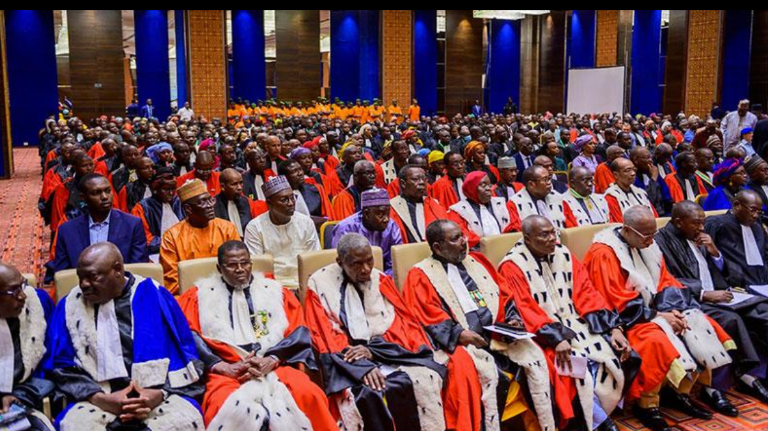
The Nigerien State Court finds itself embroiled in a growing controversy as public anger swells over the controversial retention of three senior judges beyond statutory retirement age. While dozens of magistrates prepare to step down, others appear to benefit from special exemptions, sparking fierce debate about fairness, institutional integrity, and the future of judicial independence in the country.
Unequal treatment at the summit of justice
The heart of the uproar centers on the prolonged tenures of three key figures: Abdou Dan Galadima, President of the State Court; Hassan Hodi, Vice-President; and Yaou Aboubacar, head of the Administrative Chamber. Critics point out that Hodi and Aboubacar already secured two-year extensions—raising legitimate questions about the consistency of retirement protocols.
Where fairness breaks down
Magistrates who have dutifully served for decades say they are now being forced into retirement, despite their proven competence, while others receive preferential treatment. The perception of unequal standards at the highest level threatens to erode trust within the judiciary and undermine confidence in its rulings.
Political interference or administrative necessity?
Beyond internal grievances, the controversy has reignited long-standing concerns about the State Court’s autonomy. Skeptics argue that the selective retention of top judges may reflect external pressures, with accusations that certain appointments align more closely with political objectives than legal merit.
Observers highlight how such perceptions—whether justified or not—can undermine the court’s neutrality and public legitimacy, especially in a nation where judicial independence remains a sensitive issue.
What the rules say
Under Nigerien law, extensions beyond retirement age are permissible under specific conditions. Yet when exceptions appear to favor a select few, the lack of clear, objective criteria fuels speculation and weakens institutional credibility. Transparency, experts note, is critical to maintaining public trust in the justice system.
What lies ahead for the State Court?
The fallout from this dispute extends beyond individual careers—it strikes at the core of how justice is perceived and delivered. If the court cannot demonstrate fairness in its own ranks, its moral authority risks further erosion, leaving citizens questioning whether the law truly applies equally to all.
Restoring faith in the judiciary
For the State Court to regain credibility, it must address these concerns head-on. This could involve:
- Standardized retirement policies applied uniformly to all magistrates
- Public clarification on the reasons for any extensions beyond retirement age
- Revised governance practices to ensure decisions are merit-based and free from undue influence
Without decisive action, the current crisis may deepen the divide between the judiciary and the citizens it serves—jeopardizing the very foundations of a fair and impartial legal system in Niger.