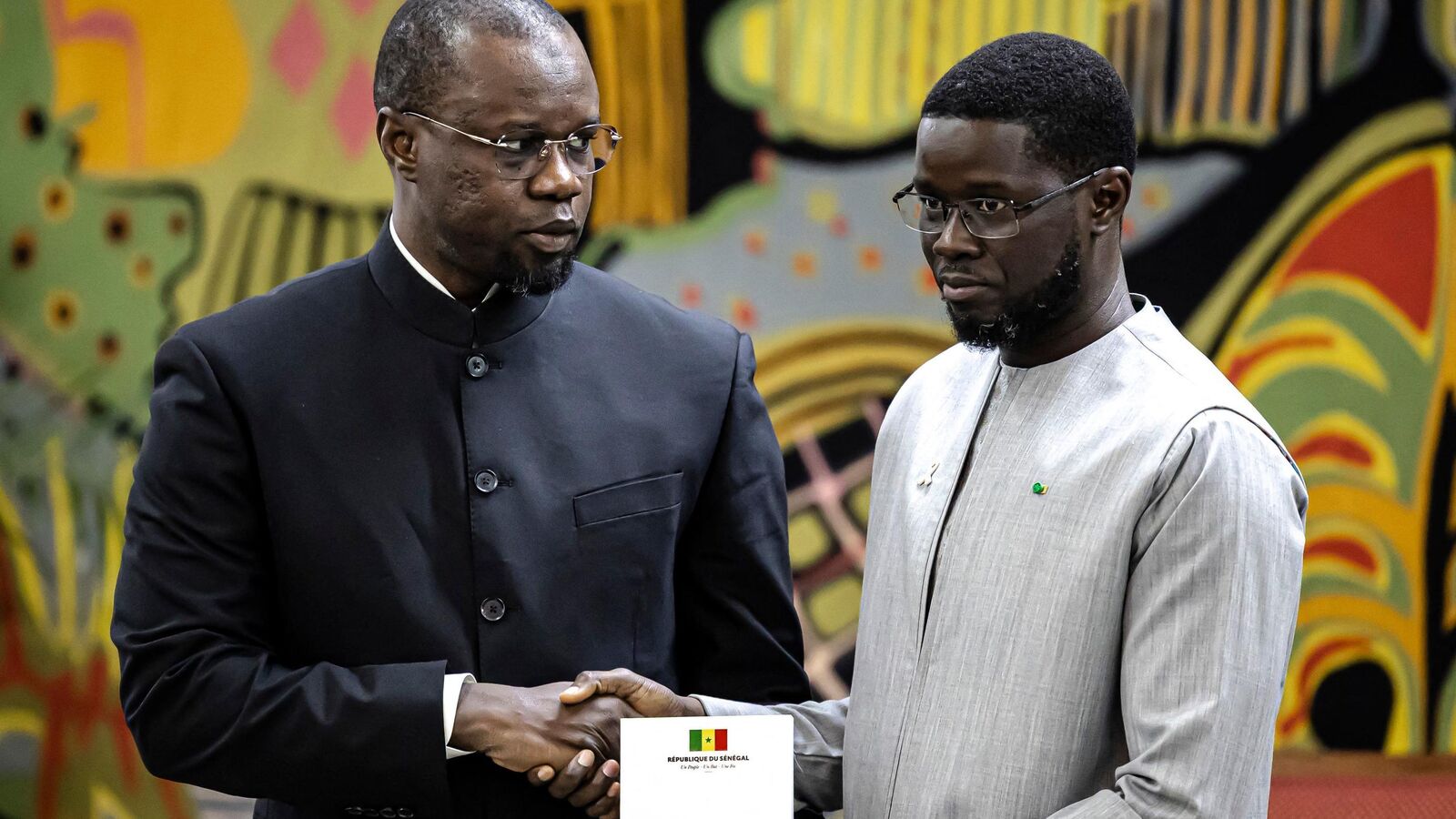
In Senegal, a once-unbreakable alliance has crumbled. The partnership between President Bassirou Diomaye Faye and his former Prime Minister, Ousmane Sonko, which once symbolized political unity with their campaign slogan Diomaye Moy Sonko (« Diomaye is Sonko »), has dissolved into open rivalry. Their collaboration, forged to defeat former President Macky Sall in the 2024 election, now faces its toughest test amid deepening political divisions and economic hardship.
The rift became official when President Faye dismissed Sonko from his post on May 22. Just weeks later, Sonko reclaimed his parliamentary seat and seized the presidency of the National Assembly, securing his position as Senegal’s second-most powerful figure—officially, the president’s heir apparent, but in reality, his most formidable opponent.
From allies to adversaries: the collapse of a political pact
Their unity was once unshakable, a rare alliance in Senegal’s turbulent political landscape. Yet the pressures of governance, conflicting priorities, and the weight of economic instability have exposed the fragility of their relationship. What began as a shared mission to challenge the status quo has now given way to a high-stakes power struggle, reshaping the nation’s political future.
Sonko’s swift rise to the Assembly’s leadership sends a clear message: Senegal’s political arena remains as volatile as ever. His new role grants him significant influence, including the power to shape legislation and set the national agenda—tools he may wield against the very leader who once appointed him.
Economic woes fuel the divide
The backdrop to this political drama is a Senegalese economy under strain. Inflation, unemployment, and fiscal challenges have intensified public discontent, testing the government’s ability to deliver on its promises. As Sonko positions himself as a vocal critic from within the system, the divide between the two leaders risks deepening, with potential consequences for both policy and public trust.
With Sonko’s newfound platform, the stage is set for a confrontation that could redefine Senegal’s political landscape. Whether this rivalry will strengthen or further destabilize the nation remains uncertain—but one thing is clear: the era of unquestioned cooperation is over.