Mali’s press freedom crisis: suspension of broadcasts and journalist arrests
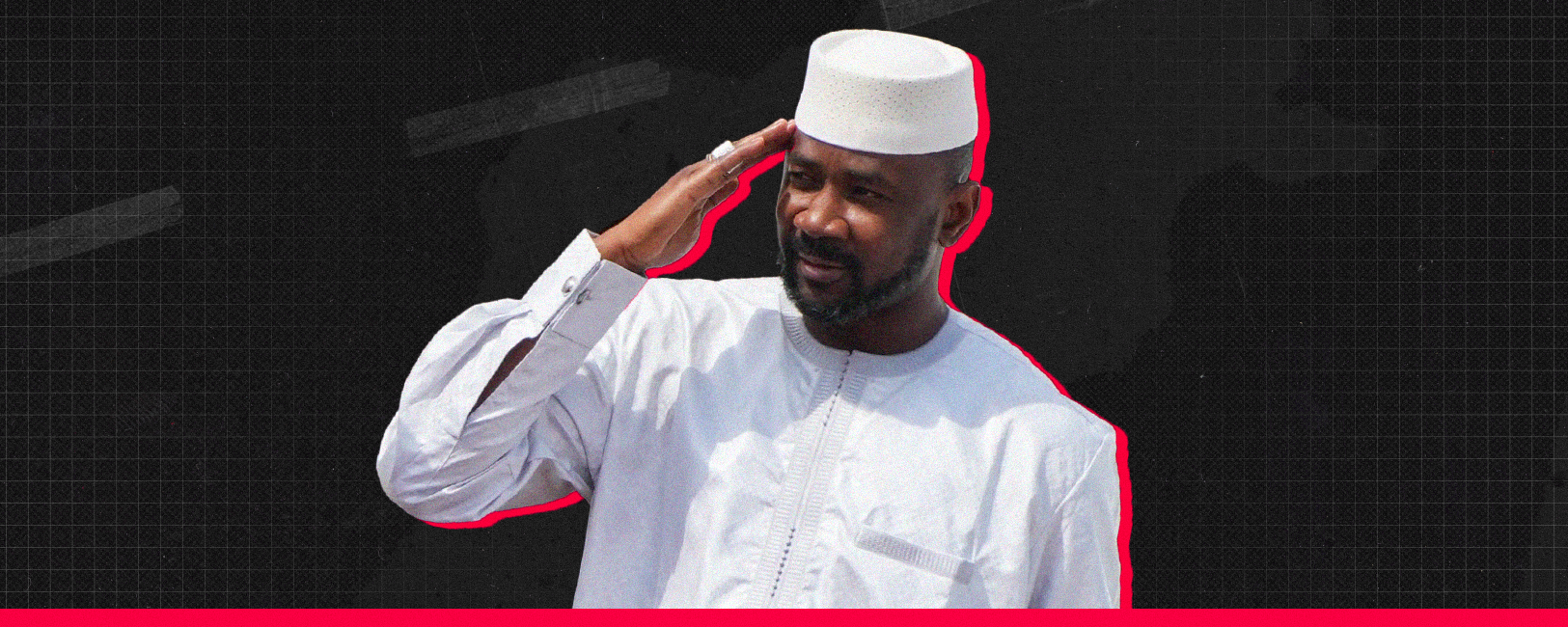
The June suspension of a popular radio call-in show and the arrests of journalists Chahana Takiou and Abderhmane Keïta highlight the growing repression facing media professionals in Mali. Over nearly six years of military-led transition, the regime of Assimi Goïta has systematically undermined press freedom, weaponizing legal systems against independent journalism. Reporters Without Borders (RSF) warns of the deteriorating state of media freedom in the country, already weakened by escalating security threats, and urges authorities to halt repressive measures to restore public access to reliable information.
June has been a particularly challenging month for Malian journalists. Since June 19, listeners can no longer voice their concerns on “Allo Klédu”, a popular call-in radio program broadcast by the private station Klédu. The National Broadcasting Authority (HAC) suspended the show for two months, citing “multiple violations of audiovisual communication regulations” in aired content. A decision widely viewed as groundless and politically motivated.
The day after the Pan-African Media Forum—held in Bamako from June 3 to 6 to promote press freedom and defend African media rights—two prominent journalists were arrested: Chahana Takiou, editor of 22 Septembre, and Abderhmane Keïta, editor of Le Témoin. Their detentions bring the total number of jailed journalists in Mali to three, all charged under the controversial cybercrime law. Takiou faces accusations of “undermining state credibility through judicial institutions,” while Keïta is accused of “regionalist incitement threatening national unity and state credibility.”
These latest crackdowns underscore the increasingly hostile environment for journalists in Mali, which has plummeted 22 places in RSF’s World Press Freedom Index over five years, dropping from 99th to 121st position.
“Before General Goïta’s coup, Mali boasted one of West Africa’s strongest media traditions. Yet for nearly six years, it has endured relentless press freedom violations—international media banned, local outlets silenced or forced into ‘patriotic reporting,’ journalists jailed, cybercrime laws weaponized, financial strangulation, and logistical sabotage. RSF urges General Goïta to end this repression against media professionals and immediately release Youssouf Sissoko, Chahana Takiou, and Abderhmane Keïta.”
The detention of the two journalists has drawn sharp criticism from media advocacy groups like the Maison de la Presse, which condemned the judiciary in a statement for failing to foster “an environment of peace and mutual understanding” despite ongoing efforts to improve relations between the press and legal system.
Over the past five years, journalists in Mali have faced mounting pressures from both authorities and armed groups. The government has aggressively promoted a ‘patriotic’ approach to news coverage, backed by repressive legislation and a media regulator (HAC) accused of favoring regime-aligned decisions.
Cybercrime law: a tool to silence dissent
Chahana Takiou and Abderhmane Keïta—scheduled for trial on July 27 and August 17, respectively—are not the first victims of the cybercrime law. Earlier this year, Youssouf Sissoko, editor of L’Alternance, was sentenced to two years in prison and fined 1 million CFA francs (€1,525) for publishing a critical opinion piece about Niger’s transitional leader, General Abdourahamane Tiani.
The law has also been used to detain Boubacar Traoré, editor of L’Empire, in November 2025 over a defamation complaint by a businessman linked to a land dispute. Critics argue the legislation is increasingly exploited to suppress dissent under the guise of combating ‘cyber threats.’
In March 2022, Mali took a dramatic step by banning Radio France Internationale (RFI) and France 24 nationwide, marking the beginning of an overt crackdown on international media. Since then, four French outlets have been suspended: TV5 Monde, France 2, TF1, and LCI.
The repression soon extended to local outlets. The suspension of Allo Klédu is the latest in a series of closures targeting critical voices. In 2025, three community radio stations—Aadar Koïma (Gao), Aadar Koukia (Ansongo), and Radio Kayira (Kolondiéba)—were shut down for three months after airing criticism of military conduct or government policies.
From international censorship to local media clampdowns
Earlier, Joliba TV News faced a two-month suspension in 2023 for an editorial deemed too critical of the junta. In 2024, the HAC went further, revoking the station’s license for six months following a complaint from Burkina Faso’s media regulator—a move seen as part of the Alliance of Sahel States (AES)’s coordinated media alignment strategy. Despite financial hardships, Joliba TV News resumed broadcasting on June 30, 2025.
Self-censorship: the silent retreat of Malian journalism
A culture of self-censorship has taken root, as documented in RSF’s 2023 report “In the Skin of a Journalist in the Sahel”. Even major news events, like the April 25, 2026, attacks, went underreported as outlets hesitated to publish without military confirmation, fearing reprisals. While international media confirmed the assassination of Defense Minister Sadio Camara, many local newsrooms delayed coverage, prioritizing caution over timeliness.
Economic stranglehold: electricity crisis and aid cuts cripple media
Media outlets face existential threats beyond censorship. Public funding for the press—critical for survival—has been frozen since January 2021. Established in 1996 to support private media growth, the annual subsidy (capped at 200 million CFA francs, ~€300,000) once bolstered independence. Its withdrawal has left independent and private outlets in dire straits, compounded by the exit of international NGOs that once purchased ad space and co-produced educational content.
Escalating violence: journalists under fire
Since 2021, Mali’s media landscape has been scarred by violence. Armed groups, particularly the Group for the Support of Islam and Muslims (JNIM/GSIM), have targeted journalists in central and northern regions:
- In April 2021, French journalist Olivier Dubois (contributing to Libération and Le Point) was abducted in Gao and held until March 2023.
- In 2020–2021, community radio journalists Hamadoun Nialibouly and Moussa M’Bana Dicko were kidnapped in central Mali, their fate still unknown.
- In 2023, Abdoul Aziz Djibrilla (radio Naata) was killed, Harouna Attino (radio Alafia) wounded, and Saleck Ag Jiddou and Moustapha Koné (radio Coton Ansongo) abducted—all remain missing.
- State broadcaster ORTM’s staff Daouda Koné and cameraman Salif Sangaré were kidnapped in October 2025 and released in December.