Sahel crisis: when military failures reflect strategic void
The Mali crisis continues to send shockwaves through West Africa, exposing not just military vulnerabilities but a profound regional security vacuum. Despite the formation of the Alliance of Sahel States (AES)—supposed to unite Mali, Burkina Faso and Niger under a shared defense framework—the alliance has yet to prove its operational effectiveness. Meanwhile, the Economic Community of West African States (ECOWAS), from which Bamako withdrew in early 2025, struggles to regain relevance in a region increasingly fragmented by shifting allegiances and geopolitical realignments.
Mali’s resilience amid coordinated attacks
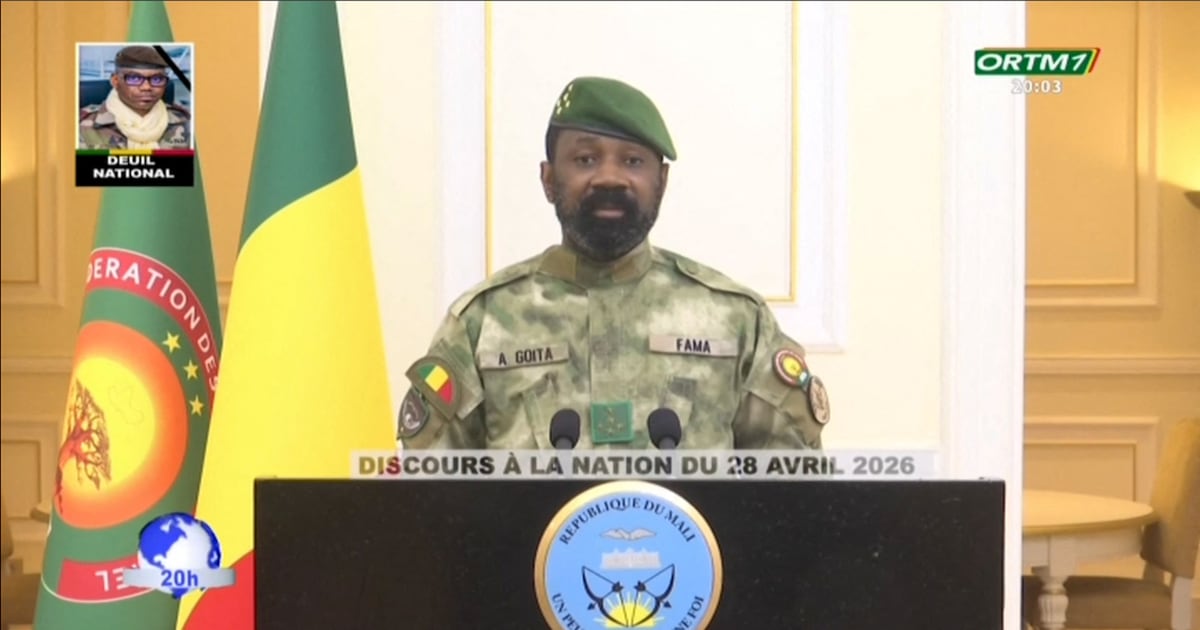
Following the April 25 coordinated assaults, particularly the devastating strike in Kati that claimed the life of Defense Minister Sadio Camara—replaced by General Assimi Goïta—the Malian government faces intense pressure. Yet, as Bakary Sambe, Director of the Timbuktu Institute and researcher at Gaston Berger University in Saint-Louis, points out, premature predictions of regime collapse or Bamako’s fall remain speculative. The Malian population, long accustomed to instability, has once again demonstrated remarkable resilience, navigating daily life despite escalating tensions between military authorities, the National Movement for the Liberation of Azawad (MNLA), and the Support Group for Islam and Muslims (JNIM).
Regional allies: between solidarity and self-preservation
The Burkina Faso and Niger, both members of the AES, have responded to the Mali crisis with cautious pragmatism. Captain Ibrahim Traoré of Burkina Faso publicly labeled the attacks a “monstrous conspiracy”, yet Ouagadougou’s primary focus remains its own escalating security crisis. Recent attacks have left scores of soldiers dead, underscoring the country’s limited capacity to engage in cross-border operations. During Mali’s late-2025 fuel blockade, Burkina Faso provided logistical support—until the crisis on its own soil became unmanageable.
Legally, the Liptako-Gourma Charter—the foundational document of the AES—mirrors NATO’s mutual defense clause. However, both Burkina Faso and Niger are constrained by internal threats, preventing full implementation of collective defense mechanisms. The Nigerien government recently declared a national “fasting and prayer day” against terrorism, highlighting the symbolic rather than operational nature of current regional cooperation.
The Mali crisis lays bare the hollow promises of regional alliances in the face of terrorism.
ECOWAS’s cautious re-engagement in the Sahel
ECOWAS’s recent call for “regional mobilization” comes at a pivotal moment. Held in Lomé, Togo, the first high-level meeting in years brought together representatives from the AES, ECOWAS, the African Union, France, the European Union, and Russia. While Mali’s Foreign Minister Abdoulaye Diop reaffirmed the country’s openness to dialogue—within the framework of Sahel sovereigntyNiger.
The African Union, meanwhile, has emphasized the need for “continental mechanisms” to prevent further destabilization in the Central Sahel. The creation of the AES has disrupted regional security architecture, leaving a void since the dissolution of the G5 Sahel in 2023. While ECOWAS plans to deploy a 1,650-strong counterterrorism brigade by late 2026, broader peacekeeping missions remain uncertain. Analysts warn that isolating the Central Sahel from West Africa in the fight against armed groups is a strategic misstep. Cooperation—through intelligence sharing and resource pooling—is now seen as indispensable.
The Sahel cannot be extracted from West Africa. Shared threats demand unified responses.
Russia’s fading influence and Washington’s strategic shift
The April 25 attacks have also exposed Russia’s strategic retreat in the Sahel. The death of Sadio Camara, a vocal proponent of Moscow’s involvement, and the withdrawal of Africa Corps paramilitaries from Kidal signal a collapse of the Kremlin’s once-dominant narrative: that Russia could guarantee regime security. This failure is not merely military—it is symbolic, eroding Moscow’s diplomatic and security credibility across the continent.
In contrast, the United States has quietly re-engaged with the Sahel, dispatching high-level diplomats even to Niger, where American forces were previously expelled. The shift reflects changing priorities: Washington now views the region through a geostrategic lens, particularly concerning resource access. While Donald Trump’s administration has shown limited interest in Africa, the Mali crisis has forced a recalibration of U.S. policy, with potential implications for regional power dynamics.
Gulf of Guinea: watching the Burkina Faso domino effect
For coastal nations like Togo, Benin, Ghana, and Côte d’Ivoire, the primary concern lies in Burkina Faso. While a deterioration in Mali would impact Senegal and Mauritania most directly, the fear of a Sahel domino effect looms large. The viability of the AES is increasingly questioned, and populations demand tangible solutions—not rhetoric. Togo, through its Foreign Minister Robert Dussey, has positioned itself as a potential “bridge to the Sahel”, though the scope of this initiative remains unclear.
As for Burkina Faso, despite vast areas outside government control, no protest movement has yet aligned with JNIM to trigger a systemic collapse. The April 25 attacks in Mali may paradoxically strengthen Bamako’s hand, rallying public opinion around the military and territorial integrity. Dissent is increasingly framed as unpatriotic, reducing space for opposition voices. For now, the risk of replication elsewhere in the Sahel appears low, given the MNLA’s limited operational reach beyond Mali and the unique confluence of Northern security and Bamako’s political instability.
Conclusion: the urgent need for collective action
The Sahel stands at a crossroads. The Mali crisis has exposed the fragility of both regional alliances and external powers’ strategies. Whether through ECOWAS’s planned brigade, renewed U.S. engagement, or the African Union’s continental mechanisms, one truth emerges: security in the Sahel cannot be achieved in isolation. The Central Sahel is inextricably linked to West Africa’s stability. Without coordinated intelligence-sharing, resource pooling, and sustained political will, the region risks deeper fragmentation—a scenario no stakeholder can afford.