Senegal’s power shift: Diomaye Faye’s bold move and the uncertain path ahead
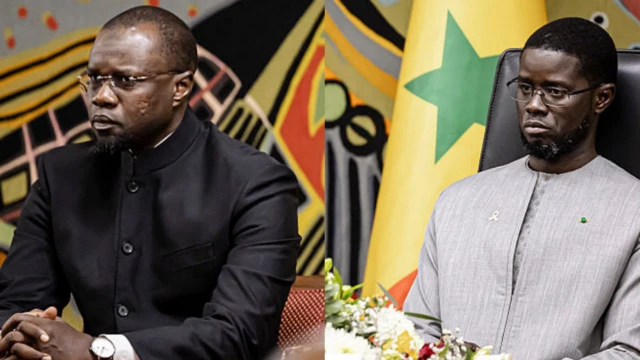
Photo credit: Getty Images
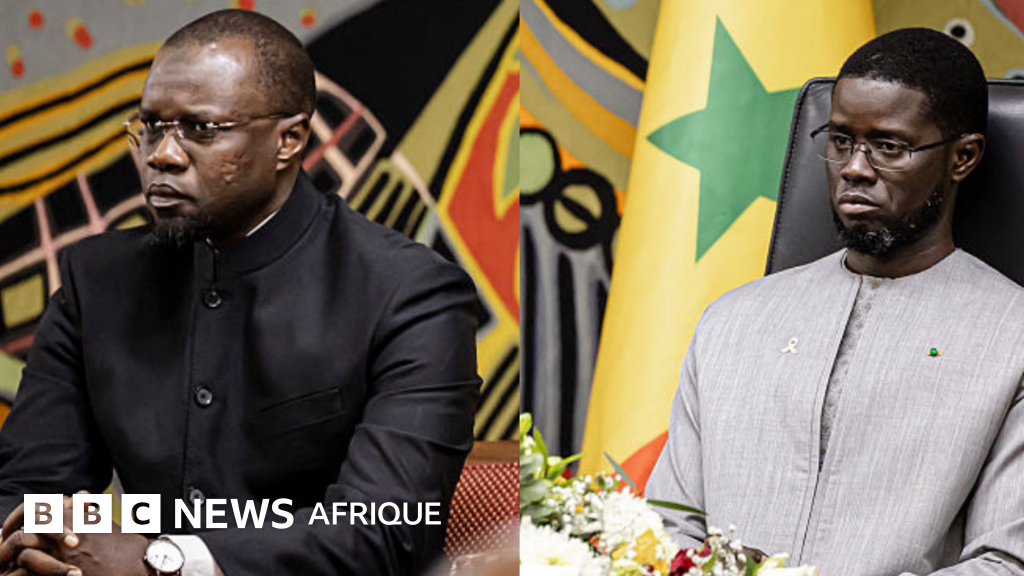
With the dismissal of Prime Minister Ousmane Sonko, President Bassirou Diomaye Faye has abruptly ended the political alliance that propelled him to power in 2024 under the banner of « Diomaye mooy Sonko ». The slogan, once a rallying cry for a united front, no longer holds sway since the May 22, 2026 decree stripping Sonko of his premiership.
The alliance symbolized a near-total fusion of political visions, personalities, and trajectories under the PASTEF banner. Yet the recent dismissal signals the collapse of this once-unassailable partnership, exposing deep-seated tensions over governance, economic policy, and party control that had simmered for months.
This rupture introduces an unprecedented period of political uncertainty in Senegal. For the first time since PASTEF’s rise to power, the president and his party’s charismatic leader now face each other across the political divide. The move underscores the inherent fragility of a dual-power system that proved unsustainable within Senegal’s institutional framework.
From unity to division: the political roots of the crisis
Political analyst Maurice Soudieck Dione, an associate professor of political science, had long anticipated this rupture. He traces its origins to the 2024 presidential election, when Sonko’s judicial troubles barred him from running, leaving him to champion Diomaye Faye’s candidacy as his political heir.
« The president’s election occurred under extraordinary circumstances—his candidacy was validated only after Sonko’s disqualification. This created an inherent duality at the heart of the state from day one, » Dione notes.
Under Senegal’s Constitution, the president holds the ultimate executive authority. Yet Diomaye Faye found himself sharing power with a prime minister whose popularity and partisan influence rivaled his own.
« You had a prime minister with unmatched political capital, mass appeal, and control over the party’s machinery. This coexistence was always destined to breed conflict, » Dione argues.
He suggests an alternative path: « After the November 2024 legislative elections, Sonko might have been better positioned as National Assembly president, with a technocratic prime minister handling day-to-day governance. That would have clarified roles and reduced tensions. »
But this option was never pursued. « From the outset, confrontation at the top became almost inevitable. »
The 2029 factor: ambitions fueling rivalry
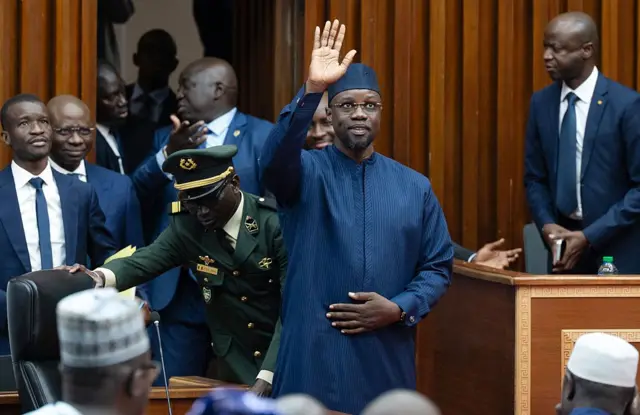
Photo credit: Getty Images
Over time, their differences crystallized into open contradictions on political, economic, and diplomatic fronts. President Faye had cautioned against « personalization » of the party—a veiled critique of Sonko’s outsized influence.
The conflict was never just structural; it was also personal. Diomaye Faye’s legitimacy stemmed from the presidential ballot, while Sonko retained the party’s militant base and popular mandate. This dual legitimacy became a powder keg.
Dione believes long-term political calculations played a role: « There were positioning strategies for the 2029 election and internal competition within the executive. This contradiction fueled the diarchy at the top and ultimately led to rupture. »
The fallout: weakened leadership and looming institutional battles
Babacar Ndiaye, research director at the WATHI think tank, warns that both men will emerge weakened from this split. « The « Diomaye is Sonko, Sonko is Diomaye » narrative has collapsed. Supporters who believed in this duo will feel betrayed, » he says.
By dismissing Sonko, Diomaye Faye has reclaimed full executive control, shedding the shadow of his former mentor. But the move carries significant risks. While the president wields institutional power, Sonko retains command of the party apparatus and a parliamentary majority won in the 2024 elections.
« Politically, Sonko’s position is stronger as PASTEF leader and architect of the party’s legislative victory. The real danger for Diomaye Faye is facing a hostile PASTEF majority in the National Assembly, » Ndiaye explains.
This could paralyze government bills and trigger a full-blown political crisis. Dione warns of a unique scenario: « an opposition within PASTEF itself. » With 130 of 165 deputies, Sonko’s faction could block legislation, leaving the president isolated.
Diomaye Faye’s lonely path forward

Photo credit: AFP via Getty Images
Diomaye Faye’s political strength once rested on a delicate balance: his presidential legitimacy complemented by Sonko’s grassroots mobilization. Now, he risks losing that base. « All eyes—and all criticism—will now converge on him alone. He must forge his own identity, » Ndiaye notes.
His coalition, though supportive, remains loosely structured. The approaching local elections and potential dissolution of the National Assembly—possible only after November 2026—could further destabilize his position. A defeat would jeopardize the remainder of his term.
For Sonko, the dismissal paradoxically offers newfound political freedom. He could reposition as an internal critic, preparing for a 2029 presidential bid, or even split PASTEF into rival factions. Observers suggest he has been quietly laying the groundwork for a 2029 challenge since his exclusion from the ballot in 2024.
Ndiaye outlines three possible scenarios: Sonko as internal opposition, a methodical 2029 campaign, or a complete political realignment—with Diomaye representing an institutional current and Sonko embodying a populist-sovereignist bloc.
The coming months will test whether Diomaye Faye can govern alone. His success hinges on consolidating a loyal base and maintaining his parliamentary majority. Failure could unravel his presidency long before 2029.
The slogan has vanished. Now, both men must prove they can thrive—and survive—without the other.