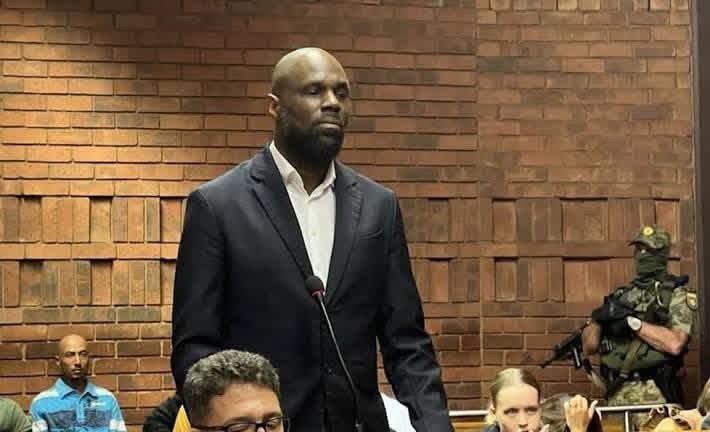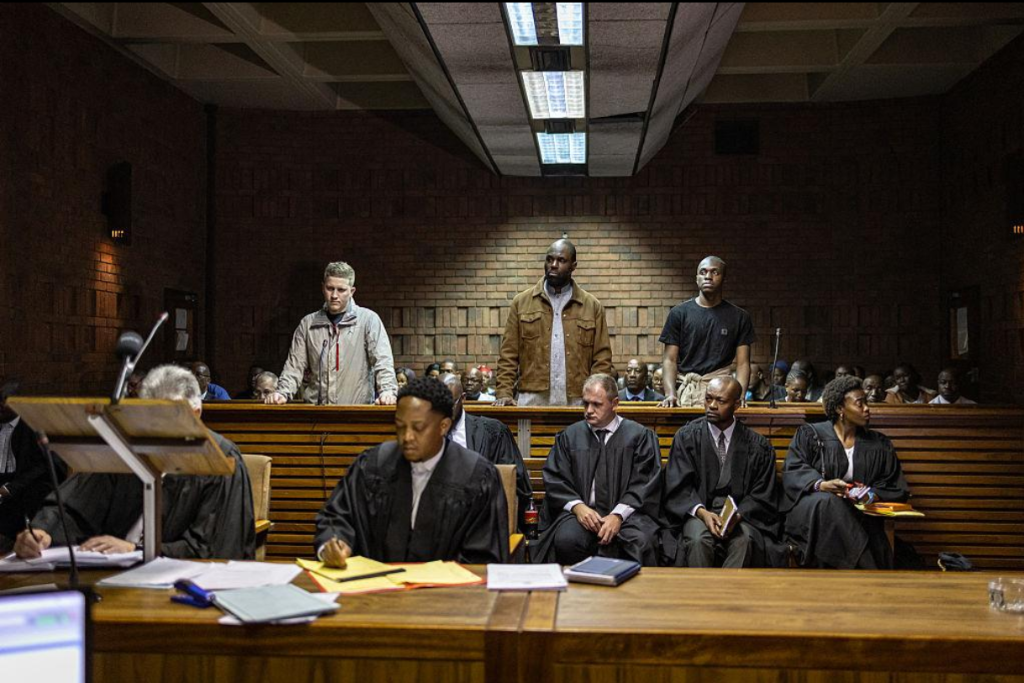
South Africa’s High Court in Pretoria has once again refused to grant bail to panafricanist activist Kémi Séba, following his latest court appearance on 26 November 2026. The decision underscores mounting judicial concerns that his release could trigger a covert extraction operation orchestrated by international networks—with suspected Russian involvement.
Bail refusal fuels debate over judicial risks and hidden networks
The ruling delivers a fresh setback to Séba’s legal team, who sought provisional freedom while awaiting trial. Instead, the court sided with prosecutors who warned that a temporary release could serve as a smokescreen for an elaborate escape plan. Public scrutiny of the case has intensified, sparking a wider debate about the limits of judicial discretion when faced with alleged transnational conspiracies.
Security around Séba has visibly tightened since earlier reports surfaced of a possible plot to spirit him out of the country. During a 20 November hearing, prosecutors raised concerns that he might have feigned illness in an attempt to flee the courtroom—a scenario that prompted immediate reinforcement of his escort by heavily armed police officers.
Accusations of Russian-backed exfiltration reshape the dispute

Central to the judicial impasse are allegations of direct links between Séba and figures tied to Russian ultra-conservative circles. Investigators allege that an extraction network, reportedly mobilising Russian personnel, was preparing a multi-stage escape route: first through Zimbabwe, then onward to Russia before a possible final destination in Niger. The suspected involvement of Russian ideologue Alexandre Douguine has added a geopolitical dimension to what was initially a domestic legal matter.
The emerging picture points to a coordinated effort involving logistics, financing and operational support—capabilities that far exceed what a lone fugitive could mobilise. This raises troubling questions about the sophistication and reach of transnational networks that could exploit procedural gaps in South Africa’s justice system.
Transnational networks complicate Pretoria’s judicial calculus
South African authorities now face a dual challenge: ensuring due process while preventing any covert extraction that might be orchestrated from outside the country. The court’s refusal to grant bail signals that, in this case, assurances of appearance—however robust—cannot outweigh the perceived risk of an international operation designed to remove Séba from legal oversight.
Evidence suggests that support structures exist across borders, capable of circumventing standard border controls and surveillance mechanisms. Such networks could potentially reconfigure the activist’s location within hours, rendering traditional judicial safeguards ineffective.
Extradition request adds pressure on South Africa’s judiciary
Kémi Séba was detained in Pretoria on 13 April 2026 alongside his son and François van der Merwe. He now faces multiple legal fronts: South Africa is reviewing his immigration status and alleged involvement in a clandestine departure scheme, while the government of Benin has formally requested his extradition to answer charges of money laundering and endangering state security.
Séba continues to deny all allegations, portraying himself as the target of a politically motivated campaign. Yet the combination of international suspicions and extradition demands has turned his detention into a high-stakes showdown between South African sovereignty and alleged foreign interference.
Uncertain future as investigations probe deeper
With each courtroom development, the case grows in complexity. Questions linger about the true scope of the alleged Russian-backed network, the identities of its operatives and whether their infrastructure remains intact. Authorities admit the full picture has yet to emerge—leaving open the possibility that other nodes of this alleged transnational system could still be active.
For now, Kémi Séba remains behind bars in South Africa. The spectre of an international extraction, once dismissed as speculative, has steadily hardened into a credible threat—one that is now reshaping how Pretoria weighs freedom, justice and national security in one of its most scrutinised cases.