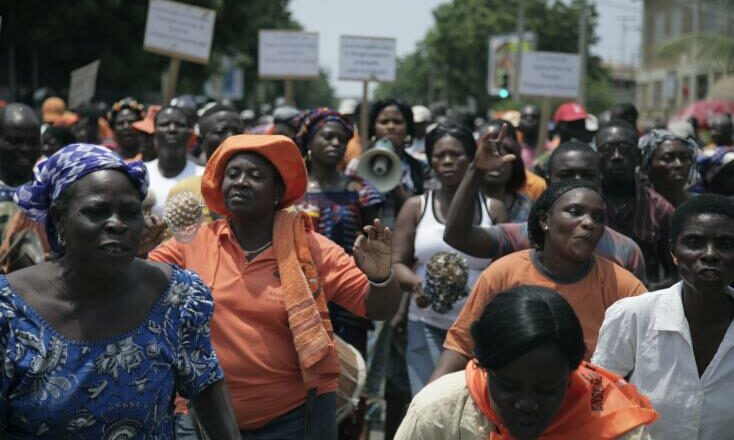
Hundreds of demonstrators took to the streets of Vogan, southern Togo, on Sunday to voice their opposition to the controversial 2024 constitutional amendments. Critics argue the reforms are designed to extend President Faure Gnassingbé’s 20-year grip on power, sparking fresh tensions in a country where public dissent has been rare in recent years.
The protest, orchestrated by the National Framework for Change in Togo (CNCC)—a coalition of opposition parties and civil society groups—marked the second major rally in three months. The first gathering, held in early May, set the stage for renewed calls against what activists call an illegal power grab.
Protesters carried signs with messages like “No to unconstitutional government changes” and “Constitutional coup”, demanding the reversal of reforms they deem illegitimate. David Dosseh, spokesperson for the Citizen Front for a Standing Togo (FCTD), a key member of the coalition, condemned the amendments as a blatant violation of democratic principles.
Faure Gnassingbé, who has led the country since 2005, now holds the newly created role of President of the Council, the top executive position under the revised system. The 2024 reforms scrapped direct presidential elections in favor of a parliamentary model, centralizing power in his hands while altering the nation’s institutional framework.
The opposition and civil society groups warn the changes are a calculated move to perpetuate the Gnassingbé dynasty. In contrast, the government frames the amendments as a step toward stronger democratic representation. However, the dispute has already turned violent—2025 protests left seven civilians dead per civil society reports, while prosecutors cite five drowning victims during clashes.
The Economic Community of West African States (ECOWAS) Court of Justice ruled in late January that the reforms amounted to an unconstitutional government change, a decision the Togolese government swiftly rejected. Authorities argued the court overstepped its authority, claiming its mandate is restricted to human rights and community law violations—not domestic constitutional matters.