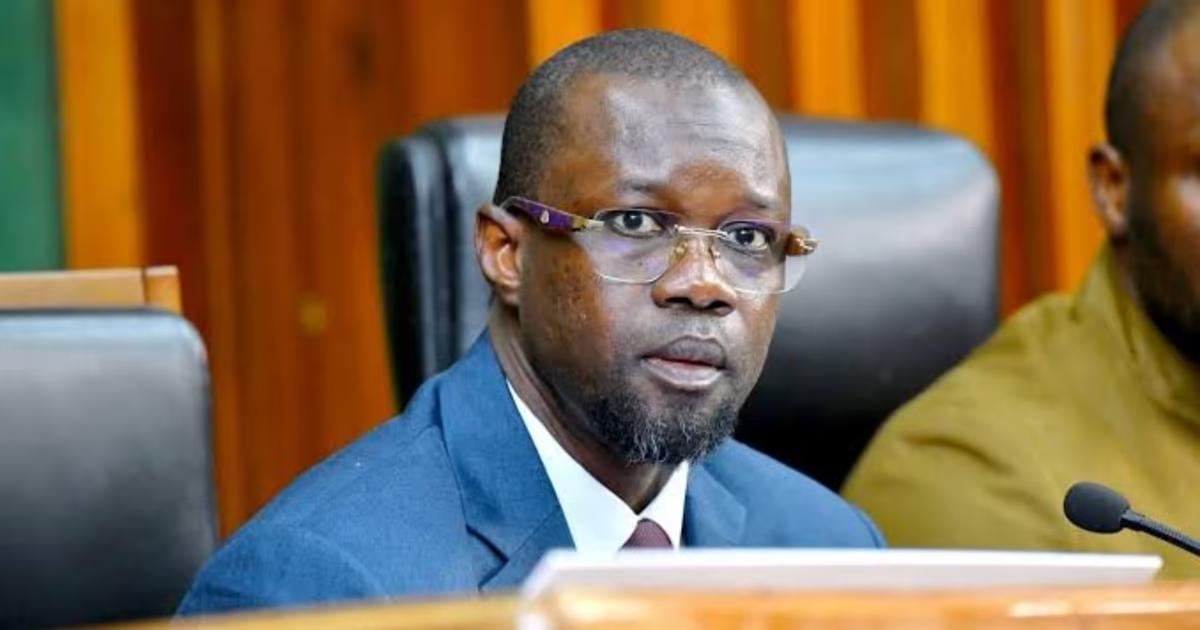
Dakar — The National Assembly has set in motion a pivotal phase with the announcement of its first extraordinary session of the 2025-2026 legislative year, convened under the leadership of Ousmane Sonko and the Bureau of the Assembly. This urgent meeting, scheduled to commence on Monday, August 10, 2026, marks a significant return for the 15th Legislature, cutting short parliamentary recess to address pressing legislative matters.
The session, strictly regulated by the Assembly’s internal rules, will unfold over a maximum of 15 days, as mandated by law. This timeframe ensures focused deliberation without unnecessary delay. The Bureau of the Assembly has already finalized the agenda, which includes two draft laws, three legislative bills, and six requests for parliamentary inquiry commissions—all meticulously selected to align with current institutional priorities.
Regulatory framework and procedural clarity
Under the Assembly’s regulations, the extraordinary session must adhere to a predetermined agenda, which cannot be altered once proceedings begin. This ensures transparency and prevents last-minute deviations from the established priorities. The Bureau’s decision to convene this session stems from both political imperatives and the need for institutional reforms, signaling a proactive approach to governance.
Upon opening, the session will commence with a quorum verification, followed by a formal declaration by Ousmane Sonko, President of the National Assembly. The conference of presidents will then convene to outline the session’s detailed work schedule, ensuring structured and efficient proceedings. The Assembly’s commitment to this framework underscores its dedication to upholding democratic norms and procedural integrity.
Legislative priorities take center stage
Among the key texts slated for examination is a proposal to amend Article 37 of the Senegalese Constitution, which pertains to the declaration of assets by the President of the Republic. This initiative reflects ongoing efforts to enhance transparency in governance. Additionally, a bill aimed at regulating special credits and secret funds will be reviewed, addressing longstanding concerns about financial oversight.
These legislative measures were declared admissible by the Bureau of the Assembly in July 2026, following thorough preliminary assessments. The urgency of these discussions highlights their relevance to the current socio-political landscape of Senegal, where accountability and institutional reform remain critical focal points.
The extraordinary session is poised to close automatically upon the exhaustion of its agenda, ensuring that all deliberations remain time-bound and outcome-focused. As the National Assembly resumes its duties, the nation watches closely, anticipating the outcomes of these landmark legislative proceedings.