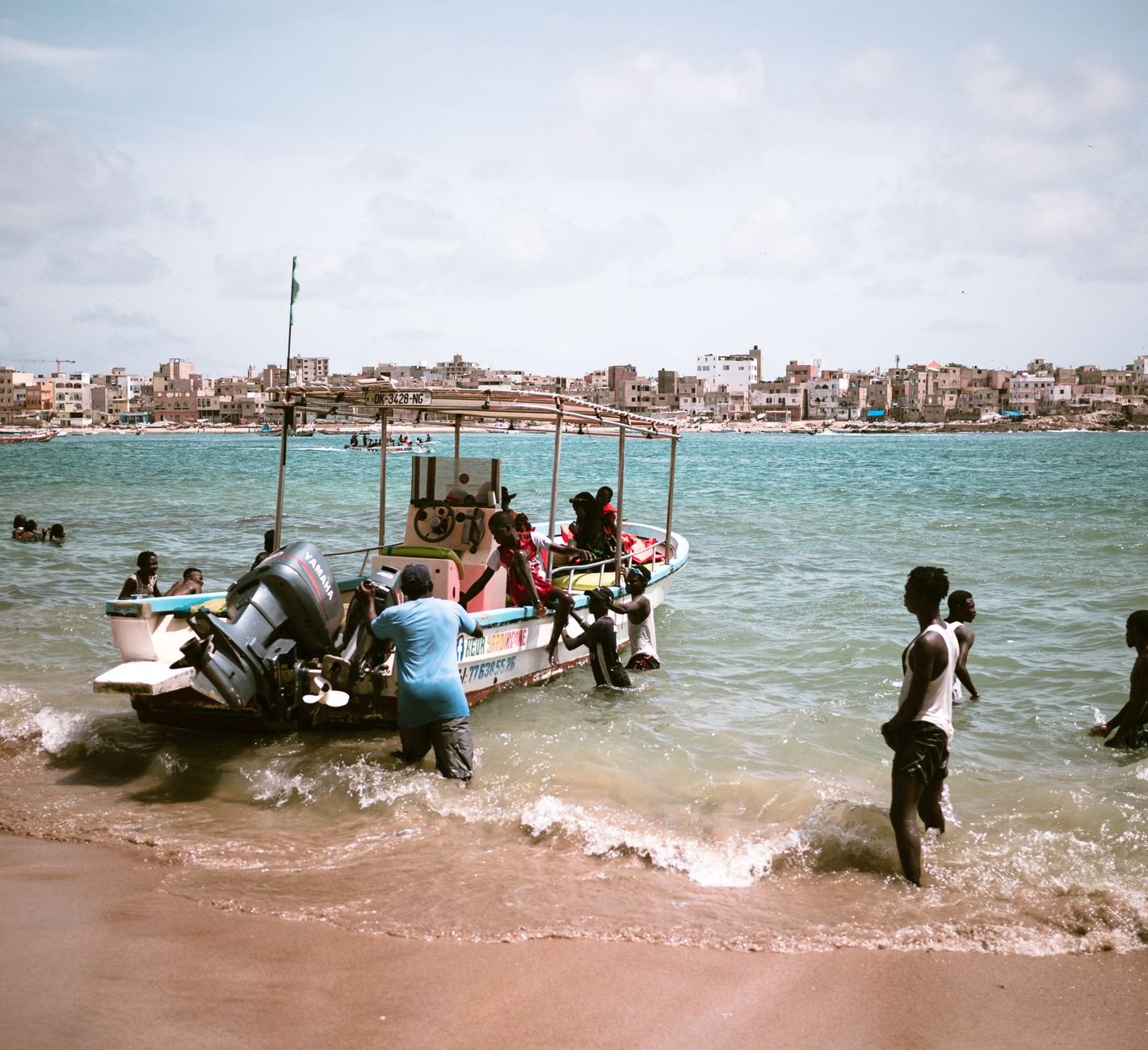
The coastal village of Lompoul in the Louga region has become the focal point of a much deeper reckoning after initial tallies suggested around 40 lives were lost. While the country mourns, the disaster lays bare an uncomfortable statistical reality: Senegal’s coastline remains one of the busiest departure corridors toward the Spanish Canary Islands, even after migration cooperation with Madrid and Brussels tightened from 2023 onward. The Association of Journalists in Migration and Security of Senegal (AJMS) has issued a statement urging public authorities to abandon a purely security-driven reading of the crisis.
What the youth programme record actually shows
The core demand from AJMS is an independent evaluation of the socio-economic integration schemes designed for young people. Senegal has multiplied dedicated instruments over the years: the General Delegation for Rapid Entrepreneurship of Women and Youth (DER/FJ), created in 2017; the National Agency for Youth Employment Promotion (ANPEJ); and the XËYU NDAW ÑI programme launched by the presidency in 2021 after the March unrest, with an announced envelope of 450 billion CFA francs over three years. Yet the mapping, governance and impact indicators of these tools remain thinly documented in public.
The challenge is both numerical and structural. Officially, Senegal has more than 17 million inhabitants, about 75 percent of them under 35 according to the National Agency of Statistics and Demography (ANSD). Close to 200,000 young people enter the labour market every year, while formal job creation remains far below that figure. This persistent gap continuously fuels a pool of would-be migrants, and awareness campaigns alone have struggled to reduce it durably. For AJMS, a transparent diagnostic of youth programmes is the precondition for any credible overhaul.
The security response is reaching its operational limits
November illustrated how intense the enforcement machinery has become. On 12 November 2026, 96 people attempting irregular migration were intercepted during an operation, a day after Gambian immigration services acted during the night of 11 to 12 November. Since 2024, Senegal, Morocco, Mauritania and Cape Verde have multiplied joint patrols with the European agency Frontex, whose budget exceeded 900 million euros in 2024. Even so, the flow has not stopped: nearly 47,000 irregular arrivals were registered in the Canaries in 2023, a historic record driven in part by departures from Senegal’s coast.
The pattern holds across the West African Atlantic facade. In Senegal, Mali and Gambia alike, interdiction operations tend to move departure points rather than reduce the number of attempts. AJMS places its advocacy in that context: a migration policy that does not simultaneously address domestic employment supply and regular mobility channels will keep managing repeated tragedies.
Diplomatic leverage, visa pathways and managed mobility
The second part of the statement focuses on diplomatic negotiation. The association wants stronger partnerships with destination countries to widen quotas for students, seasonal workers and professional trainees. The Spanish precedent is telling: in 2024, Madrid and Dakar agreed on several hundred seasonal agricultural work contracts, a volume seen as marginal compared with social demand. France, Italy and Portugal remain solicited interlocutors, but consular procedures are still perceived as costly and discouraging.
The role of Senegalese diplomatic representations is also under discussion. For the signatories, embassies and consulates could become information and orientation points on scholarships, job-search visas and diploma recognition mechanisms. This approach echoes the European Pact on Migration and Asylum, which entered into force in June 2024 and ties part of development cooperation to the establishment of credible legal pathways.
The political response expected in Dakar goes far beyond the Ministry of Youth alone. The real arbitration involves the finance, labour, foreign affairs and interior portfolios, all within a constrained budgetary environment marked by ongoing discussions with the International Monetary Fund over a new programme. That is the equation facing the government in the aftermath of Lompoul.