The Republic of Senegal, long regarded as a beacon of democracy in Africa, continues to grapple with a persistent challenge: the underrepresentation of women in decision-making bodies. Despite constitutional guarantees of gender equality and landmark legislation such as the 2010 parity law, the latest figures paint a sobering picture. Out of 558 communes, only 18 are led by women, while just three out of 43 departmental councils are chaired by female leaders.
Recent legislative elections have further highlighted this disparity. In the November 2024 polls, women’s representation in the National Assembly declined from 44.2% to 41%, with women heading only 13% of candidate lists. These statistics are more than mere numbers—they reflect deep-rooted structural barriers, cultural resistance, and systemic inequalities in political financing, media visibility, and access to leadership spaces.
Barriers to women’s political participation
Bator Seck, focal point for Senegal of the Réseau des femmes leaders pour le développement (RFLD), points to the paradox between Senegal’s progressive legal framework and the reality on the ground. While the 2001 Constitution enshrines gender equality and Senegal has ratified key international conventions on women’s rights, societal norms and institutional practices continue to limit women’s political engagement.
“Women in Senegal are the backbone of local communities,” Seck emphasizes. “They drive economic growth, lead social initiatives, educate future generations, and foster peace. The question is no longer whether women are capable of governance—but why systems persist in excluding them from leadership.”
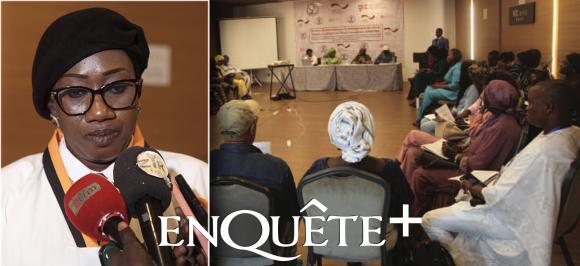
To address this imbalance, the RFLD has launched a two-day regional seminar focused on women’s political participation in francophone West Africa. Supported by the Afrofeminist Initiative for Human Rights Development in Francophone West Africa and funded through the SEA-T program of BMZ with GIZ, the initiative brings together 30 women leaders from across Senegal. The cohort includes parliamentarians, party leaders, local elected officials, activists, and civil society leaders, representing diverse generations, political affiliations, and social backgrounds.
The goal is clear: to strengthen solidarity among women, share experiences, analyze systemic challenges, and develop actionable strategies to influence public policy and electoral processes. “We are not just advocating for inclusion—we are redefining democracy,” says Seck. “A truly inclusive democracy cannot be built without women at the table. And it must be built with women, not for them.”
Building confidence and competence
Maman Diouf Fall, representing the Ministry of Family and Social Solidarity, underscores another critical dimension: the psychological and professional empowerment of women in public life. Many women possess the skills and legitimacy to lead but hesitate due to social pressure, entrenched stereotypes, and a lack of structured support.
“Confidence is the first step toward leadership,” Fall notes. “But confidence alone is not enough. Women must also have access to high-quality training in leadership, political communication, negotiation, public governance, public speaking, and strategic management. Without investment in women’s human capital, progress will remain limited.”
She highlights the urgent need to expand training opportunities beyond urban centers, ensuring rural women—who are often most engaged in their communities—are not excluded. Mentorship programs and intergenerational support networks are also vital, offering young women role models, guidance, and solidarity as they navigate leadership pathways.
Toward inclusive governance
The Ministry of Family and Social Solidarity has implemented multiple initiatives to strengthen women’s empowerment, including leadership training, civic education, human rights advocacy, and psychosocial support for vulnerable groups. These efforts aim to build resilience, promote economic autonomy, and encourage active participation in public life.
Collaboration with technical and financial partners, local governments, and community organizations is essential to creating an environment where women and girls can thrive. “Our collective responsibility,” Fall concludes, “is to ensure women’s full, free, and effective participation in public life. This requires continuous social transformation, community awareness, and investment in the next generation of women leaders.”