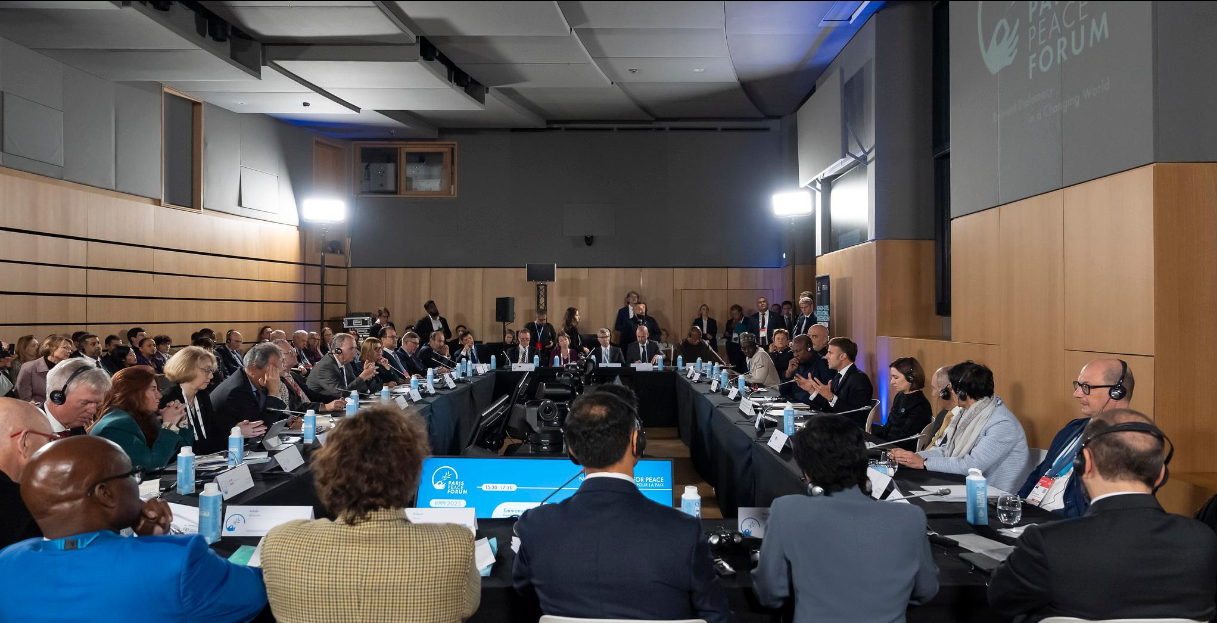
The ninth edition of the Paris Peace Forum, held on November 10-11, 2026, became a battleground for competing visions of global governance, with African leadership emerging as a defining force in the debate. Senegal and Benin took bold steps to assert their priorities on the international stage, sparking fresh discussions about Africa’s evolving role in shaping the world’s future.
With geopolitical tensions escalating and technological disruption reshaping power dynamics, the forum served as a critical platform for world leaders to address the fractures in global stability. Against this backdrop, Dakar and Cotonou made their presence felt—not just as spectators, but as architects of a new narrative for African sovereignty and progress.
What the Senegalese president brought to the Paris Peace Forum
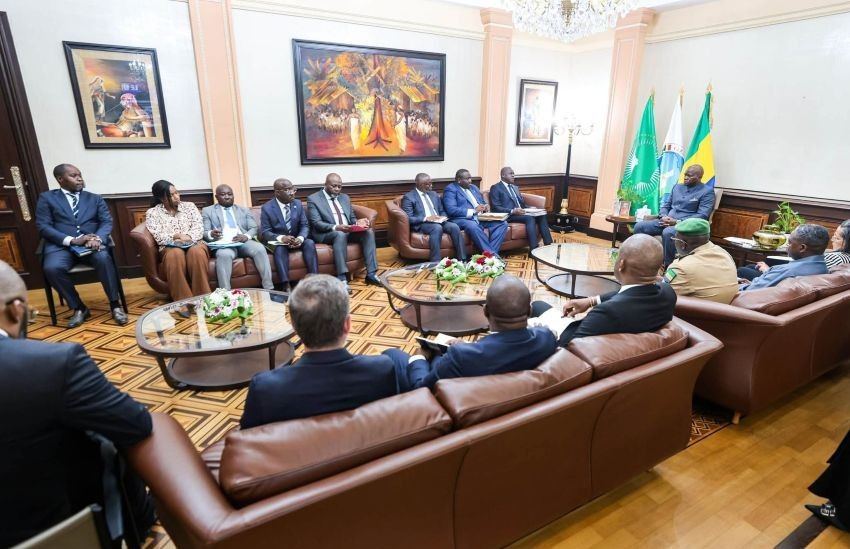
Senegalese President Bassirou Diomaye Faye arrived in Paris with a clear agenda: to reposition his country as a key player in international decision-making. His meetings on November 9 with French President Emmanuel Macron at the Élysée Palace set the tone for Senegal’s broader diplomatic ambitions.
The visit was more than symbolic. Faye’s participation underscored Dakar’s determination to shape global conversations around security, development financing, and institutional reform. In a series of high-level discussions, the Senegalese delegation pushed for a stronger African voice in addressing crises across the Sahel and West Africa, while advocating for fairer trade policies and debt relief mechanisms.
For Senegal, the Paris Peace Forum was not just about joining the conversation—it was about leading it. By championing a vision of cooperation rooted in mutual respect and shared sovereignty, Faye positioned himself as a mediator between African priorities and global imperatives. The discussions reflected a growing consensus: Africa’s future cannot be dictated from abroad. It must be written in partnership, with African leaders at the helm.
Bilateral tensions and opportunities in Franco-Senegalese relations
The encounter between Faye and Macron also served as a litmus test for Franco-Senegalese relations, which have seen their share of friction in recent years. From trade disputes to questions of cultural influence, the two nations have had to navigate a complex partnership—one increasingly defined by Senegal’s push for greater autonomy.
In Paris, both leaders framed their discussions around mutual interests: economic cooperation, technological collaboration, and security partnerships. Yet beneath the diplomatic courtesies, a subtle power struggle persisted. Senegal’s insistence on sovereignty—echoed in Faye’s public statements and private meetings—sent a clear message: Africa will no longer accept a one-sided relationship with its former colonial powers.
How Benin is redefining Africa’s digital future
While Senegal made headlines with its political posturing, Benin took a different tack—one that may prove equally transformative. The country was represented by Mahouna Akplogan, Minister of Digital Transformation and Innovation, who brought a bold vision for Africa’s technological independence to the forum.
The rise of artificial intelligence, cybersecurity threats, and the dominance of global tech giants have made digital sovereignty a non-negotiable priority for African nations. Benin’s participation highlighted how technology is no longer a peripheral issue in international diplomacy but a cornerstone of national strategy. Akplogan’s presence signaled a commitment to harnessing innovation for economic growth, job creation, and self-determination.
The minister’s contributions to panel discussions focused on ethical AI development, data governance, and the creation of homegrown tech ecosystems. Benin’s approach reflects a broader trend: African nations are no longer content to import solutions designed elsewhere. Instead, they are investing in local talent, infrastructure, and policy frameworks to build a digital economy that serves their people first.
The global fallout: who stood out at the Paris Peace Forum
The forum drew leaders from across the globe, each bringing their own agendas to the table. Among the most prominent were France’s Emmanuel Macron, Timor-Leste’s José Manuel Ramos-Horta, Lithuania’s Gitanas Nausėda, and Slovakia’s Peter Pellegrini. Their presence underscored the event’s international significance, but it was the African delegations that sparked the most debate.
Senegal and Benin’s interventions triggered reactions from other participants, with some praising their forward-thinking strategies while others questioned whether their demands for reform were realistic. The forum became a stage for competing visions of global order—one where power is increasingly decentralized and where new centers of influence, including Africa, are demanding a seat at the table.
For critics of the current international system, the forum offered a rare opportunity to challenge the status quo. For supporters of multilateralism, it was a chance to reaffirm the need for dialogue. And for African leaders, it was a platform to turn rhetoric into reality.
What comes next: turning dialogue into action
The Paris Peace Forum’s lasting impact will depend on whether its participants move beyond talk and into tangible outcomes. For Senegal and Benin, the challenge now is to translate their forum participation into concrete gains—whether through new partnerships, policy changes, or measurable progress on their key priorities.Senegal has already signaled its intention to leverage the momentum generated in Paris by pushing for reforms in international financial institutions and advocating for greater African representation in global security frameworks. Meanwhile, Benin is expected to accelerate its digital transformation initiatives, with plans to launch new AI-driven projects aimed at improving public services and economic competitiveness.The question on everyone’s mind: Will Africa’s newfound diplomatic activism lead to real change, or will it fade into the background as other crises dominate the global agenda? For Faye, Akplogan, and the millions of Africans watching from afar, the stakes could not be higher. Their actions in Paris were just the beginning of a longer journey—one that will determine whether Africa’s voice is heard, and its interests defended, on the world stage.
The Paris Peace Forum may have ended, but the debate it sparked is only just beginning. And Africa intends to keep the conversation going.