The recent mass arrests in Guinea’s illegal gold mines have ignited a fierce public debate, exposing deeper economic fractures and sparking urgent questions about what comes next for both Burkina Faso and the West African region.
From repression to reckoning: Guinea’s crackdown on artisanal gold mining
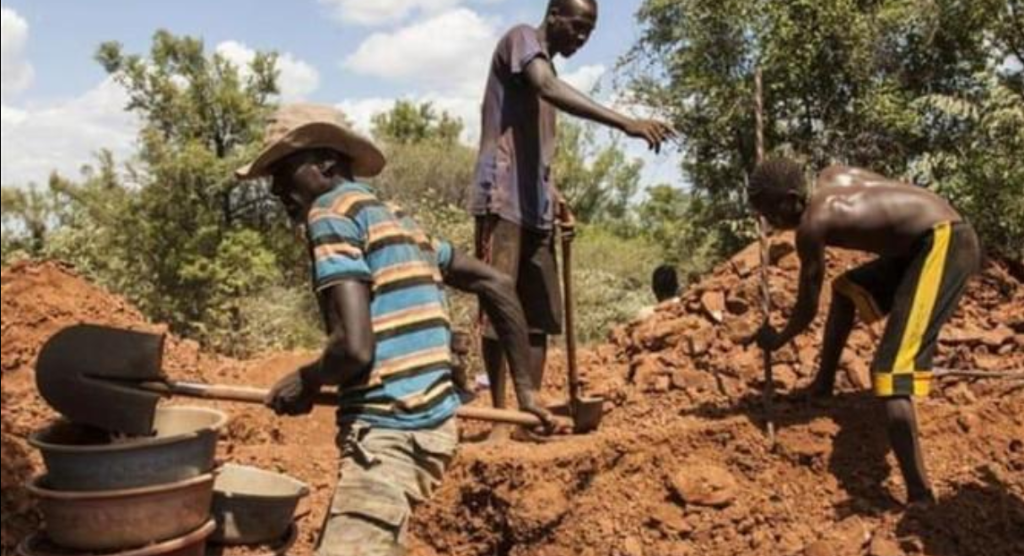
Guinea’s crackdown on illegal gold mining has reached a critical juncture, with authorities announcing proceedings against 1,263 individuals detained during multi-day operations targeting clandestine mining sites. The sweeping action, launched earlier this month, underscores the human cost of a crisis that transcends national borders.
According to a joint statement from Guinea’s ministries of National Defense, Security, and Civil Protection, an additional 149 arrests were recorded on November 7 and 8 alone—100 in the Kérouané prefecture and 49 in the Siguiri region. All detainees were handed over to judicial authorities in Kankan, bringing the total number of arrests to 1,412.
The sweeping operation casts a spotlight not only on Guinea’s regulatory challenges but also on the broader socioeconomic realities driving migration from neighboring Burkina Faso. For many West African workers, the lure of gold extraction, despite its dangers and unstable conditions, has become a last-resort livelihood amid deepening poverty and scarce opportunities at home.
Why Burkina Faso’s gold seekers are crossing borders
Burkina Faso, rich in mineral resources but grappling with insecurity, internal displacement, and economic stagnation, has seen a growing number of its citizens venture into Guinea’s artisanal mining zones. This cross-border mobility, while not new, has intensified as local populations face mounting hardship under prolonged crisis conditions.
For these migrants, the journey is not one of ambition but of necessity. Access to stable income remains out of reach for many rural communities, where agricultural livelihoods are threatened by climate shocks, conflict, and disrupted markets. In this context, Guinea’s goldfields—though equally precarious—offer a glimmer of economic survival.
The surge in border-crossing miners reflects a broader regional paradox: despite abundant natural wealth, large segments of the population remain trapped in poverty, compelled to seek opportunities across national boundaries.
Can Ibrahim Traoré’s economic sovereignty vision deliver on the ground?
Since assuming leadership in 2022, Captain Ibrahim Traoré has prioritized economic sovereignty, particularly through the mining sector. His administration has emphasized regaining control over national resources, renegotiating mining contracts, and increasing state revenue from gold extraction. Yet the persistent exodus of Burkinabè miners to Guinea raises a pressing question: why are citizens of a gold-rich nation being driven to risk their lives in neighboring territories?
This migration pattern serves as a barometer of policy effectiveness. While sovereignty rhetoric emphasizes national ownership and resource control, tangible improvements in employment, rural income, and poverty reduction have yet to materialize for many. Structural barriers—including insurgency, infrastructure gaps, and weak governance—continue to undermine progress.
As long as economic disparities persist within Burkina Faso, the outflow of workers seeking subsistence in Guinea is likely to continue, challenging the credibility of official development narratives.
Guinea’s balancing act: enforcement vs. root causes
Guinea’s response to illegal mining combines judicial action with environmental and security measures. Authorities warn that unregulated gold extraction damages soils, pollutes waterways, and jeopardizes public health—risks that disproportionately affect local communities.
The recent arrests signal a firm stance against clandestine activity, but experts caution that repression alone cannot resolve systemic issues. Without addressing the underlying economic drivers—particularly poverty and lack of local alternatives—underground mining networks are likely to re-emerge, perhaps under new guises.
The ongoing judicial process will be closely monitored. Officials have yet to disclose the nationalities of the 1,412 arrested individuals, leaving unanswered questions about the scale of Burkinabè involvement. More granular data could help identify recruitment networks and migration patterns, enabling more targeted interventions.
The human face behind the statistics
Behind the cold numbers lies a tapestry of human stories: families striving to meet basic needs, young men and women seeking any income to support relatives, and communities fractured by displacement. Each arrest represents not just a legal case, but a life upended by economic necessity.
For Guinea, the challenge is not only to protect its natural resources but to do so with compassion and regional cooperation. For Burkina Faso, it is a moment of reckoning: to ensure that the promise of economic sovereignty translates into real opportunities that keep citizens at home.
True sovereignty is measured not by control over mines or rhetoric alone, but by the ability of a nation to create dignified livelihoods and resilient futures for its people—without forcing them to leave.