Behind the headlines: the real leaders in Africa’s arms supply race
As Russian influence wanes and global powers recalibrate their strategies, a fierce debate is unfolding across Africa about who truly supplies the continent’s militaries. The narrative of Moscow as the dominant force in African security partnerships is crumbling under scrutiny—and the data tells a different story.
Who really leads in African military imports?
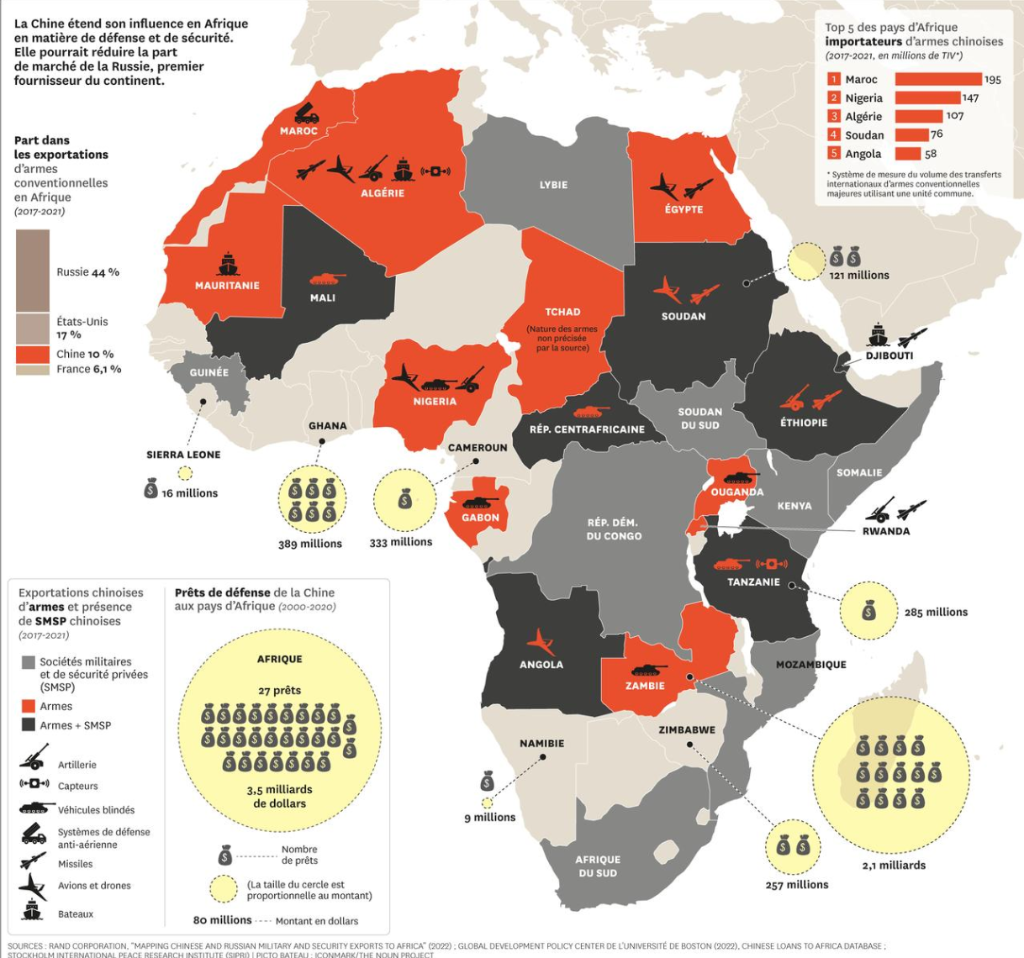
The latest figures from the Stockholm International Peace Research Institute (SIPRI), covering 2021 to 2025, paint a clear picture: the United States tops the continent’s arms imports at 19%, followed closely by China at 17%. Russia, despite its high-profile military engagements, ranks third with 15%, while France trails at 8.3%. In Sub-Saharan Africa specifically, China leads with 22%, pushing Russia down to 12%.
These statistics challenge the perception of Russia as Africa’s top military supplier, especially as its global arms exports plummeted by 64% between 2016–2020 and 2021–2025—a decline driven by war, sanctions, and Moscow’s own defense priorities.
China’s strategic rise in African defense cooperation
Beijing has quietly transformed into a key player, offering more than just weapons. African militaries now benefit from Chinese-made armored vehicles, surveillance drones, anti-aircraft systems, radars, artillery, and transport aircraft. In 2024 alone, Burkina Faso received 116 infantry carriers and six assault vehicles from China, while Mali’s defense ties with Chinese firm NORINCO include training and potential technology transfers.
This approach goes beyond sales. Beijing emphasizes maintenance, logistics support, and training—critical components for sustained military operations. In regions plagued by terrorism, China’s focus on mobility, surveillance, and protection aligns with Africa’s urgent operational needs. Drones, for instance, enhance intelligence gathering, while armored transport improves troop mobility in conflict zones.
Russia’s fading dominance despite strong political ties
Moscow’s influence hasn’t disappeared—but its model is shifting. While Russia ranks third in arms deliveries, its real impact lies in operational support through advisors, contractors, and restructured entities like the Africa Corps. In countries like the Central African Republic and Mali, Russian military presence remains highly visible, even if its commercial footprint is shrinking.
The contrast is stark: Russia’s political visibility far exceeds its market share. Yet, its declining export capacity—amplified by the Ukraine war and sanctions—raises questions about the long-term sustainability of its African engagements.
Beyond weapons: what Africa truly needs in its fight against terror
For African nations, the debate isn’t just about who sells the most guns. True security hinges on intelligence networks, aerial capabilities, cross-border cooperation, and the restoration of state authority in ungoverned territories. Well-trained, equipped, and supported forces are essential—but so is the right mix of partners.
New suppliers bring opportunities, yet they also introduce risks: technological dependency, maintenance costs, supply chain challenges, and the potential for weapon proliferation. Diversification is key, but so is caution. Africa’s security future will depend on balancing partnerships that deliver not just arms, but real operational value.
A continent rewriting its defense alliances
As the dust settles on old narratives, Africa is quietly reshaping its defense landscape. China’s industrial and commercial strategy is gaining ground, while Russia clings to political relevance despite market losses. The United States maintains its lead, but the stakes are higher than ever.
For governments across the Sahel and beyond, the message is clear: the strongest partnerships aren’t measured by headlines, but by results. And in a rapidly evolving security environment, Africa’s leaders are learning to play the long game.