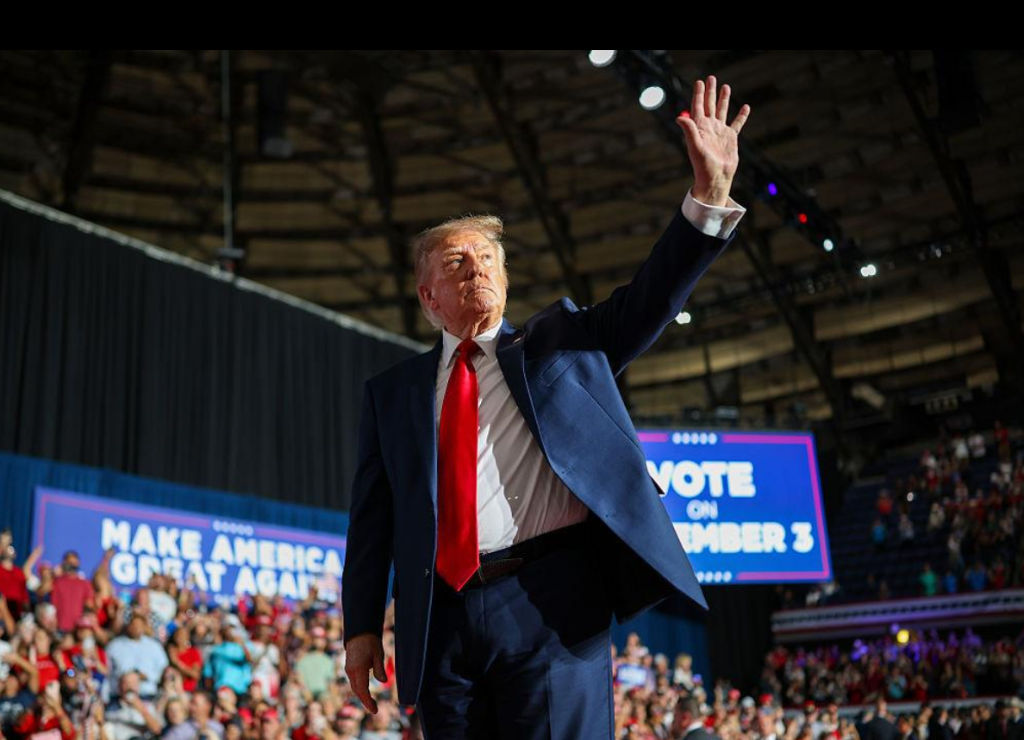
At the eleventh hour: Trump’s strike in Hormuz stirs controversy amid midterm races
The days leading up to the U.S. midterm elections have been marked by high-stakes political maneuvering—and now, military action in one of the world’s most volatile regions. Just hours before voters head to the polls, the Trump administration authorized precision strikes on Iranian targets in the Strait of Hormuz, particularly on Qeshm Island. Advocates of the move frame it as a defensive measure to curb escalating threats, but critics argue it risks inflaming tensions at a pivotal political moment.
The timing could not be more explosive. Days earlier, Trump had publicly signaled optimism about potential negotiations with Tehran, only to execute a strike that contradicts his own assurances. The contradiction has fueled sharp criticism from opponents who accuse the president of prioritizing foreign posturing over domestic priorities.
From geopolitics to gas pumps: how Middle East tensions hit home for Americans
The Strait of Hormuz is more than a flashpoint—it’s the artery of global oil trade, handling nearly one-fifth of the world’s crude supply daily. Disruptions here have immediate ripple effects: rising fuel prices at the pump, higher shipping costs, and increased inflationary pressure across the economy. Recent polling suggests that economic concerns, particularly the cost of living, now outweigh traditional foreign policy debates for many voters.
With inflation hitting a 40-year high earlier this year, energy costs have become a daily stressor for households. Now, as voters cast their ballots, the timing of the military strike raises a critical question: will the move be perceived as strong leadership or reckless distraction?
Voter sentiment shifts: war fatigue meets electoral math
Midterm elections are rarely about one issue alone—but in 2024, foreign conflicts have moved from the backburner to center stage. Data from late August showed only 31% of Americans supporting the U.S. military involvement in Iran-related conflicts, while 63% opposed it. The recent strikes could deepen skepticism among swing voters already frustrated with economic pressures and skeptical of prolonged overseas engagements.
For Republicans, the calculus is especially delicate. While some base voters applaud assertive foreign policy, others fear entanglement in another costly war. Analysts note that even within the GOP, there’s growing unease over the administration’s approach to the region, with calls for restraint growing louder.
Congress at the crossroads: what a Republican loss could mean for U.S. foreign policy
Should the Democrats gain control of the House or Senate, the political landscape for U.S. foreign policy would shift dramatically. A new congressional majority would wield powerful oversight tools: investigative hearings, budgetary leverage, and the ability to challenge administration decisions in real time. This could translate into stricter scrutiny of military actions, defense spending, and diplomatic strategy.
The administration has downplayed fears of escalation, emphasizing that the strikes were limited and proportional. Yet the broader trajectory remains unclear. Regional analysts warn that each military move heightens the risk of miscalculation, potentially drawing the U.S. into a larger conflict it cannot control.
The public debate ignites: strength vs. recklessness
The White House insists the operation was a necessary response to repeated Iranian provocations. But critics counter that it represents an attempt to change the narrative ahead of the vote—projecting strength while avoiding deeper entanglement. The move has dominated headlines, displacing economic concerns that were expected to dominate the campaign.In battleground states and tight races, the issue has become a lightning rod. Voters are now forced to weigh whether firmness in the Middle East justifies the costs—or whether it signals a dangerous departure from domestic priorities.
What comes next: escalation, standoff, or retreat?
The coming weeks will reveal whether the strike was a tactical masterstroke or a miscalculation with long-term consequences. The Iranians have vowed retaliatory action, raising fears of a cycle of escalation. Meanwhile, global oil markets have reacted with volatility, underscoring the sensitivity of the region.
For President Trump, the gamble is clear: reinforce his image as a leader who acts decisively on the world stage, or risk reinforcing perceptions of impulsiveness and distraction. With so much on the line, the midterms may only mark the beginning of a broader reckoning over America’s role in the region.