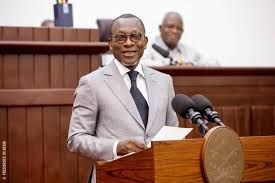
As Benin’s National Assembly prepares to scrutinize the 2027 draft finance bill, an unusual absence has sparked public debate: Patrice Talon, president of the Senate, is not scheduled to defend his chamber’s budget before the lower house’s Budget Committee.
The gap between the two houses of Parliament on this point is not a procedural oversight but a deliberate arrangement anchored in the Senate’s internal rules. In a system where autonomy and integration must coexist, the absence raises questions about transparency and the next steps for public oversight of parliamentary spending.
Behind the missing appearance: what the Senate’s rules say
The Senate’s internal budget process is governed by articles 97, 98 and 99 of its standing orders. These provisions uphold the chamber’s administrative and financial autonomy while keeping its expenditures within the broader framework of public finance regulations.
Article 97 outlines the Senate’s right to manage its own affairs internally, allowing it to draft and approve a budget tailored to its operational and institutional needs. This autonomy does not mean the chamber operates outside the law; it merely organizes how decisions are made within the Senate itself.
Article 98 details the annual budget cycle. After the government presents its budget guidelines in the National Assembly, the Senate sets its own financial targets in line with those guidelines and its president’s directives. The draft budget is then reviewed and approved by the senators themselves, following internal voting procedures.
Once endorsed by the upper house, Article 99 kicks in. Patrice Talon, as Senate president, formally transmits the adopted budget to the minister of finance, where it is merged into the government’s overall finance bill. It is at this stage that the Senate’s credits become part of the national budget tabled for parliamentary approval.
How the budget travels from the Senate to the National Assembly
Far from evading scrutiny, the Senate’s budget is subject to a two-tier review. Inside the chamber, senators deliberate on their own proposal. Externally, once appended to the government’s finance bill, it faces the same examination, debate and vote as all other public expenditures in the National Assembly.
Joseph Djogbénou, president of the National Assembly, faces the same procedural reality. He too does not appear before the Budget Committee to defend the lower house’s credits, because both chambers follow parallel internal processes before their budgets are consolidated into a single state budget.
What comes next for parliamentary budget transparency
The public reaction to Patrice Talon’s absence reflects broader concerns about the visibility of parliamentary spending. Critics argue that citizens have a right to know how their taxes fund the operations of both houses, yet the current system offers no platform for direct questioning of chamber presidents during budget hearings.
Legal experts point out that the absence is not a breach of procedure but an invitation to rethink oversight mechanisms. One proposed solution is to schedule joint appearances where both the Senate and National Assembly presidents could explain the overall parliamentary budget envelope before the Budget Committee. Such a move would align with calls for greater fiscal transparency and public accountability.
Institutional autonomy vs. public accountability
The debate underscores a delicate balance: protecting the Senate’s internal decision-making while ensuring that public funds—including those allocated to the upper house—are subject to democratic debate. As Benin moves forward with bicameral governance, the conversation about how best to reconcile autonomy and transparency is just beginning.