The eastern provinces of the Democratic Republic of Congo (DRC) are no strangers to challenges—geopolitical tensions, armed conflicts, and whispers of territorial fragmentation have long loomed over the region. But what lies beneath the surface of these recurring threats? A recent strategic gathering in Kisangani has pulled back the curtain, revealing how the Grand Orientale alliance is mobilizing to address the root causes of instability and safeguard national unity.
Unpacking the core motivations behind the Grand Orientale’s resistance
The Grand Orientale—comprising the Tshopo, Bas-Uélé, Haut-Uélé, and Ituri provinces—has become a focal point in the debate over Congo’s territorial integrity. At a high-stakes colloquium held from November 14 to 17, 2026, the Action for Renewal and Development of Congo (ARDC) party took center stage, not just to voice opposition to balkanization, but to dissect the motivations behind it.
Jean Bakomito, Governor of Tshopo and a prominent ARDC leader, framed the discourse around a simple yet powerful question: ‘How can we ensure that the voices of the eastern regions are not drowned out by external pressures or internal divisions?’ The answer, he argued, lies in collective action. Bakomito and his counterparts, including Jean-Pierre Kezamudru, emphasized that the region’s fragmentation would not only weaken the DRC’s sovereignty but also exacerbate existing grievances among local communities.
The historical context fueling today’s tensions
To understand the Grand Orientale’s resolve, one must look to the region’s complex history. Decades of conflict, resource exploitation, and weak governance have left deep scars. The Ituri conflict, for example, has displaced hundreds of thousands, while the Bas-Uélé and Haut-Uélé remain vulnerable to armed group activities. Against this backdrop, the ARDC’s call for unity is not merely political posturing—it’s a response to a long-standing crisis.
Key drivers of instability in the Grand Orientale:
- Resource competition: The region’s vast mineral wealth—gold, cobalt, and oil—has attracted both foreign interests and rebel factions, creating a volatile environment.
- Ethnic tensions: Historical rivalries and competition for land and power have periodically flared into violence.
- Weak state presence: Poor infrastructure and limited state authority in remote areas have allowed armed groups to operate with impunity.
From rhetoric to action: How the Grand Orientale is mobilizing
The colloquium in Kisangani wasn’t just about speeches—it was a call to arms, albeit figuratively. The ARDC and its allies are pushing a three-pronged strategy to counter fragmentation:
- Community cohesion: Leaders are urging residents to transcend ethnic and political divides, framing national unity as the only path to stability. ‘We are tired of war,’ Bakomito declared, underscoring the region’s exhaustion with conflict.
- Institutional synergy: The party is collaborating with provincial authorities, the Forces Armées de la République Démocratique du Congo (FARDC), and civil society to strengthen security and governance. This includes joint patrols and conflict resolution initiatives.
- Public advocacy: A push to educate the populace on the dangers of separatism and the importance of preserving Congo’s territorial integrity through workshops, media campaigns, and grassroots mobilization.
The role of President Tshisekedi’s leadership
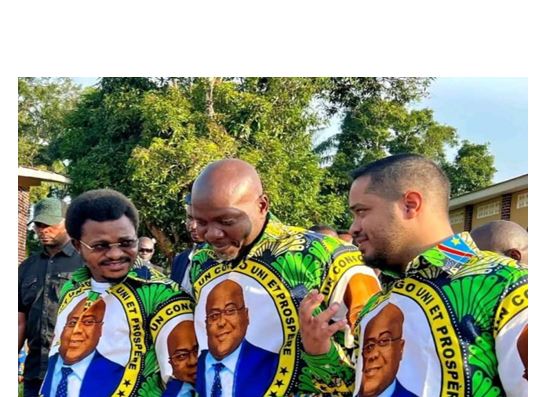
Central to the conversation was the legitimacy of President Félix Tshisekedi’s mandate. The ARDC unequivocally rejected any attempts to disrupt his term, echoing a broader sentiment in the Grand Orientale: ‘Fatshi is not alone.’ This refrain underscores the region’s support for democratic governance and its rejection of unconstitutional power grabs. Bakomito stressed that the President’s elected status grants him the moral and legal authority to lead, and the region stands ready to defend that mandate.
The message is clear: the Grand Orientale will not tolerate any actions—domestic or foreign—that threaten to derail Congo’s democratic progress or its territorial cohesion.
What’s next? The road ahead for the Grand Orientale
The colloquium’s conclusion set the stage for a renewed push toward stability. The ARDC and its partners are now focused on:
- Consolidating alliances: Building stronger ties with other political parties, regional blocs, and international partners to present a united front against fragmentation.
- Addressing root causes: Tackling issues like corruption, poor resource management, and weak security infrastructure that perpetuate instability.
- Promoting economic recovery: Leveraging the region’s agricultural and mineral potential to create jobs and reduce dependency on external aid, thereby weakening the appeal of armed groups.
The Grand Orientale’s mobilization is more than a defensive strategy—it’s a proactive step toward reshaping the region’s narrative. By confronting the underlying drivers of instability, the ARDC and its allies are laying the groundwork for a more resilient, unified Congo.