In a bold move to tighten security along its borders, Beninese customs officials have intercepted nearly half a ton of explosives smuggled from Togo. This high-stakes operation is part of a sweeping national crackdown aimed at dismantling organized crime networks and securing the country’s frontiers against rising security threats.
Precision operation in Sonahoulou intercepts dangerous cargo
The dramatic seizure unfolded along the Sonahoulou-Djougou corridor, a critical transit route where customs agents had set up a targeted inspection point in Anoum. Under the command of First-Class Inspector Parfait Laurent Mekoun, the team conducted a meticulous search of a suspicious vehicle. What appeared to be an ordinary shipment of goods concealed a far more sinister cargo.
The smugglers had meticulously hidden the explosives within stacks of everyday consumer products, but the sharp-eyed customs officers quickly uncovered the illicit load. While the driver managed to flee into the darkness and rough terrain during the operation, the evidence left behind—including the vehicle and its contents—has provided investigators with a critical lead to pursue.
A seizure of unprecedented scale
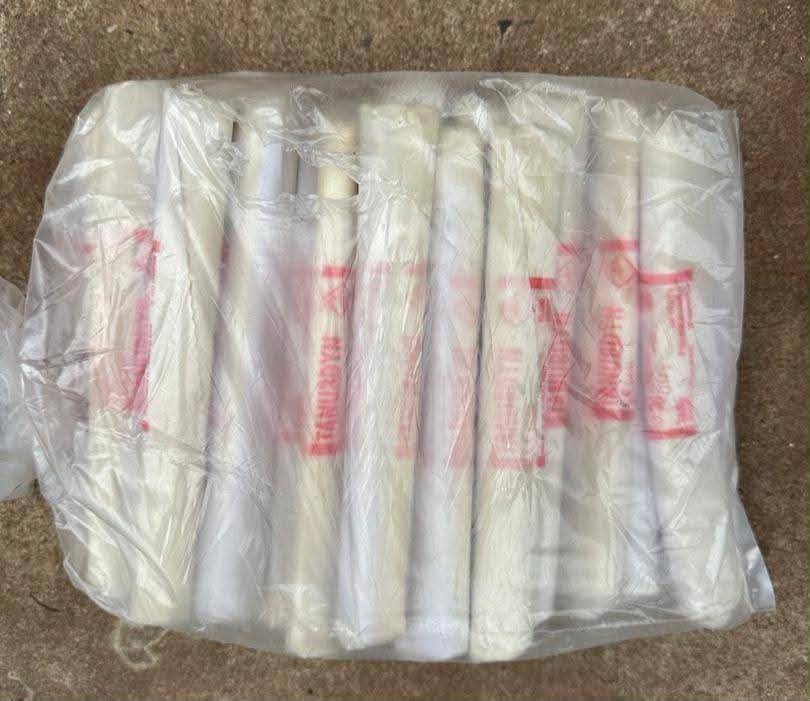
The inventory following the bust revealed staggering figures, underscoring the severity of the threat averted. Customs officials extracted 3,295 high-powered explosive sticks from the vehicle, packaged in ten bags totaling nearly 500 kilograms. Investigators traced the origin of the shipment to Kétao in neighboring Togo, with the illegal cargo en route to Malanville, a strategically vital border town in northern Benin.
The intended destination of this arsenal raises serious concerns. Malanville, situated at the crossroads of Benin, Niger, and a region plagued by security instability, serves as a critical junction for illicit activities. Authorities have launched a thorough judicial inquiry to dismantle the smuggling network, identify its masterminds, and prevent further cross-border criminal operations.
Nationwide customs offensive targets organized crime
This explosive seizure is far from an isolated incident. It reflects a broader, intensified campaign led by the Director-General of Customs, Colonel Raouf Malèhossou Aboudou, to clamp down on smuggling and organized crime across Benin. Recent weeks have seen a surge in high-impact operations targeting various illegal networks.
In the Borgou region, customs intercepted 3,000 hunting cartridges destined for the black market. In Couffo, authorities seized 1,400 kilograms of counterfeit and smuggled medications, safeguarding public health from deadly fake drugs. Meanwhile, in Hillacondji, officials confiscated 5,574 undeclared Android phones, preventing significant revenue losses and protecting the market from fraudulent imports.
These coordinated successes signal a transformative shift within Beninese customs: moving from passive revenue collection to an aggressive, intelligence-driven enforcement agency. The new strategy emphasizes comprehensive coverage of road networks and border zones, supported by modernized equipment and strategic intelligence gathered in collaboration with local communities.
Customs emerge as key players in Benin’s security framework
As security risks escalate across West Africa and the Sahel, Beninese customs have evolved into a cornerstone of the nation’s defense strategy. No longer confined to their traditional fiscal role, they now stand shoulder-to-shoulder with the Armed Forces and National Police in safeguarding territorial integrity and public safety.
The modernization of inspection infrastructure, enhanced intelligence-sharing networks, and relentless field operations—including surprise patrols on secondary roads—have strengthened the agency’s operational reach. This proactive stance is underscored by a clear directive from customs leadership: “The safety of our citizens and the protection of our borders remain non-negotiable priorities.”
By intercepting 500 kilograms of explosives before they could inflict harm, the Atacora-Donga anti-fraud unit has demonstrated the critical role of customs in Benin’s security architecture. Vigilance at every border crossing remains essential as the fight against transnational crime intensifies.