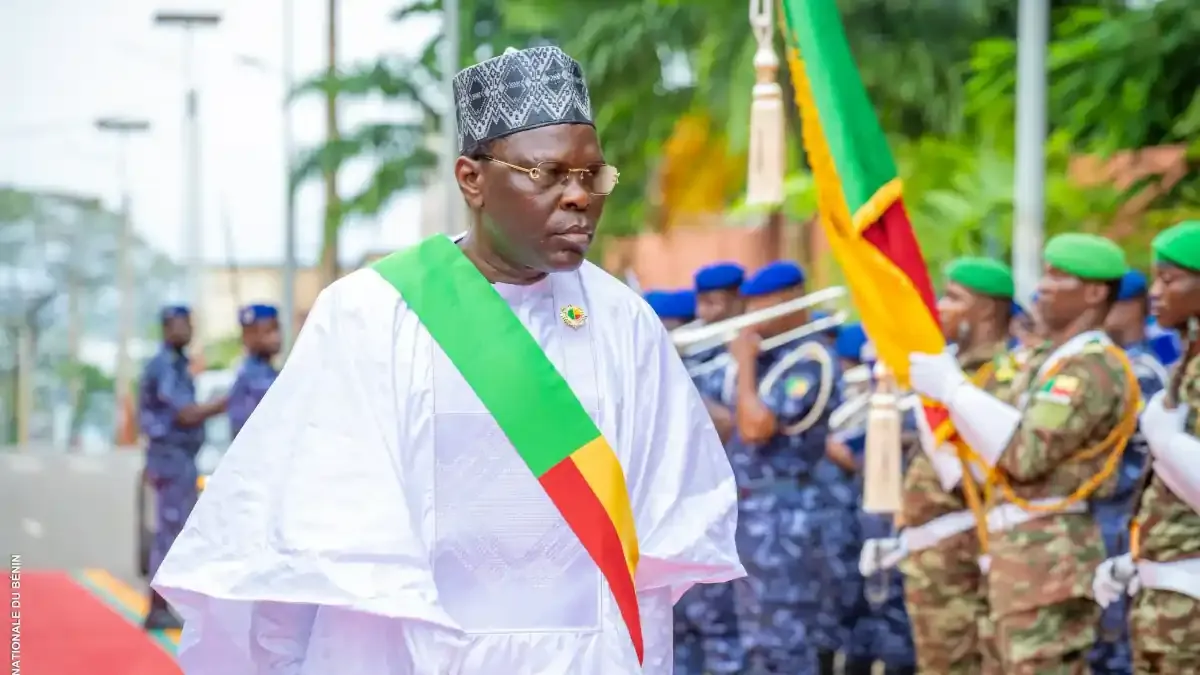
The dust is yet to settle on a high-stakes diplomatic standoff in West Africa, but Benin’s top lawmaker is already sounding the alarm—and laying down a marker for what comes next.
As regional leaders convened in Lomé under the African Parliamentary Union’s banner, Joseph Fifamè Djogbénou, President of Benin’s National Assembly, seized the moment to reignite dialogue with neighboring capitals. His message was unmistakable: the path forward hinges on breaking the cycle of hostility that has long shadowed relations with Niger and Burkina Faso.
From rhetoric to reality: A plea for shared resilience
Djogbénou’s impassioned call for reconciliation isn’t just symbolic; it’s a deliberate push to shift the narrative from division to collaboration. Speaking against the backdrop of stalled border negotiations and lingering distrust, he framed the moment not as a diplomatic gamble, but as an act of necessity.
« The fractures we see today are not chasms—only shadows that lengthen when we turn our backs on one another. Together, we can shorten their reach. »
The timing carries weight. Burkina Faso’s recent ascent to the African Parliamentary Union’s leadership role offers a rare diplomatic opening, one Djogbénou is determined to leverage. His words carry the weight of institutional continuity: Benin’s commitment to dialogue hasn’t wavered through leadership transitions, reinforcing the message that regional peace isn’t contingent on who holds power in Cotonou.
Why isolation is not an option for West Africa
The Sahel’s challenges transcend borders. Armed groups, climate pressures, and human displacement don’t recognize territorial lines—and neither should policymakers. Djogbénou underscored this interdependence with a stark observation:
- « When Europe turns its back on African migrants, it doesn’t single out Beninese or Nigerien nationals. It turns away Africans—each one tied to a shared destiny. »
His stance rejects the logic of disengagement: closing doors only deepens collective vulnerabilities. Instead, he champions parliamentary diplomacy as a bridge-building tool, urging lawmakers from Benin, Niger, and Burkina Faso to pool resources and strategies in service of stability.
Legislative clout: The quiet force reshaping regional relations
The push for dialogue isn’t confined to executive meetings or executive corridors. Parliamentarians, Djogbénou argues, wield unique influence in shaping public mood and policy direction. By aligning legislative agendas, these leaders can dismantle the barriers isolating states and foster a climate where cooperation outpaces confrontation.
The underlying principle is clear: regional resilience begins with dialogue. And in a climate where skepticism often trumps solidarity, Djogbénou’s stance serves as both a challenge and an invitation—to move from confrontation to conciliation, and from division to shared progress.
Key takeaways for what’s next
• The rift between Benin and its northern neighbors isn’t just political—it’s a regional risk multiplier.
• Parliamentary diplomacy is emerging as a critical lever for restoring trust and coordination.
• The continuity of Benin’s outreach reflects a deeper conviction: that West Africa’s future depends on unity, not isolation.