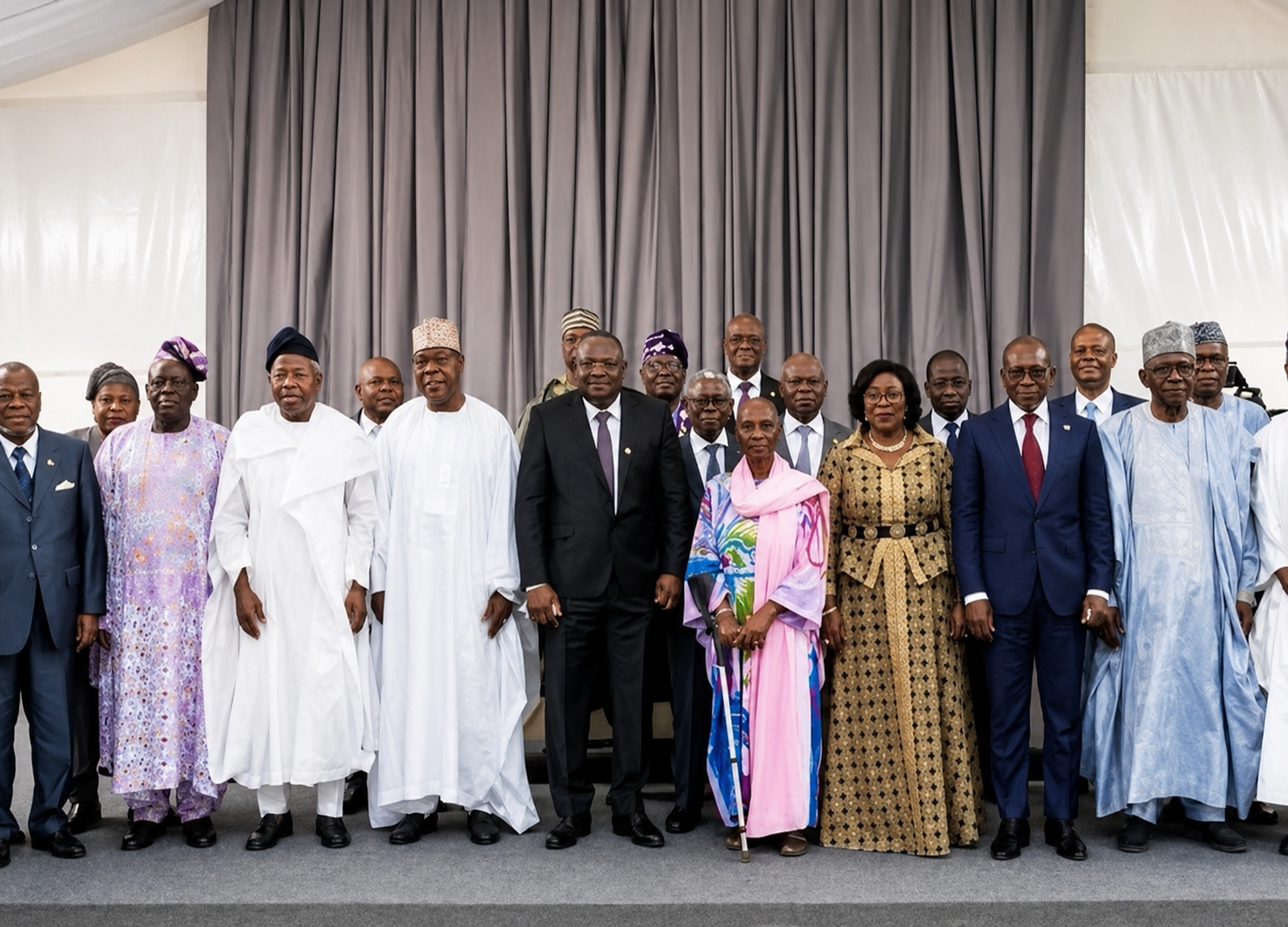
The Bénin Senate’s Inauguration and the Rise of Patrice Talon
On July 30, 2026, Bénin marked a historic moment with the official establishment of its first Senate, a bicameral legislative body born from the constitutional reforms of December 17, 2025. Just over a week later, on August 6, the former President Patrice Talon was elected as its president, adding a layer of complexity to the country’s evolving political landscape.
This new chamber, introduced to balance the nation’s institutional framework, has already sparked intense debate. Critics have framed the Senate as a potential “shadow government,” suggesting it could serve as a conduit for Talon to maintain influence beyond his presidential tenure. However, such claims warrant a closer examination of the constitutional framework that defines the Senate’s role.
A Constitutionally Mandated Institution, Not a Personal Project
The Senate of Bénin is not an ad hoc creation but a direct result of constitutional amendments ratified in 2025. The revised Constitution explicitly establishes a bicameral Parliament, comprising the National Assembly and the Senate, with clearly outlined compositions, responsibilities, and operational guidelines.
This distinction is critical: while the Senate’s establishment may be scrutinized, its existence is not contingent on any individual’s ambitions. It is a permanent feature of Bénin’s institutional architecture, designed to function independently of personal agendas.
Patrice Talon’s Role: Influence Without Executive Power
The election of Patrice Talon as Senate president has fueled speculation about his continued political influence. As a former head of state, his leadership of the chamber naturally raises questions about the Senate’s potential role in shaping Bénin’s future.
Yet, it is essential to separate constitutional duties from political influence. Talon’s presidency of the Senate does not equate to a revival of his executive authority. The transition of power to President Romuald Wadagni, inaugurated on May 24, 2026, cemented the separation of roles. Talon, no longer president, holds no executive powers, nor does he command the government or state administration.
The Constitution remains clear: executive authority rests with the president, while the Senate operates within the legislative branch. Article 79 of the Constitution explicitly defines the Parliament as the institution responsible for legislative functions and oversight of government actions.
The Senate’s Powers: Regulation Without Governance
Critics often conflate the Senate’s regulatory functions with governance, but these are distinct roles. The Senate’s constitutional mandate includes preserving national unity, democracy, and political stability, as well as ensuring adherence to political truce and ethical standards in governance.
While these responsibilities are significant, they do not transform the Senate into a parallel government. Regulation is not governance; oversight is not execution. The Senate’s primary function lies in legislative review and institutional checks, not in administering the state.
Legislative Authority with Clear Boundaries
The Senate wields substantial legislative powers, though they are tightly circumscribed. For instance, constitutional laws, electoral statutes, and regulations governing political parties require the Senate’s non-objection before promulgation. To veto a bill, the Senate must secure a two-thirds majority, and silence within a set period is interpreted as tacit approval.
Additionally, the Senate can request a second deliberation on laws passed by the National Assembly, with exceptions for budgetary and finance-related bills. This mechanism underscores the chamber’s role in refining legislation but does not grant it executive authority.
A Chamber of Experience: The Senate’s Unique Composition
One of the Senate’s defining features is its composition. The Constitution mandates the inclusion of former high-ranking officials, including those from defense and security sectors, alongside appointed members with extensive institutional experience. This structure aims to create a body that leverages wisdom and expertise to mitigate political tensions and foster consensus.
In a democracy, governance is not solely about majoritarian decisions; it also requires dialogue, mediation, and conflict prevention. The Senate’s design reflects this philosophy, positioning it as a potential hub for institutional stability and compromise.
Political Influence vs. Constitutional Mandate
Critics argue that Patrice Talon’s presidency of the Senate could allow him to wield undue influence. While it is reasonable to acknowledge that former presidents retain political capital, this does not equate to a constitutional power grab.
The pertinent question is whether this influence can legally supersede the authority of the sitting president. The answer, grounded in the Constitution, is a definitive no. The Senate’s powers are delineated, and its members including Talon are bound by strict rules of political neutrality. The Constitution prohibits senators from acting as political partisans, emphasizing their role as institutional custodians rather than partisan actors.
The Continuity Question: Democracy in Transition
The transition from Patrice Talon to Romuald Wadagni as president, marked by Wadagni’s landslide victory in the April 2026 election with over 94% of the vote, has been interpreted as a continuation of the previous administration’s policies. While this continuity can be debated politically, it does not constitute an institutional power seizure.
A democracy can experience political succession without abrupt policy shifts. The true test lies in whether institutions function within their mandates, responsibilities are clearly delineated, and oversight mechanisms remain effective.
The Real Test: Evaluating the Senate’s Functionality
As a nascent institution, the Senate’s efficacy will be determined by its daily operations. Will it strike a balance between exercising its powers and avoiding redundancy? Can it foster constructive dialogue with the National Assembly and government? How will it utilize its legislative review mechanisms, and will it uphold its constitutional obligations of political reserve?
The answers to these questions will reveal whether the Senate fulfills its intended role as a stabilizing force in Bénin’s governance. Its success hinges not on the personality of its president but on its adherence to constitutional principles and its ability to contribute to legislative excellence and national cohesion.
Clarifying Roles: A Definitive Framework
The Senate’s existence should not be clouded by misplaced fears. The president remains the head of the executive branch, the government administers state affairs, and the Parliament comprising both chambers legislates and oversees. The Constitutional Court ensures adherence to constitutional principles and resolves institutional disputes.
In this structure, Patrice Talon’s leadership of the Senate does not grant him executive powers. His political experience may shape debates, but it does not redefine the constitutional order. The Senate’s value will ultimately be measured by its contributions to stability, legislative rigor, and democratic resilience not by speculative narratives.
For Bénin, the path forward demands a focus on facts over fiction. The Senate is a constitutional reality, and its performance will determine its legacy. The era of speculation must give way to one of evaluation, where the institution’s actions, decisions, and respect for its limits will define its true purpose.