A few weeks ago, the arrival of a French naval vessel in Beninese waters sparked a flurry of commentary and misinformation across certain media outlets aligned with the Alliance of Sahel States (AES). Critics quickly framed the stopover as suspicious, weaving narratives around alleged threats to Benin’s sovereignty and amplifying speculation about France’s intentions.
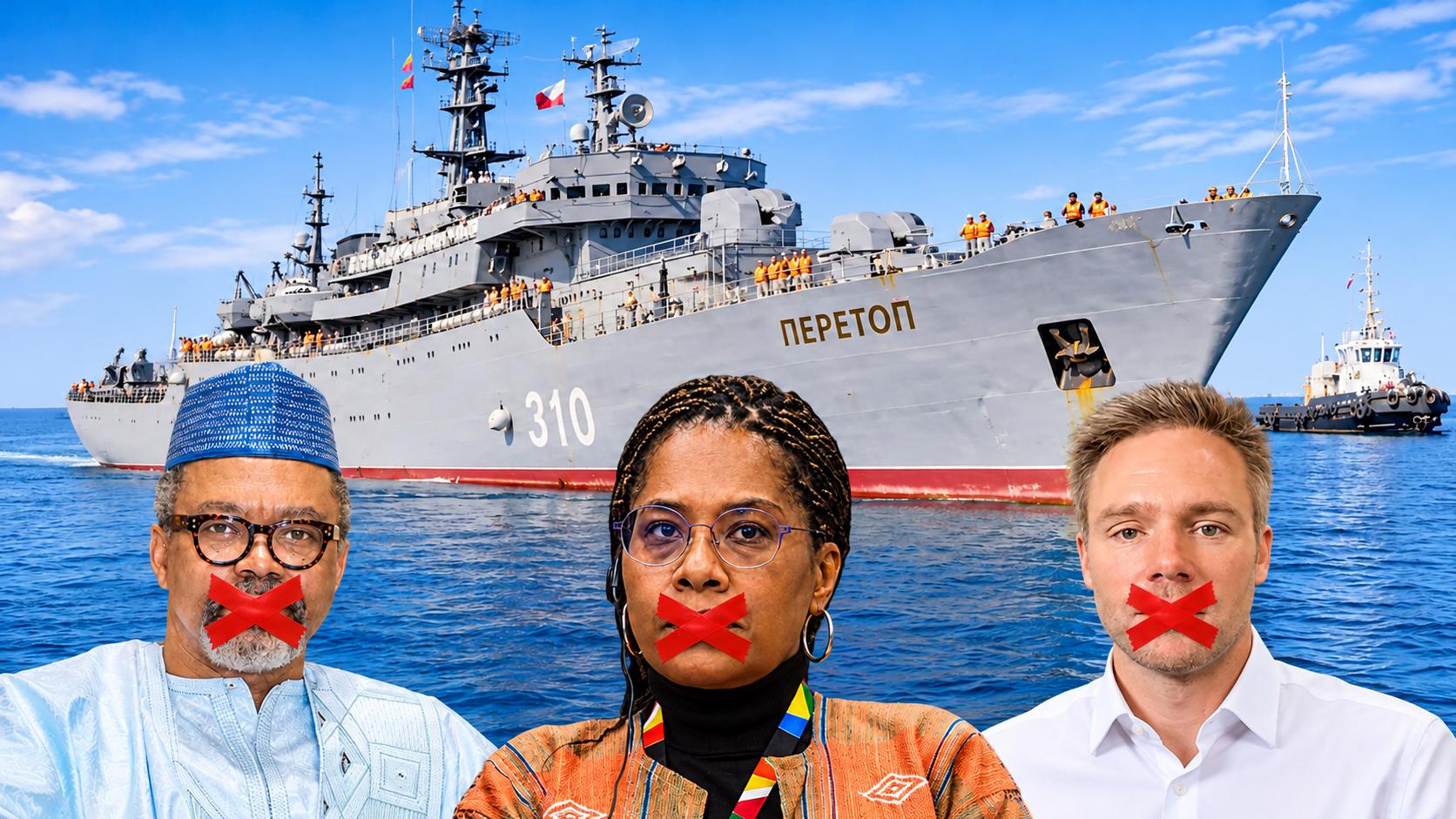
Yet today, another foreign ship docks in Cotonou this time flying the Russian flag and the stark contrast in responses demands scrutiny. Where are the condemnations? Where are the urgent calls for transparency? The absence of alarmist headlines and outraged statements raises an unmistakable question: why does the narrative shift when the vessel’s origin changes?
From French controversies to Russian quiet
During the earlier episode, prominent voices such as Nathalie Yamb, Antoine 2Moscou, and Franklin Nyamsi known for their pro-Russian leanings and frequent criticism of France’s African policies led the charge in questioning the French ship’s presence. Their commentary, echoed by several media platforms, cast doubt on Benin’s sovereignty and painted the country in a negative light.
Now, with a Russian vessel in port, the silence is deafening. No comparable campaign has emerged to scrutinize the motives behind the Russian ship’s visit. No demand for explanations about its mission or impact on national independence. The same rigor that was so vehemently applied to the French ship appears to vanish when the flag changes.
The unspoken double standard
This discrepancy exposes a troubling pattern in regional discourse. Sovereignty, a principle that should transcend geopolitical alliances, seems to be treated as a selective priority. The Beninese government, like any sovereign state, must evaluate partnerships based on its national interests. Yet the media’s response suggests that scrutiny is not equally applied especially when aligned with certain political narratives.
Critics who once warned of foreign interference during the French ship’s arrival now remain conspicuously silent. The absence of calls for transparency or even basic fact-checking points to a deeper issue: a media environment where who stands to benefit from a partnership can dictate the tone of coverage.
Sovereignty without conditions
The Beninese authorities have repeatedly emphasized that their diplomatic choices are guided by national priorities, not external pressures. Cooperation with France, as with Russia, should be assessed on its merits: compliance with international law, mutual benefit, and respect for sovereignty.
If foreign vessels routinely dock in Cotonou without raising questions, those visits should be treated uniformly regardless of the country of origin. A ship’s flag does not alter the rules of engagement. Neither should it alter the standards of journalistic scrutiny.
What’s next for Benin’s foreign policy narrative?
The double standard in media reactions reflects broader tensions in regional politics. As Benin continues to navigate partnerships with global powers, the expectations for balanced reporting remain unchanged. Citizens deserve clear, objective information not narratives that shift with the winds of geopolitical convenience.
The question now is whether this pattern will persist. Will future foreign visits invite the same level of scrutiny, irrespective of the vessel’s origin? Or will the silence continue to favor one side over another? One thing is certain: a sovereign nation’s choices should not be held to a different yardstick based on which flag is raised.
By Ousmane Tandja — Journalist