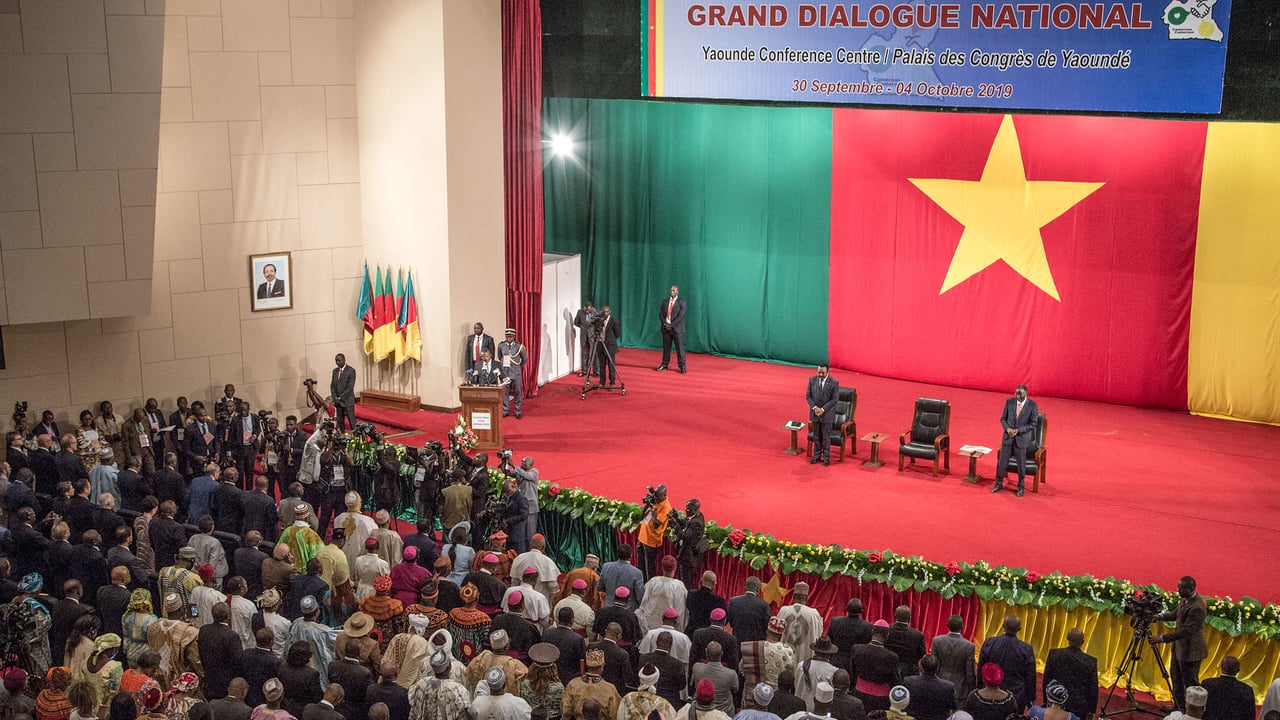

The question of whether Cameroon can revert to a federal structure has resurfaced amid ongoing debates about governance and regional tensions. A national dialogue, spearheaded by Prime Minister Joseph Dion Ngute in Yaoundé, sought to address the deep-rooted conflict affecting the country’s Anglophone regions. However, the initiative’s potential progress was stifled by the conspicuous absence of influential separatist leaders, casting doubt over its immediate impact.
Why federalism is back on the agenda in Cameroon
Federalism has long been a contentious issue in Cameroon, with proponents arguing that it could address historical grievances and decentralize power. The current push for federalism gained momentum following the escalation of the Anglophone crisis, which began in 2016 as protests against perceived marginalization of the country’s English-speaking minority. The conflict has since escalated into a violent separatist movement, with armed groups demanding independence for the North West and South West regions.
In response, the government launched a national dialogue in September 2019, inviting stakeholders from across the political spectrum to propose solutions. The initiative was hailed as a step toward reconciliation, but its effectiveness was immediately questioned due to the withdrawal of key rebel figures. Their absence highlighted the deep divisions within the country and underscored the challenges of achieving meaningful reform through negotiation alone.
The obstacles to federalism in Cameroon
Despite growing calls for federalism, several formidable barriers stand in the way of its implementation. One of the most significant challenges is the lack of consensus among political leaders, civil society, and separatist factions. While some groups advocate for a return to a federal system, others remain skeptical, fearing that it could further destabilize the country or lead to an outright breakup.
Another critical hurdle is the entrenched centralization of power in Cameroon. The current political system, shaped by decades of centralized rule under former President Ahmadou Ahidjo and his successor Paul Biya, has left little room for regional autonomy. Reversing this trend would require not only constitutional amendments but also a fundamental shift in how power is distributed and exercised across the country.
The ongoing security crisis in the Anglophone regions further complicates the federalism debate. Separatist groups, emboldened by their military campaigns, have shown little interest in negotiated solutions, while the government’s heavy-handed response has fueled further resentment. In this climate, any move toward federalism risks being perceived as either a concession to separatists or an attempt to quell dissent without addressing its root causes.
What federalism could look like in Cameroon
If Cameroon were to adopt a federal system, it would likely involve significant changes to its constitutional framework. A federal model could grant greater autonomy to the country’s Anglophone regions, allowing them to manage their own affairs in areas such as education, justice, and local governance. This approach has been proposed in various forms, from a loose confederation to a more structured federation with clearly defined powers for each region.
Proponents of federalism argue that it could help restore trust between the government and marginalized communities, particularly in the North West and South West. By devolving power to the regions, the central government could reduce tensions and create a more inclusive political environment. However, critics warn that federalism could also exacerbate ethnic and regional divisions, particularly if not implemented carefully.
Will Cameroon embrace federalism?
The future of federalism in Cameroon remains uncertain. While the national dialogue raised hopes for a peaceful resolution to the Anglophone crisis, the withdrawal of key separatist figures dealt a significant blow to its credibility. Without their participation, the dialogue’s ability to produce tangible outcomes was severely limited, leaving the question of federalism unresolved.
The government’s willingness to consider federalism will be tested in the coming months, as political leaders weigh the risks and benefits of such a transformation. For now, the debate continues, with advocates and skeptics alike grappling with the implications of a federal system for Cameroon’s unity and stability. One thing is clear: the path to federalism, if it exists at all, will be long and fraught with challenges.