The turning point: how military operations reshaped the conflict
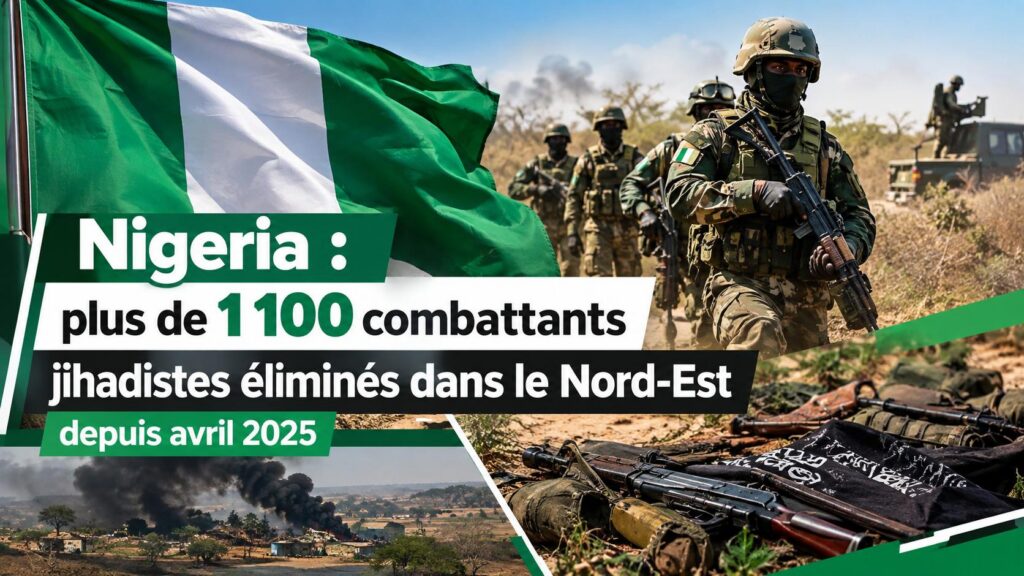
The Nigerian military’s sustained campaign in the Lake Chad region has delivered a major blow to Boko Haram and ISWAP, raising a critical question: Can Africa’s most populous nation finally end the jihadist insurgency that has plagued its northeast for over 15 years? In a recent briefing from Maiduguri, the outgoing commander of Operation HADIN KAI, Major General Abdulsalam Abubakar, unveiled staggering statistics that underscore the intensity and scale of the recent offensive.
Record losses for insurgents: over 1,100 fighters neutralized
Since April 2025, coordinated ground and aerial assaults targeting key strongholds in the Sambisa Forest, Mandara Mountains, and Lake Chad periphery have left militants reeling. The military’s latest tally reveals a devastating blow to opposing factions:
- 1,106 jihadists eliminated — including both Boko Haram loyalists and ISWAP factions
- 475 firearms recovered — ranging from assault rifles to heavy weaponry
- 295 improvised explosive devices (IEDs) defused — removing a persistent threat to both military and civilian movement
These figures point to a deliberate strategy aimed not only at defeating armed groups but also dismantling their logistical networks and operational bases.
Disrupting the supply chain: arrests and logistical collapse
The campaign went beyond direct combat. Military intelligence operations targeted the lifelines sustaining the insurgency. 758 suspected logistical operatives and collaborators were detained, including financiers, suppliers, and communication facilitators. By severing these critical links, the Nigerian Armed Forces have exposed the organizational fragility of both Boko Haram and ISWAP.
Surrender wave gains momentum: 969 militants lay down arms
In response to sustained pressure, a growing number of combatants are abandoning the fight. Over 969 individuals—a mix of fighters and their families—have voluntarily surrendered or deserted militant-controlled zones. Many have been enrolled in government-run Disarmament, Demobilisation, and Reintegration (DDR) programs, offering them a pathway out of extremism and toward community reintegration.
Humanitarian breakthrough: 638 civilians rescued from captivity
Amid the military advances, a significant humanitarian success has emerged. 638 civilians, including women and children, held captive by jihadists have been liberated. These individuals were rescued during raids on militant training camps and fortified hideouts. Each survivor undergoes medical and psychological screening before being handed over to civil authorities and humanitarian agencies for reintegration support.
A fragile peace: what lies ahead for northeast Nigeria?
Despite these gains, the path to lasting peace remains uncertain. The insurgency, which began in 2009, has claimed over 40,000 lives and displaced more than two million people across the Lake Chad basin. While the military surge has weakened jihadist structures, ISWAP continues to launch ambushes and plant IEDs, maintaining asymmetric pressure.
The leadership transition within Operation HADIN KAI presents a pivotal moment. The new command must now consolidate gains, secure liberated zones, and create conditions for the safe return of displaced populations—ensuring that the military’s tactical victories translate into sustainable regional stability.
A call for hope amid enduring challenges
The numbers tell a story of progress, but the human cost remains heavy. As Nigeria stands at this crossroads, the question lingers: Can the gains made in 2025 be the beginning of the end for jihadist rule in the northeast? Only time—and continued strategic commitment—will reveal whether this operation has truly shifted the tide of a conflict that has defined an entire generation.