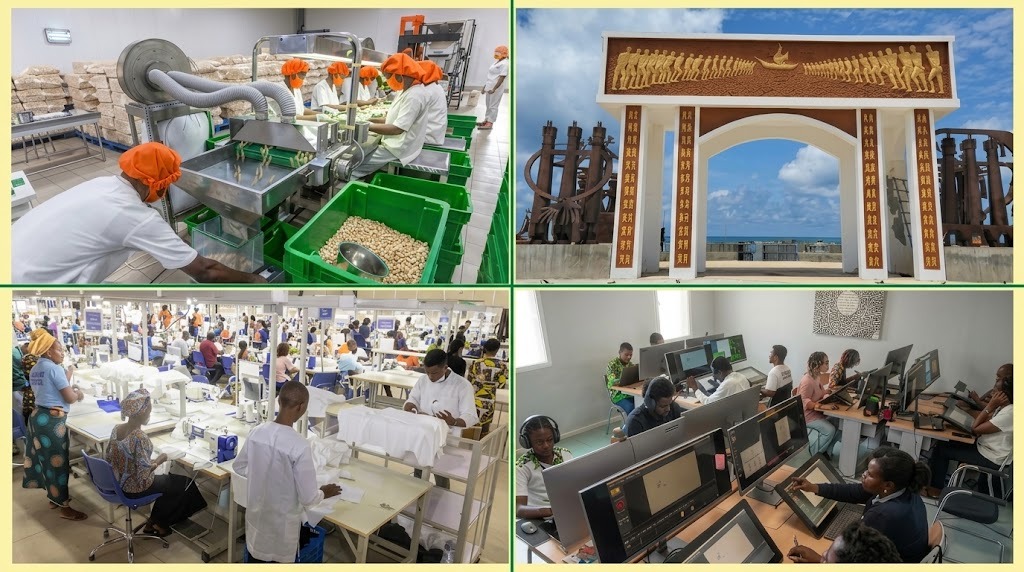
At a decisive crossroads, Niger’s transitional government has taken a major step that could reshape its economic trajectory. On Thursday, October 8, 2026, the International Monetary Fund (IMF) announced a staff-level agreement following a mission led in Niamey from September 28 to October 8 by Julia Bersch. This breakthrough marks a turning point: it seals the return of Washington’s teams to the heart of the state’s economic policy, even as leaders continue to champion national sovereignty and the rejection of external oversight. A new 38-month program under Washington’s watch Far…
Read MoreCategory: A la Une
Benin’s healthcare overhaul kicks into high gear as 14 construction sites break ground
The Beninese government has entered a decisive new phase in its drive to overhaul public healthcare and narrow the gap in medical access. Meeting in Council of Ministers on Wednesday, 7 October 2026, the executive approved contractual agreements with the selected firms, clearing the way for work to begin on fourteen health centers nationwide, alongside a full renovation of the maternity ward at the Ouidah zone hospital. A stronger care network for underserved areas This large-scale push is designed first and foremost to bring health facilities closer to people in…
Read MoreBenin’s 2027 budget: a decisive leap to 4,757 billion FCFA
Benin has reached a decisive turning point in its 2027 budget planning. The government has now sent its finance bill to the National Assembly for review and approval, setting total resources and spending at 4,757.029 billion FCFA — a 14.7% jump from the 4,148.357 billion FCFA in the 2026 revised finance law. That is an increase of 608.672 billion FCFA. This move signals a major shift: the government is betting on 7.5% economic growth, capping the deficit at 2.8% of GDP, and pouring more money into sectors seen as engines…
Read MoreCameroon’s Far North: a decisive shift as Boko Haram strikes back
By Ousmane Tandja — Journalist
Read MoreNiger’s turning point: detention of Moussa Kaka exposes the Tiani junta’s cracks
A pivotal admission amid ongoing uncertainty The fate of Nigerien journalist Moussa Kaka has reached a decisive moment. After more than a month of silence following his departure from the premises of Radio Télévision Saraounia in Niamey, the authorities have finally acknowledged that he is “alive” and “held by the authorities.” This confirmation, delivered on 6 October by Niger’s Minister of Justice, marks a significant shift in a case that had been shrouded in mystery. While this admission represents a breakthrough, it leaves critical questions unanswered. The government has not…
Read MoreBenin’s economic breakthrough: World Bank projects 7.7% growth by 2027
Benin is setting itself apart as a standout economic performer in West Africa, with the World Bank forecasting a robust growth trajectory through 2027. The country is on track to close the 2025-2027 period with a solid expansion, defying global economic uncertainties and reinforcing its role as a regional growth engine. A decisive growth path: 7.7% projected for 2027 Following estimated growth rates of 8.1% in 2025 and 7.8% in 2026, the international financial institution expects Benin’s gross domestic product (GDP) to grow by 7.7% in 2027. This forecast underscores…
Read MoreGabon’s poultry import ban: a decisive break from dependency
With less than three months remaining before Gabon’s ban on imports of table chicken is scheduled to take effect on January 1, 2027, Libreville and Washington are now locked in a high-stakes confrontation at the World Trade Organization. This is no ordinary trade spat. It marks a turning point in Gabon’s economic trajectory — a moment when the country is choosing to break decisively with decades of food import dependency, even if it means testing the limits of global trade rules. The real question is no longer whether Gabon wants…
Read MoreNiger’s water utility under scrutiny: contamination findings spark public debate
The provisional findings of Niger’s Court of Accounts on the management of the state water utility, la Nigérienne des Eaux (NDE), have ignited a fierce public debate. Between alarming bacteriological contamination, shortages of treatment products, suspicions of corruption in the awarding of public contracts, and management privileges, the report lays bare the fragility of a company responsible for supplying drinking water to millions. As the country grapples with the fallout, questions are mounting over the future of water safety and the urgent need for reform. A bacteriological alert that raises…
Read More