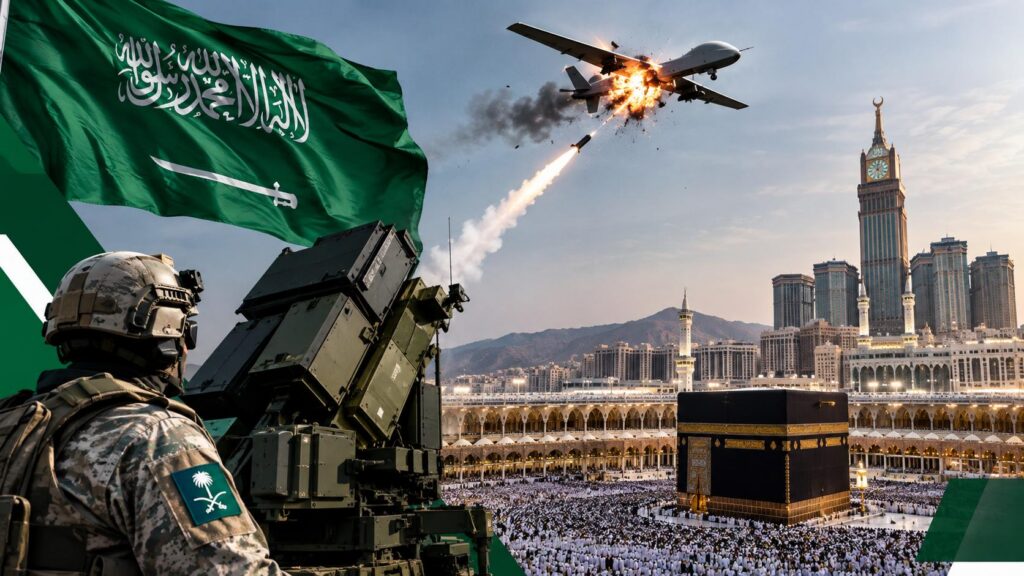
Saudi Arabia’s air defenses intercepted an armed Houthi drone targeting the Mecca region on September 15, according to the Riyadh-led military coalition. The unmanned aircraft was shot down south of the holy city before it could enter the strictly protected airspace surrounding Islam’s most sacred site. While no casualties or damage were reported, the attempted strike has reignited concerns over regional stability and the vulnerability of religious infrastructure to asymmetric threats.
Why mecca’s airspace is a red line
The Royal Saudi Air Defense Forces neutralized the drone just outside Mecca’s southern perimeter—a zone that hosts millions of pilgrims annually and houses the Grand Mosque. Successfully defending this area isn’t just a tactical win; it’s a symbolic necessity for the Kingdom. Any breach near such a spiritually significant location carries profound political and religious weight, especially when civilians and worshippers are at potential risk.
Riyadh condemns deliberate threat to worshippers
Coalition spokesperson General Turki Al-Maliki swiftly denounced the attack, directly accusing Yemen’s Houthi rebels and their allies of intentionally endangering lives and destabilizing the Kingdom. He emphasized that targeting Mecca represents a dangerous escalation—an explicit violation of norms protecting holy sites. In response, Saudi authorities reaffirmed their commitment to deploying all available measures to safeguard civilians, national territory, and sacred Islamic landmarks.
A pattern of escalation in a protracted conflict
This incident fits into a broader pattern of Houthi drone and missile strikes against Saudi infrastructure, including oil facilities, airports, and border zones. Yet attacks aimed toward Mecca consistently provoke stronger diplomatic and military reactions due to the city’s unique status. Despite intermittent UN-brokered truces and mediation efforts, the Houthis have maintained offensive capabilities, underscoring the persistent instability along Saudi Arabia’s southern frontier.
What’s next for arabian peninsula security?
The successful interception demonstrates the effectiveness of Saudi air defense systems—but also highlights ongoing vulnerabilities. Asymmetric warfare continues to challenge traditional security frameworks, particularly around high-value religious and economic assets. With international observers closely monitoring developments, this event serves as a stark reminder that without a durable political resolution to the Yemen conflict, the threat of sudden escalation remains ever-present, jeopardizing both regional peace and global energy interests.