Facing mounting pressure to stabilize regional trade amid growing insecurity and infrastructure gaps, Benin is betting big on its role as West Africa’s logistics linchpin. With the Autonomous Port of Cotonou as its anchor and backed by a €30 million investment from the European Union and Belgian cooperation agency Enabel, the country is overhauling its road and customs systems to serve as Niger’s lifeline—and potentially reshape cross-border commerce across the region.
Why Benin holds the key to landlocked Niger’s survival
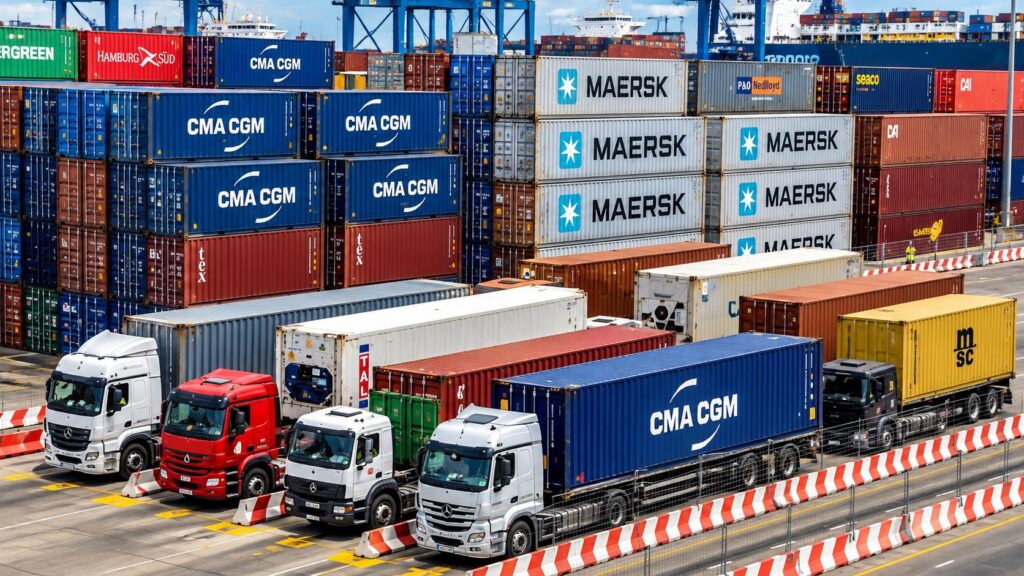
Benin’s coastal position makes it more than just a neighbor—it’s Niger’s primary gateway to global markets. As an inland nation with no direct sea access, Niger relies almost entirely on Benin’s port for imports ranging from fuel to food. Meanwhile, Nigeria’s booming economy continues to strain its own logistics capacity, creating overflow demand that Benin is strategically positioned to absorb. Recognizing this dual opportunity, Cotonou is accelerating infrastructure upgrades to cement its status as West Africa’s indispensable trade corridor.
The cotoni project: reengineering a 729-km economic artery
Launched in May and set to run for four years, the Cotoni Project (Support Project for the Development of the Cotonou-Niamey Corridor) is the centerpiece of Benin’s transformation plan. Spanning 729 kilometers from the Port of Cotonou to Niamey—the economic heart of Niger—the initiative aims to modernize, secure, and streamline freight movement along this critical route.
The project operates on four integrated pillars:
- Enhanced governance: Ensuring long-term sustainability through dedicated road maintenance funding.
- Corridor security: Protecting transporters while eliminating arbitrary checkpoints and bottlenecks.
- Trade facilitation: Linking logistics networks to strengthen local value chains, especially in agriculture.
- Customs efficiency: Upgrading the joint border post to enable seamless, coordinated clearance procedures.
Beyond borders: building a transnational logistics ecosystem
This corridor doesn’t end at Niger’s frontier. It extends toward Nigeria, creating a trilateral trade spine designed to move goods faster, safer, and more predictably. The Cotoni Project aligns with broader regional shifts—complementing Benin’s fleet modernization efforts and dovetailing with the upcoming Abidjan-Lagos Highway, expected to partially open by 2030. Crucially, customs reforms aim to resolve chronic delays that have long hampered inter-state commerce, restoring the fluidity essential for economic integration.
Showcasing progress at transport logistique Cotonou
The momentum will be on full display from November 12–14 at the Transport Logistique Cotonou (TLC) exhibition, held at the Palais des Congrès in partnership with the Autonomous Port of Cotonou and ACAM. Over 2,000 regional stakeholders are expected to gather for high-level discussions on African freight challenges. The event also features public “open house” tours, offering rare behind-the-scenes access to port operations—from cargo terminals to maritime entry points—highlighting Benin’s commitment to transparency and leadership in West African logistics.