Mali’s turning point: aerial strikes devastate vital water resources near Kidal
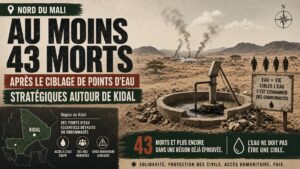
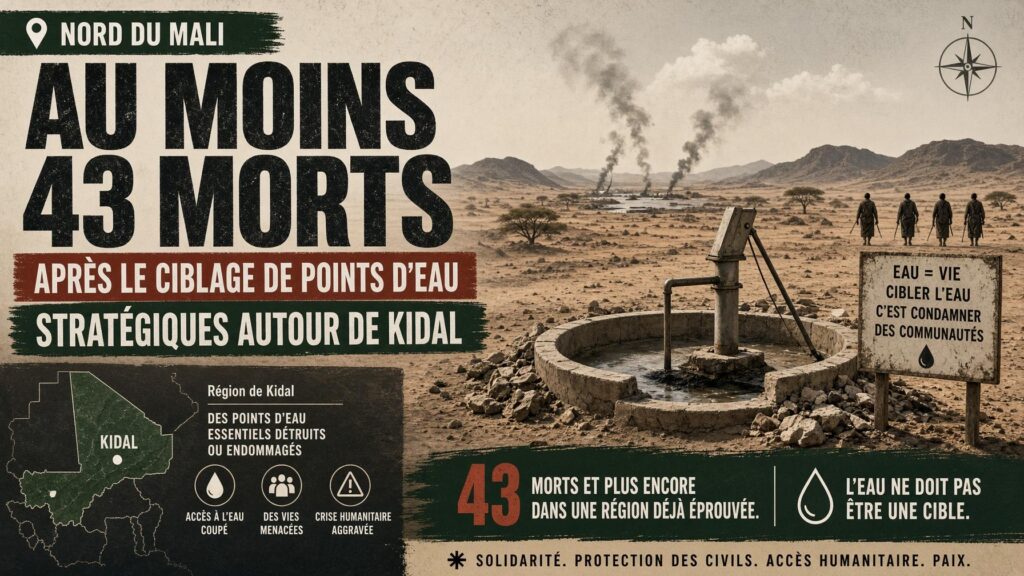
In a decisive military escalation that has sent shockwaves across the Sahel, forces aligned with the Malian government launched targeted strikes on water infrastructure in the Kidal region between September 15-16, 2026. The deliberate destruction of these lifelines has not only claimed at least 43 civilian lives but has also triggered a humanitarian crisis that threatens to dismantle the region’s pastoral economy entirely.
In the arid expanses north of Kidal, water is life itself. The first strike hit Amassine on September 15, when a Su-24 bomber demolished the community’s sole water well—their sole source of water for both people and livestock. Less than 24 hours later, military operations near Tassik intensified, with government forces supported by allied units targeting additional water points. The result? A devastating toll: 43 confirmed deaths, countless injuries, and scores of families left stranded in the desert.
Strategic water strikes: a calculated blow to rural survival
The attacks on Amassine and Tassik were no isolated incidents. They are part of a broader military strategy observed in recent months: the systematic targeting of water sources to cut off nomadic communities from their most basic survival needs. By destroying wells, Mali’s forces are not just disabling infrastructure—they are aiming to erase the very foundation of life in an already fragile ecosystem.
Evidence of this tactic extends beyond the desert outskirts. Within Kidal city, power and water networks have been repeatedly damaged during security operations, and places of worship such as mosques have not been spared. The message is clear: no civilian resource is off-limits in this new phase of conflict.
The pillars of pastoral survival collapsing
For generations, the herding communities of northern Mali have depended on seasonal migration to find water and pasture for their livestock. With wells destroyed and rainfall unpredictable, their way of life is unraveling. The immediate consequences are catastrophic:
Economic collapse: Livestock, the primary asset of pastoral families, are dying rapidly from dehydration. Markets that once thrived on the sale of cattle, goats, and camels are grinding to a halt.
Humanitarian emergency: Thousands now face severe water scarcity, heightening the risk of disease and displacement. Families are abandoning their ancestral lands, seeking refuge in overcrowded towns where aid is scarce.
Cultural dissolution: The loss of water sources erodes not just livelihoods but cultural identity. Without access to grazing lands, nomads lose their traditions and their history tied to the land.
Urgent question: what does international law say?
The deliberate targeting of water infrastructure raises serious concerns under international humanitarian law. Civilian water systems—essential for survival—are protected under the Geneva Conventions. Yet, with military operations restricting access to aid organizations, the civilian population is trapped in a growing humanitarian black hole.
As tensions persist, the risk of mass displacement and famine among pastoral communities grows daily. Aid workers warn that without immediate intervention, the region faces a humanitarian catastrophe of unprecedented scale.
What lies ahead for northern Mali?
The Kidal water crisis is no longer a regional issue—it’s a turning point with implications far beyond Mali’s borders. As pastoral families face displacement and loss, the Sahel’s stability is increasingly at risk. The destruction of these water sources is not just an environmental disaster; it is an attack on the very fabric of life in the Sahara.
With no end to the military operations in sight, the fate of thousands hangs in the balance. Will the world act before northern Mali’s pastoral communities vanish forever?