The unfolding debate over Félix Tshisekedi’s national dialogue initiative
Kinshasa, October 2026 — The announcement of a national dialogue in the Democratic Republic of the Congo (DRC) by President Félix Tshisekedi has ignited a fervent public debate. While proponents hail it as a beacon of hope for national reconciliation, skeptics warn of potential constitutional risks. At the heart of the controversy lies a fundamental question: can a structured dialogue process truly bridge deep societal divides without eroding the legitimacy of the state? Political analysts, legal experts, and civil society leaders are now weighing in, each offering nuanced perspectives on the initiative’s long-term implications.
Legal expert warns against institutional mimicry
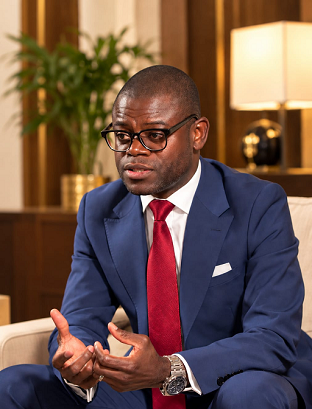
Me Ben Touere, a Paris-based lawyer specializing in public law and a lecturer at Sorbonne Paris Nord University, has emerged as a vocal critic of the dialogue’s potential to morph into an extra-constitutional entity. During a recent analysis, he cautioned that the dialogue must not be allowed to function as a parallel parliament, government, or even an informal constitutional assembly.
« The national dialogue should serve as a mechanism for consultation and pacification, not a shadow institution with decision-making powers,» Touere emphasized. « Any political outcomes must first be channeled through the country’s legitimate institutions—Parliament for legislative reforms, the Government for public policies, and the Constitutional Court for legal questions—before acquiring binding legal force.»
The expert drew a clear distinction between dialogue-driven consensus and the exercise of sovereign authority, which, by the DRC’s Constitution, resides exclusively with the people. « Neither the majority, opposition, nor dialogue participants can arrogate to themselves the nation’s sovereignty,» he asserted. « This process must strengthen the state, not fragment its core functions or create competing power centers.»
Constitutionality and the limits of political compromise
The legal framework governing the dialogue’s proceedings has become a lightning rod for criticism. Article 5 of the DRC Constitution explicitly vests national sovereignty in the people, who exercise it directly through elections and referendums, or indirectly through elected representatives. This provision, Touere argues, places strict limits on the dialogue’s mandate.
- Legislative reforms require parliamentary approval;
- Policy decisions fall under the government’s purview;
- Constitutional questions must be adjudicated by the Constitutional Court;
- Direct public consultations must follow prescribed legal procedures, including referendums when necessary.
« The dialogue can propose pathways to reform, but it cannot bypass these institutional pathways,» Touere noted. « To do so would risk undermining the very foundations of the state it purports to strengthen.»
Public reaction: hope versus institutional caution
The dialogue initiative has elicited a spectrum of responses across the DRC’s political landscape. Civil society organizations have largely welcomed the gesture as a step toward inclusivity, particularly in regions grappling with persistent insecurity and intercommunal tensions. Advocacy groups point to past successful dialogues in other African nations as evidence of its potential to foster stability.
However, opposition figures and constitutional lawyers have raised alarms over the lack of clear guidelines on the dialogue’s scope, duration, and decision-making authority. « Without safeguards, there’s a real danger this could become a tool for political maneuvering rather than a genuine reconciliation process,» warned one senior opposition leader who requested anonymity.
What comes next: roadmap or reckoning?
As the debate intensifies, the government faces mounting pressure to clarify the dialogue’s objectives and mechanisms. Key unresolved questions include:
- Will the dialogue’s recommendations carry advisory or binding force?
- How will marginalized groups—particularly those in eastern provinces—be ensured meaningful participation?
- What mechanisms will prevent the dialogue from becoming an instrument of exclusion or manipulation?
Political observers suggest that the dialogue’s success hinges on transparency and adherence to constitutional norms. « The process must be perceived as legitimate by all stakeholders, not just a select few,» commented a political analyst based in Goma. « Otherwise, it risks deepening divisions rather than healing them.»
The road ahead: dialogue or disruption?
As the DRC navigates this pivotal moment, the national dialogue represents both an opportunity and a test. For proponents, it offers a chance to rewrite the country’s fractured narrative. For critics, it poses existential risks to the state’s institutional integrity. The coming weeks will reveal whether this initiative becomes a catalyst for unity or yet another chapter in the DRC’s long history of unfulfilled promises.