In the Democratic Republic of Congo, the National Council for Monitoring the Agreement and Electoral Process, known as the CNSA, has intensified efforts to compile a comprehensive list of political and opinion prisoners. This move comes as the country prepares for an anticipated inclusive national dialogue.
The initiative, while applicable to all eligible individuals, is viewed as a strategic step toward easing tensions ahead of the dialogue. The CNSA has emphasized that its actions are guided by the principle that justice must be blind—everyone deserves their rights under the law.
According to the Council, the list, once finalized, will be submitted to President Félix Tshisekedi. The goal is to enable the head of state to take preemptive measures before the dialogue begins, potentially paving the way for broader reconciliation.
Ensuring fairness in prisoner review
The CNSA has outlined clear criteria for evaluating cases, focusing on individuals whose detention may be deemed unjust. Among those whose names have surfaced in discussions are Aubin Minaku and Emmanuel Ramazani Shadary, senior figures in the People’s Party for Reconstruction and Democracy (PPRD), associated with former President Joseph Kabila.
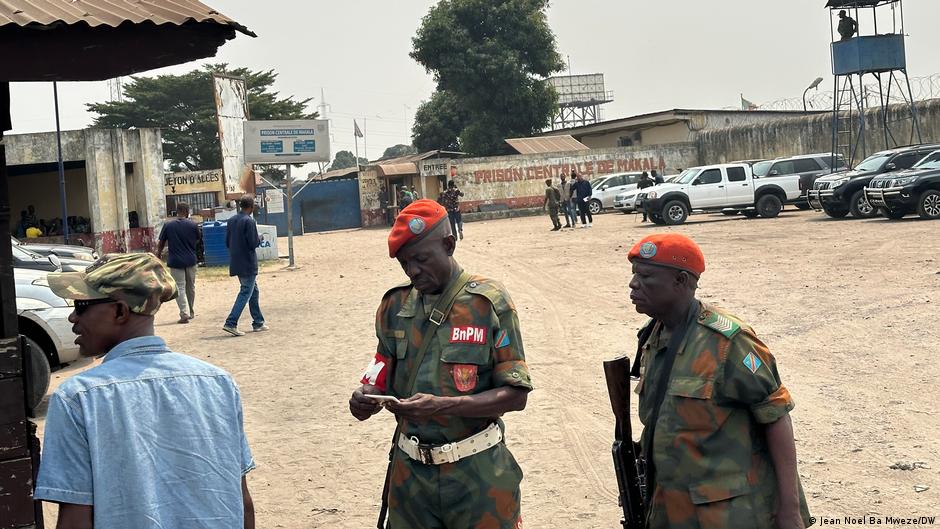
Joseph Olenghankoy, President of the CNSA, underscored the urgency of adhering to legal timelines. “Within 48 hours of an arrest, a detainee must be brought before their natural judge,” he stated. “Yet, reports indicate some have been held for over six months without due process.”
Olenghankoy stressed that while case-by-case reviews are necessary, the current delays represent a clear violation of legal rights. “Justice has no color. If someone is entitled to freedom, they must be released. Our responsibility is to present these concerns to the relevant authority to facilitate the release of detainees and promote national dialogue,” he added.
PPRD voices support for the initiative
The PPRD, the political party linked to Joseph Kabila, has welcomed the CNSA’s efforts. Lucain Kasongo, a senior member of the party, expressed optimism that the initiative could lead to the release of detained members, including high-profile figures like Minaku and Shadary.
“If this initiative by the CNSA results in the liberation of our comrades, we wholeheartedly support it,” Kasongo remarked. He further highlighted the names of several other detainees, including Dunia Kilanga and Parole Kamizelo, whose cases he hopes will be reviewed favorably.
Civil society has also played a role in this process. Justicia ASBL, a human rights organization, recently submitted a list of over 100 individuals it considers political or opinion prisoners to the Minister of Justice, reinforcing calls for their release.
Addressing death sentences in the peace process
The scope of the CNSA’s review extends beyond those in pretrial detention. It also encompasses individuals like former President Joseph Kabila and Corneille Nangaa, leader of the AFC/M23 rebellion, both of whom have been sentenced to death.
Timothée Mbuya, Coordinator of Justicia ASBL, argued that annulling these sentences would be a critical step toward fostering trust in the political process. “A political measure must be taken to quash the death sentences against Joseph Kabila and Corneille Nangaa. These decisions are essential to building the confidence needed for an inclusive dialogue,” he asserted.
As calls for dialogue grow louder across the DRC, the CNSA’s initiative remains a pivotal development. Whether it will translate into tangible steps toward easing political tensions and securing the release of detainees remains to be seen.