Gabon and Monaco forge a green alliance to protect ecosystems and boost sustainable development
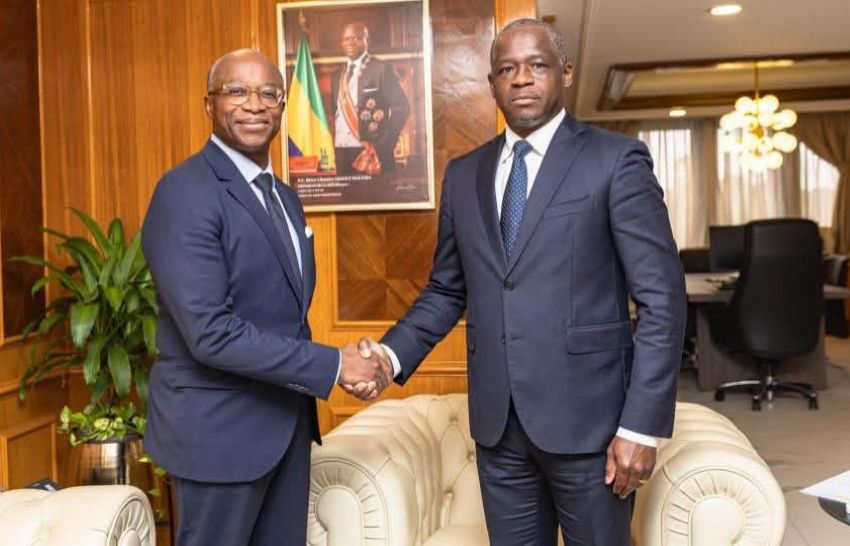
Libreville, August 9, 2026 – Gabon is turning its natural capital into a powerful diplomatic, climate and economic asset. The August 5 meeting between Vice-President Hermann Immongault and Monaco’s Prince Albert II Foundation delegation represents a bold step in this strategic shift.
Beyond the environmental discussions lies a broader ambition for Libreville: building international partnerships that can fund, safeguard and sustainably enhance the country’s forests, biodiversity and marine resources.
Led by Charles Oula Siehe, Special Advisor for Africa at the Prince Albert II Foundation, the Monégasque delegation engaged in high-level talks with Hermann Immongault, joined by Maritime, Fisheries and Blue Economy Minister Aimé Martial Massamba. At the core of these negotiations was the potential to deepen the Foundation’s footprint in Gabon and expand cooperation across new fronts.
Why Gabon? A natural treasure with global significance
Gabon’s selection as a priority partner is no coincidence. With one of Africa’s most extensive rainforests, vital marine ecosystems and unparalleled biodiversity, the country holds a natural legacy that transcends its borders. As climate change accelerates and the world seeks nature-based solutions, Gabon’s assets position it at the forefront of both environmental responsibility and strategic opportunity—capable of attracting international investment and funding.
Central Africa’s Congo Basin at the heart of the initiative
Monaco’s interest arrives on the eve of the Foundation’s 20th anniversary in September. The organization is doubling down on its commitment to the Congo Basin, one of the planet’s most critical carbon sinks and biodiversity hotspots.
For Gabon, the challenge is aligning this global ambition with national priorities. The emerging collaboration could span critical areas such as forest protection, biodiversity conservation, carbon financing mechanisms and blue economy development.
The blue economy deserves special focus. For a nation with rich maritime resources, sustainable ocean management is no longer optional but essential. By balancing resource utilization with ecosystem preservation and community benefits, Gabon can unlock economic value while securing its environmental future.
Similarly, forests are no longer just about conservation—they must become engines of economic and social progress. The country’s vast woodlands already provide invaluable environmental services. The next step? Leveraging carbon financing models that are transparent, credible and ensure fair compensation for conservation efforts.
From environmental stewardship to geopolitical influence
The Libreville talks underscore Gabon’s evolving environmental diplomacy. No longer viewed solely as an ecological obligation, nature protection is now a cornerstone of development, international cooperation and national prestige.
Yet, the true test lies in execution. A meaningful partnership must deliver tangible outcomes: funded projects, knowledge transfer, job creation, scientific data and durable ecosystem protection. The real challenge will be transforming these commitments into measurable, long-term programs.
For both nations, this alliance is mutually beneficial. Monaco brings expertise, global networks and the ability to mobilize resources around environmental causes. Gabon, in turn, offers a strategic foothold in the Congo Basin—an ecosystem whose preservation directly impacts global climate stability.
The August 5 meeting was more than a diplomatic engagement. It marked the beginning of a high-stakes strategy: positioning Gabon’s natural capital as a lever for sovereignty and sustainable growth. In a world where forests, oceans and biodiversity are increasingly treated as strategic assets, Libreville must negotiate partnerships with the same rigor it applies to economic agreements.
The goal isn’t merely to secure international support for conservation—it’s to ensure Gabon’s efforts are recognized and rewarded. If the collaboration with the Prince Albert II Foundation succeeds in merging conservation, financing, expertise and national benefits, it could set a precedent for a new era of Gabonese diplomacy—one where environmental stewardship becomes a powerful driver of development and global influence.