Key challenges
How can Cotonou’s bustling port area support street vendors while ensuring food safety and dignified working conditions for both sellers and customers?
Initiative highlights
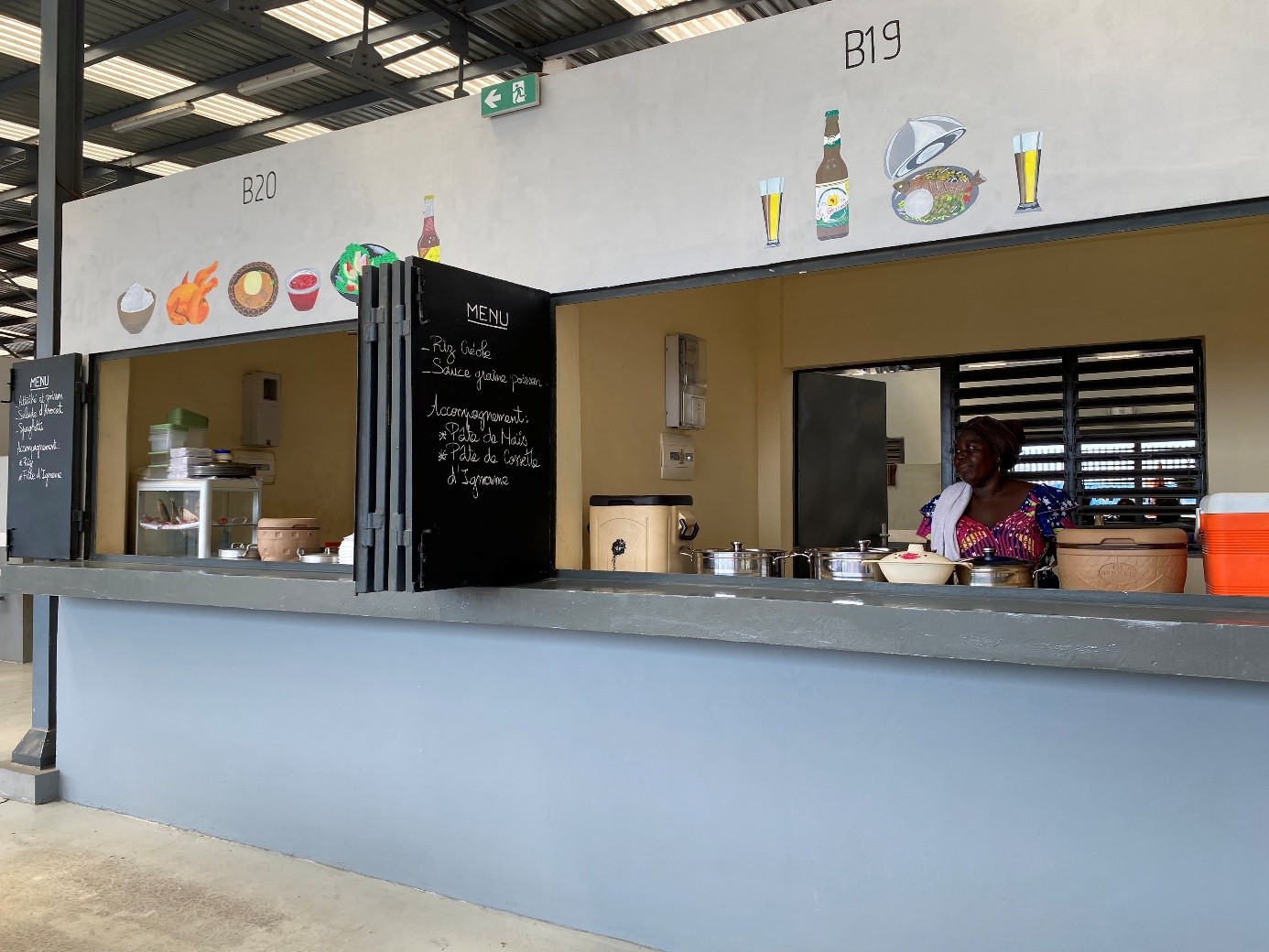
Following observations of hazardous working conditions and food hygiene risks among itinerant food vendors along the port’s perimeter, the Port Autonome de Cotonou (PAC) launched an extensive consultation process. The outcome was the establishment of modern, weatherproof stalls featuring running water and electricity—an initiative that underscores the port authority’s commitment to social and environmental responsibility within the local community.
Case study: transforming port-side commerce
As part of its long-term strategy to modernize operations and uplift surrounding communities, the Port Autonome de Cotonou (Bénin) launched a transformative project in 2024. The initiative delivered a 3,000m² covered marketplace equipped with cooking facilities, water access, and reliable electricity. Previously, 98 female vendors operated along the roadside without shelter, unable to prepare or reheat meals and lacking basic sanitation. Today, they benefit from clean, secure facilities that enhance productivity and raise hygiene standards for dock workers and neighboring residents alike. The relocated stalls also enable vendors to maintain stock, boosting their financial stability.
The project, costing over 600 million FCFA, prioritized stakeholder engagement throughout its development. Beyond improving working conditions and income, the new venue has fostered a more inclusive community space by attracting a broader customer base—including senior port staff and dockers. Early indicators show a 20% sales increase, while ongoing data collection tracks further benefits such as reduced incidents and waste.