From coup promises to hard reality
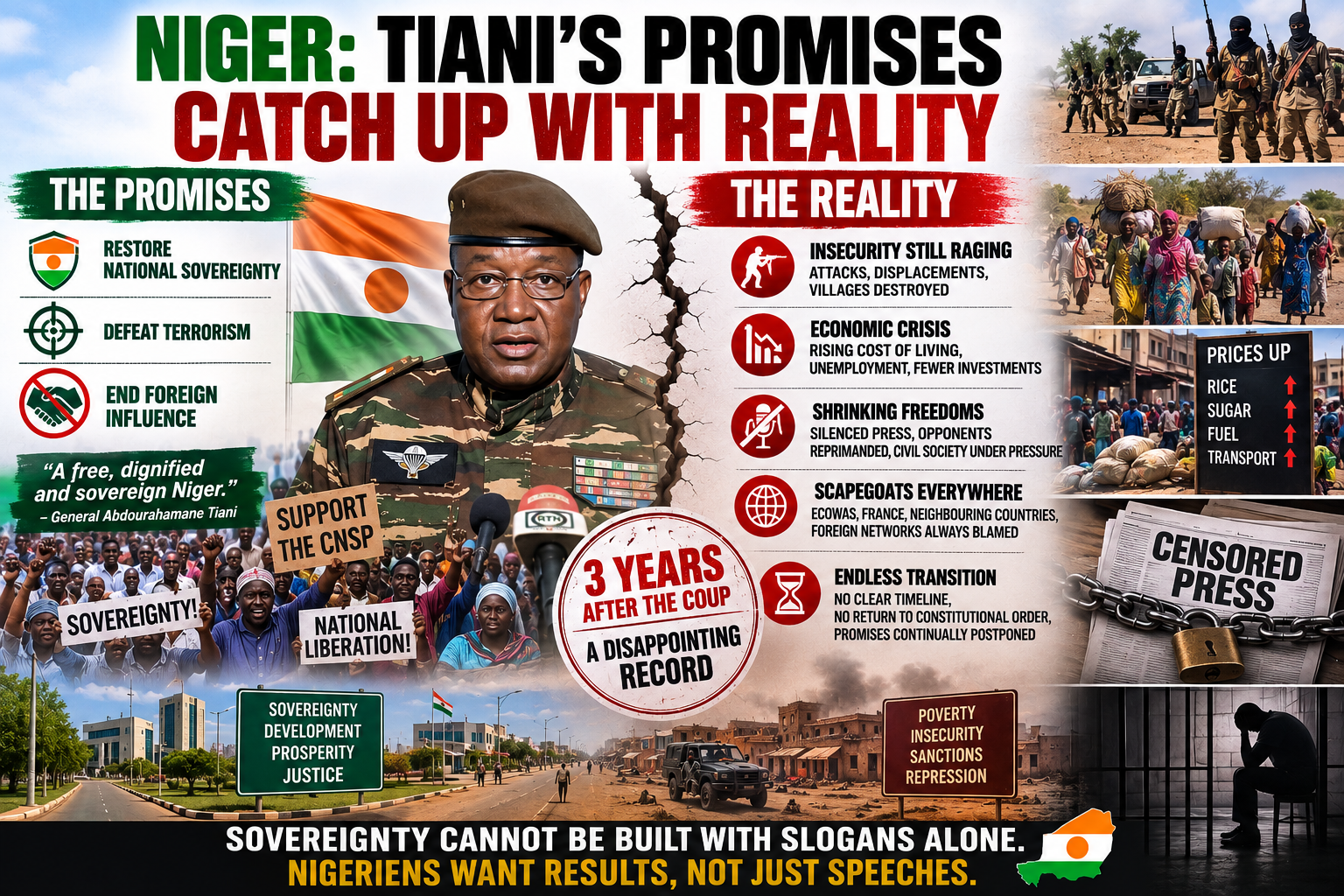
When General Abdourahamane Tiani deposed President Mohamed Bazoum on July 26, 2023, he framed his takeover around three core commitments: restoring national sovereignty, eradicating terrorism, and ending foreign influence over Niger’s decision-making. This narrative, amplified by regime-aligned media and pro-sovereignty movements, resonated with many citizens exhausted by chronic insecurity and economic hardship.
Sovereign rhetoric masks persistent challenges
Three years after the coup, the gap between promises and outcomes has fueled growing discontent. While official discourse continues to rail against neocolonialism, Nigeriens’ daily struggles remain dominated by escalating violence, economic hardship, and shrinking public freedoms.
The National Council for the Safeguard of the Homeland (CNSP), which now governs, has built its legitimacy on a simple premise: Niger has regained sovereignty by severing ties with Western partners. This framing allows the regime to portray itself as patriotic while dismissing internal critics as foreign sympathizers.
Sovereignty in theory vs. practice
Sovereignty, however, cannot be measured solely by diplomatic ruptures or the withdrawal of foreign forces. It demands tangible results: securing citizens, strengthening institutions, protecting freedoms, and improving living standards. On these fronts, the record remains deeply contested.
Patriotism as a political tool
The junta has capitalized on widespread disillusionment, presenting its coup as a historic break from decades of frustration over insecurity, unemployment, inequality, and rising costs. Over time, however, official communications have shifted from policy announcements to perpetual displays of patriotic mobilization mass rallies, denunciations of foreign conspiracies—while sidestepping scrutiny of governance performance.
This shift has redefined political debate: loyalty to the regime now often outweighs accountability for results. Public discourse increasingly revolves around defending or opposing the government, rather than evaluating its actions.
Security remains the unmet promise
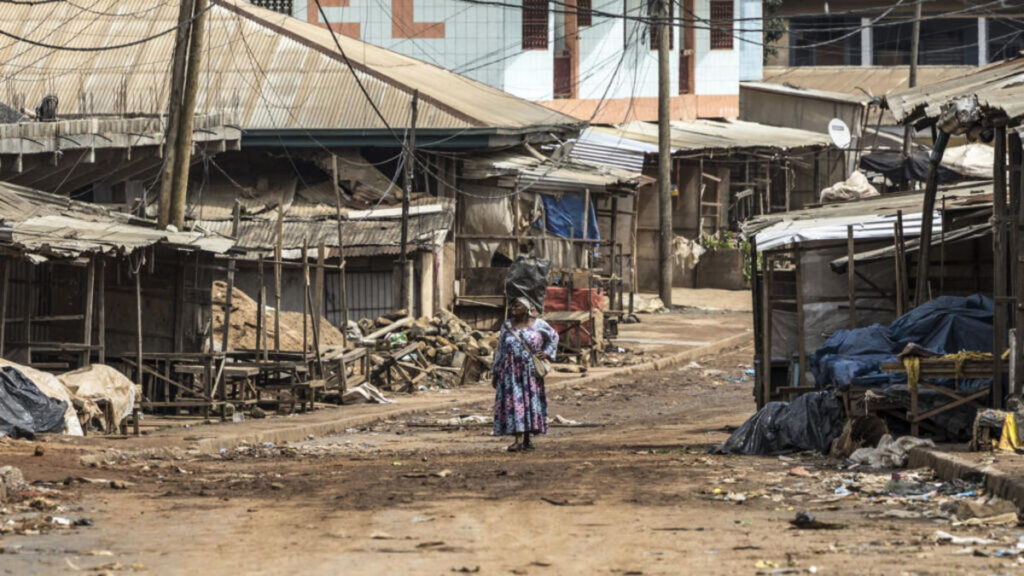
The most urgent justification for the coup was improving security. Yet large parts of Niger still endure attacks by armed groups, mass displacements, and pervasive violence. Civilians bear the brunt, with economies disrupted, social services strained, and communities fractured.
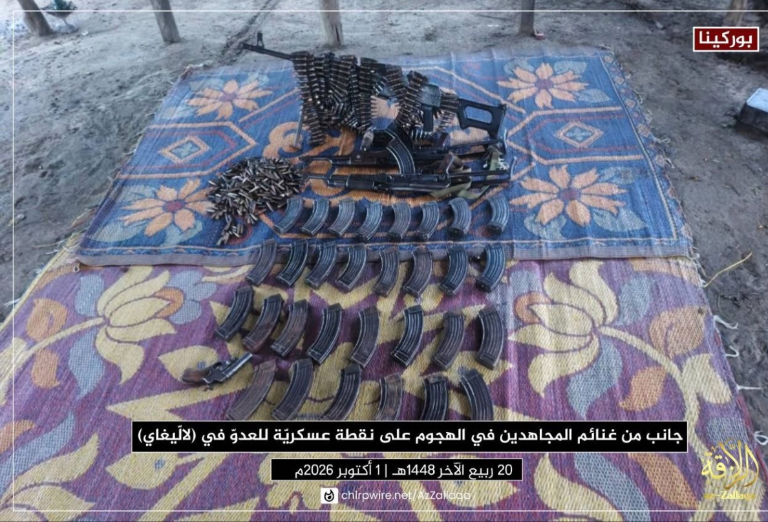
The military continues operations across multiple fronts, but repeated strikes on villages and military outposts highlight the resilience of armed factions. The conflict’s complexity cannot be resolved by regime change or shifting international alliances alone. Without transparent progress reports, doubts persist about the effectiveness of the current security strategy.
Foreign scapegoats overshadow domestic accountability
Facing mounting challenges, the regime frequently points to external actors—ECOWAS sanctions, former Western partners, neighboring states—as the root of Niger’s troubles. While regional tensions and geopolitical rivalries do shape the Sahel’s security landscape, they do not fully explain Niger’s internal struggles.
This approach risks framing every crisis as a diplomatic confrontation, diverting attention from institutional reforms, governance failures, and domestic responsibilities. Over time, it could erode the state’s capacity for self-correction and accountability.
Economic hardship persists despite political change
Economically, the anticipated benefits of the coup have not materialized. Regional sanctions, reduced investment, trade disruptions, and political uncertainty have strained key sectors. Households continue to grapple with soaring living costs, shortages, and scarce job opportunities, leaving many to question when or if the promised dividends of change will arrive.
True economic sovereignty, as often invoked in official rhetoric, requires measurable improvements in production, infrastructure, public finance, and the business climate challenges that demand long-term strategies, not short-term political gestures.
Civic space under pressure
Observers also warn of a shrinking civic space. Criticism of the government is increasingly met with scrutiny, while journalists, civil society leaders, and opposition figures operate in a climate of heightened state vigilance. In many military-led systems, the consolidation of power often comes at the expense of institutional checks and balances.
Niger now faces a critical dilemma: how to preserve national unity amid security threats without sacrificing the pluralism essential to responsible governance? The absence of a clear political transition timeline further fuels uncertainty about the junta’s long-term intentions and the prospects for a return to constitutional order.
From patriotism to performance
Patriotism can unite a nation, but it cannot indefinitely substitute for concrete results. Sovereignty is not declared—it is earned through resilient institutions, economic strength, credible justice, effective security, and transparent governance.
Recent Sahel experiences show that no leadership civilian or military can sustain legitimacy solely by blaming external enemies. As time passes, citizens judge their leaders less by their rhetoric and more by their ability to improve daily life. For General Abdourahamane Tiani and the CNSP, the true test is no longer proving Niger’s sovereignty but demonstrating that sovereignty delivers tangible benefits in security, development, justice, and freedom. Without this proof, anti-imperialist rhetoric risks being exposed as a political tool rather than a national transformation project.