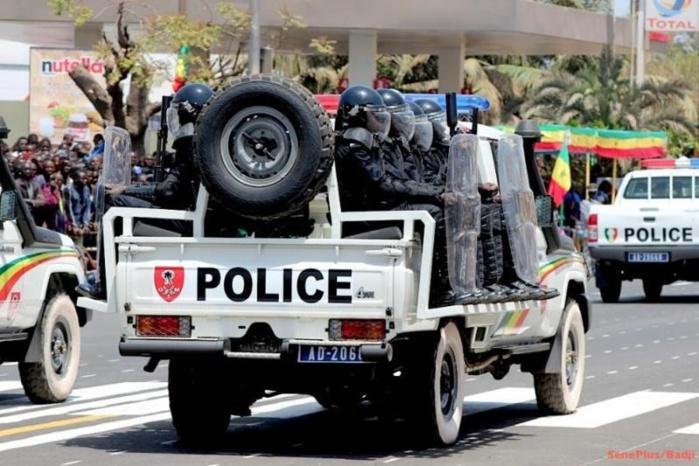
In the heart of Dakar, police operations targeting foreigners are intensifying at an unprecedented pace. Over an eight-day span, authorities conducted 490 identity checks, forwarding 36 individuals to prosecutors for irregular stay—a development that has sent ripples through civil society and the expatriate community.
The surge in administrative verifications has left many residents uneasy. Among them is Amadou Bangoura, a 30-year-old Beninese student who has called Senegal home for five years while pursuing higher education. One evening, as he exited a gym in the Liberté 6 district, a police patrol stopped him, demanding identification. Caught off guard, Amadou explained he had left his documents at home. The officers escorted him back to his residence, where they verified his passport and residency permit—all in order. Though no further action was taken, the incident left him shaken by thoughts of possible detention or deportation.
Amadou’s experience is far from isolated. Since late June, the Direction de la police des étrangers et des titres de voyage (DPETV) has ramped up its verification campaigns across Dakar and surrounding areas, citing enhanced security measures for both citizens and residents. Official figures confirm the scale of these operations: between June 30 and July 8, 2026, nearly 490 foreigners of various nationalities were checked, with 36 cases referred to prosecutors for irregular stay.
Civil society raises the alarm
Human rights and migrant support organizations have voiced sharp criticism of the escalating controls. In a joint statement released on July 13, groups including Legs Africa, Frapp, and Afrikajom Center condemned what they describe as an arbitrary shift in administrative practices toward foreigners. While acknowledging a state’s sovereign right to regulate immigration, they warn against conflating sovereignty with unchecked suspicion.
The coalition argues that the growing normalization of suspicion is transforming foreigners from individuals with rights into perceived administrative risks—even those with legal residency. This, they contend, turns routine compliance into a procedural ordeal, undermining Senegal’s tradition of hospitality.
Balancing security and openness
Elimane Kane, President of Legs Africa, emphasizes that security and openness are not mutually exclusive. While acknowledging the state’s duty to safeguard borders and enforce immigration laws, he stresses that such measures must not be perceived as persecution. “Security does not preclude diversity,” he asserts, calling for better-coordinated enforcement to prevent overreach.
Kane also highlights the global nature of professional mobility. “Just as Senegalese seek opportunities abroad, foreigners contribute to our economy,” he notes, advocating for policies that empower young Senegalese to access local opportunities rather than scapegoating migrants.
The debate underscores a delicate balance: protecting national interests while preserving Senegal’s reputation as a welcoming nation. As checks multiply, so too do questions about their long-term impact on the country’s social fabric.