From fugitive to defendant: Teganya faces genocide charges after decades
After spending over 30 years evading justice, Jean Leonard Teganya has been forcibly returned to Rwanda to stand trial for alleged involvement in the 1994 genocide against the Tutsi people. The 55-year-old former medical student, expelled from the United States on November 9, 2026, now faces charges of genocide and crimes against humanity under Rwandan law.
Upon his arrival in Kigali, Teganya was immediately handed over to national authorities and placed in police custody for questioning. His case has since been transferred to the Rwandan Public Prosecution, marking the beginning of what could be Rwanda’s most closely watched judicial proceedings in decades.
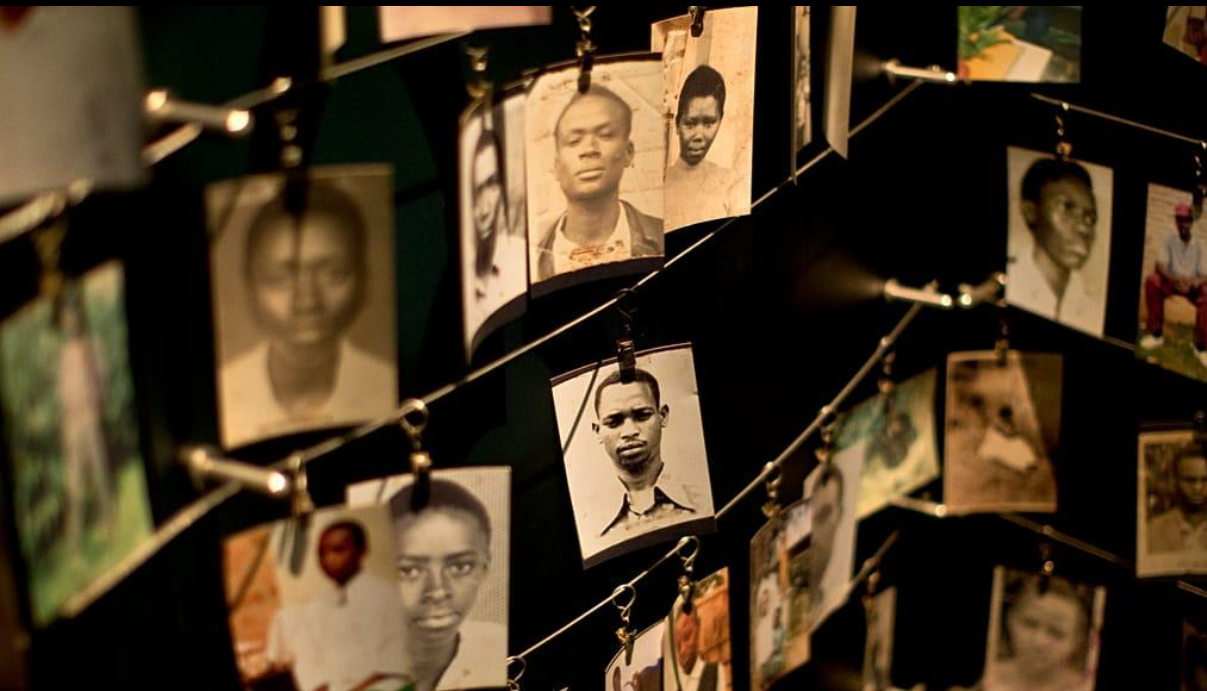
For survivors and victims’ families, his repatriation signals a belated but critical step toward accountability in one of history’s darkest chapters.
Medical student turned militia leader? The accusations against Teganya
In 1994, Teganya was enrolled in the Faculty of Medicine at the National University of Rwanda and completing an internship at the Butare University Teaching Hospital—now known as the Butare University Teaching Hospital (CHUB). Prosecutors allege that during the genocide, he played a key role in coordinating attacks against Tutsi patients and refugees seeking shelter on hospital grounds.
The charges, initially filed by Rwandan authorities in 2014, accuse Teganya of collaborating with the former ruling party, the MRND, and the notorious Interahamwe militia. Evidence presented in U.S. immigration court—where he was convicted of fraud and perjury in 2019—suggested he led armed groups that systematically hunted down and killed Tutsi civilians, including women and children.
While these allegations formed part of his U.S. deportation case, they now face rigorous examination in a Rwandan courtroom, where the burden of proof rests on establishing his direct responsibility in the atrocities.
A fugitive’s global odyssey before capture
Teganya fled Rwanda in July 1994 as the genocide unfolded, embarking on a decade-long journey across Africa and Asia. His path led him through what is now the Democratic Republic of the Congo, Kenya, and India before he settled in Canada in 1999, where he applied for asylum.
That request was denied after Canadian authorities reviewed evidence linking him to crimes in Butare. After years of legal battles, an order of removal was issued. Undeterred, Teganya crossed into the United States from Canada in August 2014 and was arrested in the state of Maine shortly after.
His attempt to claim asylum in the U.S. backfired when he was charged with immigration fraud and perjury. A Boston federal jury convicted him in 2019 on five counts, leading to a 97-month prison sentence. Notably, this conviction stemmed solely from procedural violations in his immigration applications—not from direct charges of genocide.
The extradition or expulsion of suspects like Teganya underscores a growing international consensus: time and distance do not erase accountability for mass atrocities. Since 2007, at least eight individuals accused of genocide in Rwanda have been transferred from the U.S. to face justice at home.
What happens next? A trial that could redefine Rwanda’s justice legacy
With Teganya now in Rwandan custody, the focus shifts to the judicial process ahead. The prosecution must substantiate its claims with credible evidence, while the defense will likely argue procedural irregularities or lack of direct involvement.
For Rwanda, this trial represents more than a legal proceeding—it is a test of the country’s judicial system’s ability to deliver fair and transparent justice three decades after the genocide. Survivors and victims’ families will be watching closely, hoping that Teganya’s return heralds closure rather than another chapter of unanswered questions.
The coming months will reveal whether Rwanda can reconcile its painful past with a future built on the principle that no one, no matter how long they evade justice, is beyond the reach of the law.