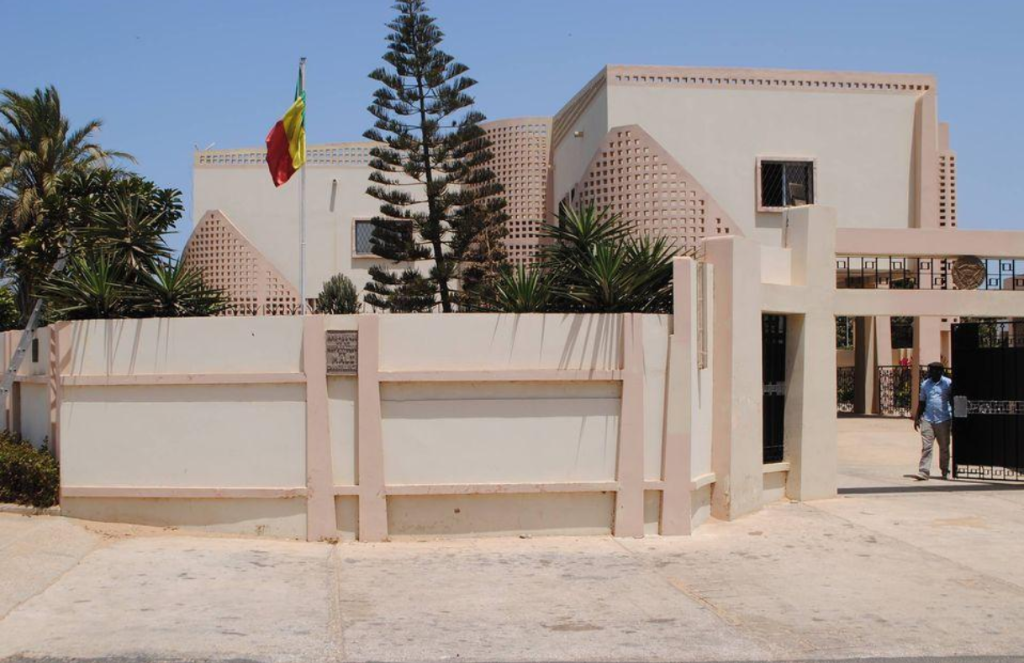
The expulsion order handed down by Senegal’s judicial system against Mali’s embassy has ignited a heated public debate in Dakar. The ruling, which requires the diplomatic mission to vacate a 1,157 square meter plot in the upscale Fann neighborhood, has raised questions about property rights, diplomatic immunity, and the enforcement of national laws over foreign missions.
What the court decided and why it matters
The decision stems from a long-standing property dispute between Immoland SARL and Mali’s embassy. The Senegalese court ruled that the diplomatic mission’s occupation of the land lacks legal foundation, ordering its immediate evacuation along with any associated personnel or assets. This verdict marks a rare instance where national jurisdiction has been asserted over a foreign embassy’s presence within Senegal’s borders.
The court’s reasoning hinges on the absence of valid title or authorization for the embassy’s use of the parcel, despite its formal diplomatic protection under international conventions. This creates a complex legal tension between private property rights and the immunities granted to diplomatic missions under the Vienna Convention on Diplomatic Relations (1961), which does not confer ownership or indefinite occupation rights.
Public and political fallout in Dakar and Bamako
Public reaction has been divided, with local media amplifying the divide. In Senegal, some observers highlight the need to uphold property laws and prevent abuses in high-value urban zones like Fann, where land speculation and irregular ownership claims are rife. Others express concern over the precedent this sets for foreign missions operating in the country, fearing it could embolden similar litigation against diplomatic compounds.
In Bamako, the Malian government has remained silent publicly, but diplomatic sources indicate that consultations are underway. The potential eviction—if enforced—could strain bilateral relations, especially if seen as a disproportionate measure against a sovereign nation’s representation. Legal experts in both capitals are closely analyzing the ruling, particularly whether it respects the procedural safeguards due to diplomatic missions under international law.
Key questions left unanswered
- Has the embassy begun evacuation? To date, there is no confirmation that the embassy or its belongings have been removed from the site. The decision has not yet been physically executed.
- Will Mali challenge the ruling? Legal sources suggest a possible appeal or diplomatic protest could follow, though no official response has been issued by Malian authorities.
- How will Senegal enforce the order? Given the sensitivity of evicting a foreign embassy, enforcement mechanisms remain unclear. The court’s order does not specify how compliance will be ensured without breaching international norms.
Diplomatic immunity vs. national sovereignty
This case has thrust a critical issue into the spotlight: can national courts compel foreign diplomats to vacate disputed properties? While embassies enjoy immunity from most legal proceedings, this does not grant carte blanche to occupy land without legal basis. The ruling implicitly asserts that diplomatic presence must align with local property laws—a position that challenges the traditional view of diplomatic inviolability extending to real estate occupancy.
Legal scholars point out that the Vienna Convention protects embassy premises from forced entry or seizure but does not shield occupants from eviction if their tenure lacks legal title. The court’s stance suggests that diplomatic missions, like any entity, must demonstrate valid ownership or lease agreements to retain access to land.
What comes next: scenarios and implications
The course of this dispute hangs on several potential developments. If the Malian embassy complies without contesting the ruling, the land may revert to Immoland SARL, though the company’s exact plans for the parcel remain unknown. Alternatively, Mali could file a counter-claim or seek mediation through diplomatic channels, a path that would test Senegal’s willingness to negotiate over a matter now before the courts.
If enforcement stalls due to diplomatic resistance, the case could escalate to international arbitration, prolonging uncertainty and damaging investor confidence in Dakar’s real estate sector. For Immoland SARL, a successful eviction would affirm its property rights; for Senegal, it could reinforce the judiciary’s authority over foreign entities—both welcome outcomes for proponents of rule of law in land governance.
Yet the broader implications are harder to quantify. In a city where land disputes frequently erupt into violent clashes, this ruling could either deter future encroachments or provoke retaliatory actions against Senegalese interests in Mali. The coming weeks will reveal whether cooler heads prevail—or whether legal victories harden into diplomatic ruptures.
Lessons for urban land governance in Senegal
Beyond the diplomatic stakes, the case underscores systemic challenges in Senegal’s land administration. Weak titling systems, overlapping claims, and opaque transfers have fueled decades of litigation in Dakar’s prime neighborhoods. The ruling may serve as a cautionary tale for other embassies and investors: without clear, undisputed title, even sovereign immunity offers no guarantee of secure tenure in Senegal’s competitive real estate market.
For now, attention remains fixed on Fann Résidence, where the fate of a single plot of land has become a flashpoint for debates on law, sovereignty, and the limits of diplomatic privilege in the 21st century.