The latest accusations linking the United Arab Emirates to industrial-scale psychotropic drug production in eastern Libya have ignited a firestorm of debate across North Africa. As diplomatic tensions between Algiers and Abu Dhabi reach new heights, these claims are amplifying concerns about transnational narcotics networks and their potential role in destabilizing Algeria’s youth.
From allegations to geopolitical flashpoint
Journalist Mehdi Ghezzar’s explosive claims on AL24 News that Abu Dhabi is bankrolling psychotropic pill factories in eastern Libya — territories under the sway of Field Marshal Khalifa Haftar’s forces — have thrust the narcotics trade into the heart of regional diplomacy. The accusations suggest these operations are not mere smuggling rings but industrialized facilities churning out vast quantities of synthetic drugs, allegedly with Emirati backing.
Ghezzar’s blunt assertion that “these are UAE-owned factories” has intensified scrutiny of cross-border criminal networks and their possible links to state actors. Yet without publicly verifiable evidence, the claims remain explosive allegations rather than established facts.
Eastern Libya: the new frontier of Africa’s drug crisis
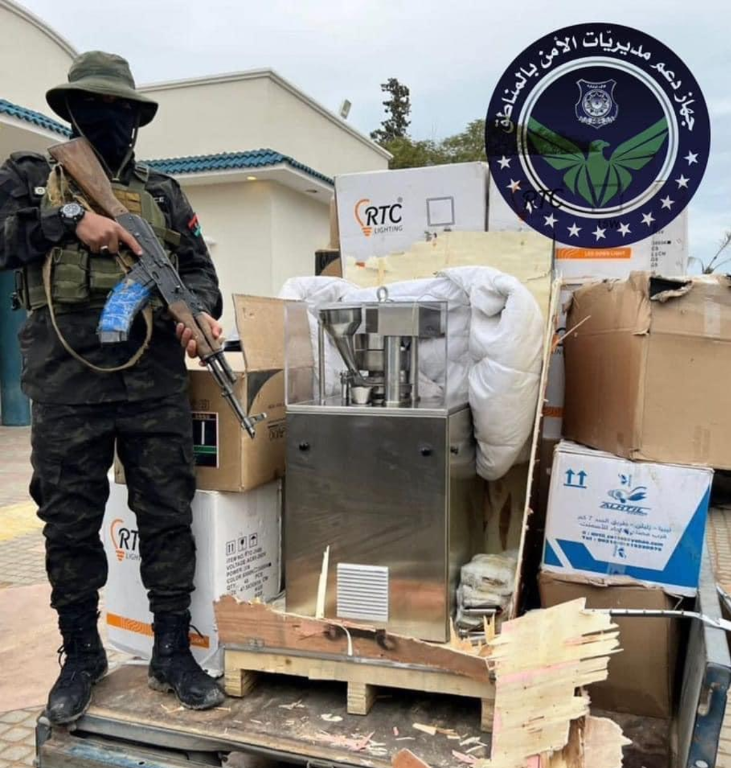
The allegations come amid mounting evidence that Libya has become more than just a transit hub for narcotics. In November 2026, a court in Qubbah, eastern Libya, sentenced six individuals to severe prison terms for producing and trafficking Captagon tablets — a synthetic stimulant. The principal defendant received 25 years, while five others, tried in absentia, were handed life sentences.
Court-released footage showed seized pills, packaging materials, and industrial pressing machinery, confirming that Libya’s narcotics problem has evolved into local production. Just weeks earlier, Haftar’s Libyan National Army announced the seizure of over 1.3 million Captagon tablets in a counter-trafficking raid near Kufra, underscoring the scale of the crisis.
Haftar’s alliances: where politics and crime intertwine
The question of who controls these facilities inevitably leads to Haftar’s eastern power base, which has long enjoyed support from the UAE. The Gulf state has been a key backer of Haftar’s military campaign since 2014, providing funding, weapons, and political cover in exchange for influence over Libya’s strategic east.
While the alliance is well-documented, proving a direct financial link between the UAE and psychotropic drug production requires more than circumstantial evidence. Investigators would need to trace financial flows, identify facility owners, and uncover any political or military patronage shielding these operations. So far, such evidence remains conspicuously absent.
Algiers vs. Abu Dhabi: when drugs become a diplomatic weapon
The timing of these accusations couldn’t be more fraught. Algeria severed diplomatic ties with the UAE in September 2026, marking a sharp deterioration in relations over regional security, military alliances, and Maghreb power dynamics. In this charged climate, even unproven allegations of external state involvement in drug trafficking acquire heightened significance.
President Abdelmadjid Tebboune has framed the drug flood as a direct assault on Algeria’s youth, declaring it “a full-scale war against our people.” He has hinted at retaliatory measures targeting production sources under the principle of self-defense. Yet even as alarm bells ring in Algiers, the accusations stop short of naming Abu Dhabi as the mastermind of this crisis.
Youth at risk: the human cost behind the headlines
Beyond geopolitics, the most urgent concern is the social and public health toll of psychotropic drug abuse in Algeria. Synthetic stimulants, often diverted from medical supply chains or manufactured in clandestine labs, are flooding urban and rural markets alike. Criminal networks exploit economic despair and youth unemployment, recruiting young dealers and addicts into a cycle of violence and addiction.
Combating this scourge demands more than border seizures. It requires international judicial cooperation, dismantling financial pipelines, regulating precursor chemicals, and strengthening prevention and rehabilitation programs in vulnerable communities.
Who’s really behind the pill factories?
The central unanswered question remains: who truly finances and operates the psychotropic production facilities in Libya’s east? To move from speculation to proof, investigators must establish:
- The true owners and operators of each facility
- The origin and flow of financial investments funding them
- The logistical networks distributing the final product
- Any complicity from political, military, or economic elites
- A clear link between Libyan producers and Algerian distribution rings
Until such findings emerge, claims of a state-directed campaign targeting Algeria remain speculative. However, the growing body of evidence around drug production in Libya demands urgent action.
The stakes for North Africa’s future
If independent investigations were to confirm that foreign states are bankrolling drug factories on Libya’s soil — with the express aim of flooding Algerian streets — the repercussions would be seismic. Diplomatic ruptures could escalate, regional alliances shift, and security cooperation unravel at a time when stability is already fragile.
For now, the known realities include:
- The documented existence of Captagon production in Libya
- Large-scale seizures of synthetic drugs in eastern and southern Libya
- Algeria’s declaration of a drug-related “war” on its youth
- Deepening distrust between Algiers and Abu Dhabi
The question now is whether Libya’s east will cement its role as a regional hub for synthetic drug manufacturing — and who ultimately profits from the trade. Algeria, for its part, faces a dual challenge: protecting its people from addiction and preserving its sovereignty in an increasingly toxic geopolitical environment.