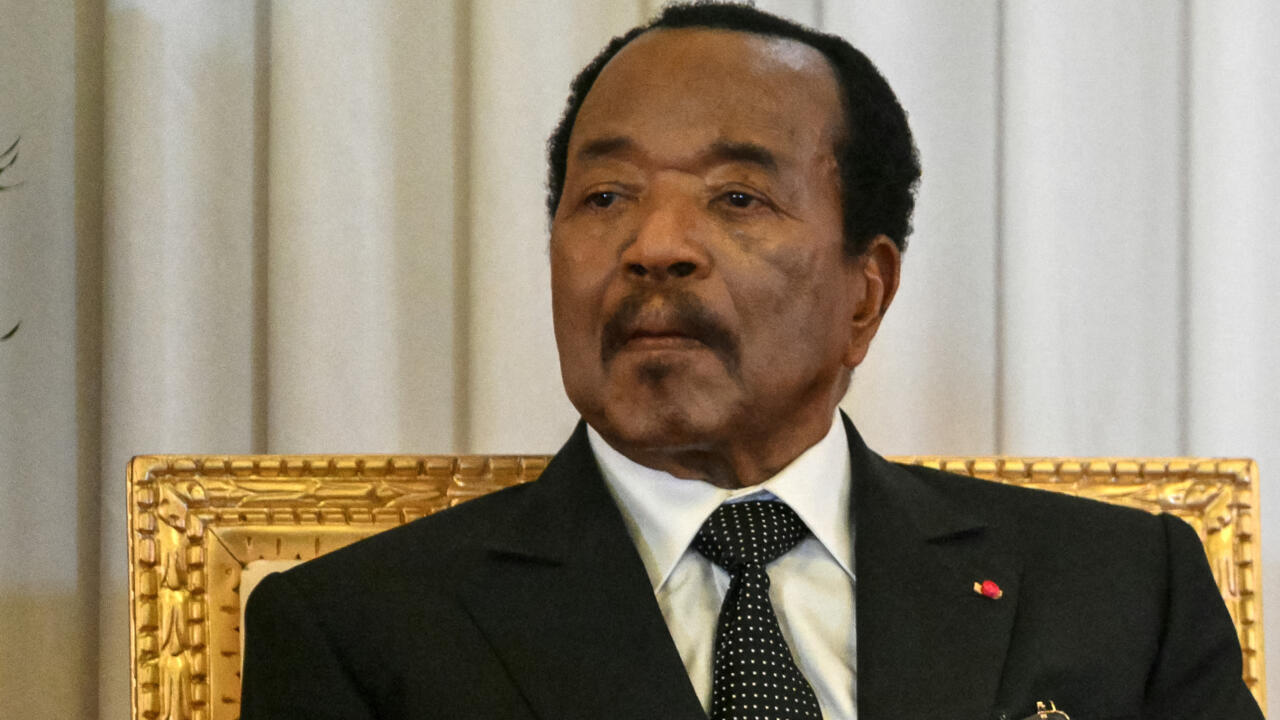
For 44 years, President Paul Biya has led Cameroon with an iron grip. Now, at 93, his prolonged absence raises critical questions. The head of state left on June 7 for what was described as a brief private stay in Europe. Yet, 58 days later, he remains unseen in public. The silence has fueled speculation about his whereabouts and the stability of the country’s leadership.
Where is Paul Biya? A leadership vacuum?
Since June 7, President Paul Biya, Africa’s oldest serving leader, has not appeared in public. His last known public engagement was on April 15, 2026, during the third day of the pope’s visit to Yaoundé. The absence—now the longest of his 44-year rule—has left many wondering about his health and the future of Cameroon’s governance.
In response to mounting concerns, Minister of Communication René Sadi finally addressed the nation through a broadcast statement. “The President is alive,” he reassured. “There is no power vacuum.” Yet, he provided no timeline for Biya’s return, leaving citizens and analysts searching for clarity.
What does the constitution say about presidential absence?
Cameroon’s constitution outlines procedures for handling a president’s temporary incapacity. Article 67 states that if the president is unable to perform duties, power temporarily transfers to the Senate President. However, with no official confirmation of incapacity, the government insists Biya remains in control, even from afar.
This prolonged silence contrasts sharply with the urgency of the moment. Opposition figures and civil society leaders have called for transparency, questioning whether the government is concealing critical information about the president’s health.
Public reaction and political implications
The absence of Paul Biya has ignited debates about succession and governance in Cameroon. With no designated successor, fears of political instability loom large. The ruling Cameroon People’s Democratic Movement (CPDM) has yet to address these concerns publicly, adding to the unease.
Analysts suggest that Biya’s prolonged absence could weaken the party’s cohesion and embolden internal factions. Meanwhile, opposition leaders have seized the moment to demand accountability, calling for a clear transition plan.
Government response: reassurance or obfuscation?
Minister René Sadi’s statements have done little to quell speculation. While he confirmed Biya’s well-being, he offered no medical updates or details about the president’s return. Such vagueness only deepens distrust among citizens and international observers alike.
The government’s insistence that “there is no power vacuum” may be technically correct under the constitution. Yet, the lack of visible leadership during a time of global uncertainty raises practical concerns about decision-making and national stability.
What’s next for Cameroon?
As Cameroon awaits Paul Biya’s return, the country stands at a crossroads. Will his absence prompt a reckoning with the aging leadership structure? Or will the status quo persist, leaving citizens in limbo?
The answers remain unclear, but one thing is certain: the prolonged silence of Africa’s longest-serving president has exposed vulnerabilities in Cameroon’s political system that can no longer be ignored.