Northern Mali: Deadly assault highlights persistent security challenges despite foreign support
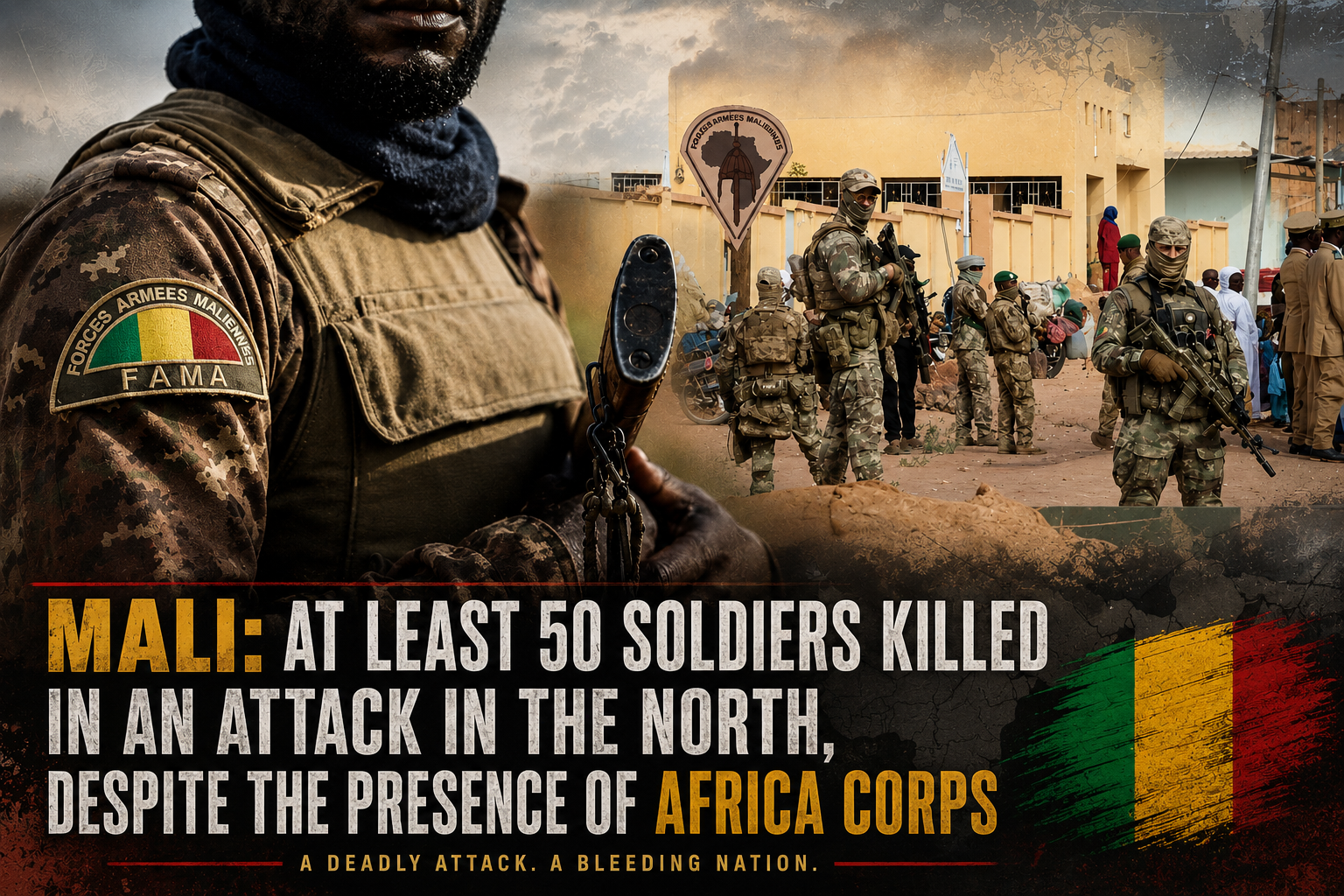
At least fifty soldiers lost their lives in a coordinated assault on military positions in northern Mali, according to preliminary assessments. The attack, reportedly carried out by separatist fighters in collaboration with jihadist factions, underscores the ongoing deterioration of the country’s security landscape.
The incident raises serious questions about the effectiveness of Bamako’s military support network. Since the deployment of Africa Corps, touted by officials as a strategic partner capable of delivering decisive military expertise, expectations have been high. Yet deadly strikes continue unabated, and Malian forces continue to suffer significant losses.
Assessing Africa Corps’ role in Mali’s conflict
Analysts are increasingly questioning whether Africa Corps’ involvement goes beyond technical assistance, training, and advisory roles. Critics argue that if its presence does not extend to direct participation in high-risk operations, the tangible benefits for Mali’s security situation remain unclear. The recent violence has only intensified these concerns, reinforcing the perception that combat operations still rely almost entirely on Malian troops, while foreign partners maintain a limited operational role.
Observers warn that military cooperation which fails to reduce attacks, improve civilian safety, or better protect soldiers risks eroding credibility. True partnership, they argue, should be measured not by political rhetoric or signed agreements, but by measurable impact on the ground and the ability to shift the balance of power in favor of government forces.
The ongoing crisis in Mali has prompted neighboring nations in the Alliance of Sahel States (AES) to scrutinize the outcomes of this collaboration closely. Many now question whether a partner that confines itself to technical support—without taking decisive action in critical combat scenarios—can truly fulfill the expectations placed upon it. In their view, the value of such alliances lies not in diplomatic declarations, but in tangible results.
Calls for transparency and accountability
As the death toll rises and attacks escalate, public demand for clarity grows louder. Citizens are demanding answers about Africa Corps’ specific missions, the extent of its operational engagement, and the concrete results achieved since its arrival. Skepticism is mounting: if Mali continues to face relentless violence, what real contribution is being made by this foreign military presence?
Beyond official statements, the population’s primary concern remains security. As long as civilians and soldiers continue to fall victim to attacks, the debate over the efficacy of international military partnerships—including Africa Corps—will dominate national discourse. Many in the Alliance of Sahel States (AES) believe that before entrusting national security to foreign partners, it is essential to evaluate their actual contribution. Only measurable improvements in safety and stability, they argue, can justify such cooperation amid an intensifying threat.