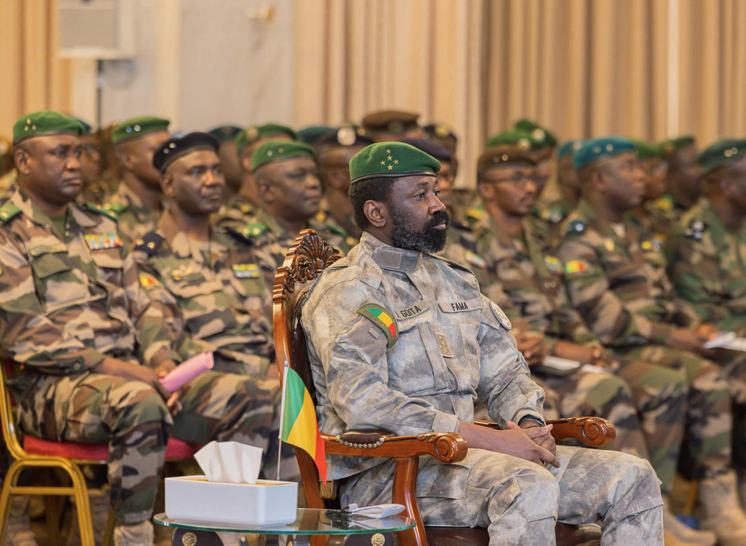
Two decades after its original National Defense Law, Mali is overhauling its security framework to address modern threats. The new architecture, approved by the National Transitional Council, expands beyond traditional military defense to include domestic security, cyber defense, and comprehensive crisis management.
The reform, adopted in July 2026 by the 125 voting members of the CNT, will replace the 2004 law (n°04-051) once finalized. Speaking to council members, General Daoud Aly Mohammedine, Minister of Security and Civil Protection, emphasized the necessity of this update due to two decades of evolving security challenges. He noted that security actors were extensively consulted during the preparatory phase to ensure an inclusive approach.
Sécurité globale
The 2004 framework already addressed domestic security, civil defense, and the roles of local authorities, civil society, and communities. However, the new reform aims to refine and unify these responsibilities to better align with contemporary threats. Cyber defense and internal security now stand as explicit pillars of national security. The National Security Council and the National Defense Committee replace previous bodies, strengthening coordination under the President’s leadership.
The reform consolidates operational command under the Chief of Staff of the Armed Forces, particularly during territorial defense scenarios. This streamlines responses to attacks, major crises, or cross-border threats without permanently placing police, gendarmerie, national guard, and civil protection under military command.
Since 2022, the National Police and Civil Protection forces have been militarized, facilitating their integration into unified security operations while maintaining their public safety and rescue missions.
General Daoud Aly Mohammedine highlighted three priorities during the CNT session: bolstering territorial administration, involving traditional leaders in counterterrorism efforts, and continuing force recruitment and equipment upgrades. The Ministry of Territorial Administration and Decentralization now plays a key role in civil defense, coordinating decentralized services, engaging local authorities, and mobilizing communities—without turning civilians into auxiliary forces.
Cyberespace et terrain
The expansion into cybersecurity includes a dedicated reform. In June, the government enacted legislation establishing the National Agency for Information System Security (ANSSI), as outlined in the 2026–2030 National Cybersecurity Strategy. The ANSSI will coordinate responses to cyberattacks and safeguard critical infrastructure, while cybersecurity covers broader protection across government networks and communications.
The DDR-I program, though not part of the legal reform, serves as a practical test for inter-agency coordination. On August 4, 254 former fighters from various armed groups completed training at Soufouroulaye and joined the Armed Forces. The program plans to integrate 2,000 ex-combatants and reintegrate 1,000 others socioeconomically. This initiative requires collaboration among defense, security, reconciliation, and local authorities.
The success of this new strategy hinges on execution. Clear procedures, intelligence-sharing mechanisms, local capacity-building, cyber expertise, post-integration monitoring, and clearly defined roles will determine its impact. The reform establishes a chain of command, with effectiveness measured by decision speed, field coordination, and trust among institutions, forces, and the public.