While Bamako breathes easier with the arrival of two critical convoys—one carrying fuel and the other heavy weaponry—the heart of Mali remains trapped in a tightening security nightmare. A stark contrast emerges between the capital’s hard-won logistical victories and the relentless terror gripping central regions, where the Jama’at Nusrat al-Islam wal Muslimin (JNIM) continues to tighten its grip.
Bamako’s lifelines: fuel and firepower secure the capital
After weeks of strained supply chains and heightened tensions, Bamako received a much-needed reprieve in late July. Two high-stakes deliveries broke the logistical blockade threatening the city’s stability and economy, proving Mali’s ability to reroute critical supplies despite the jihadist threat.
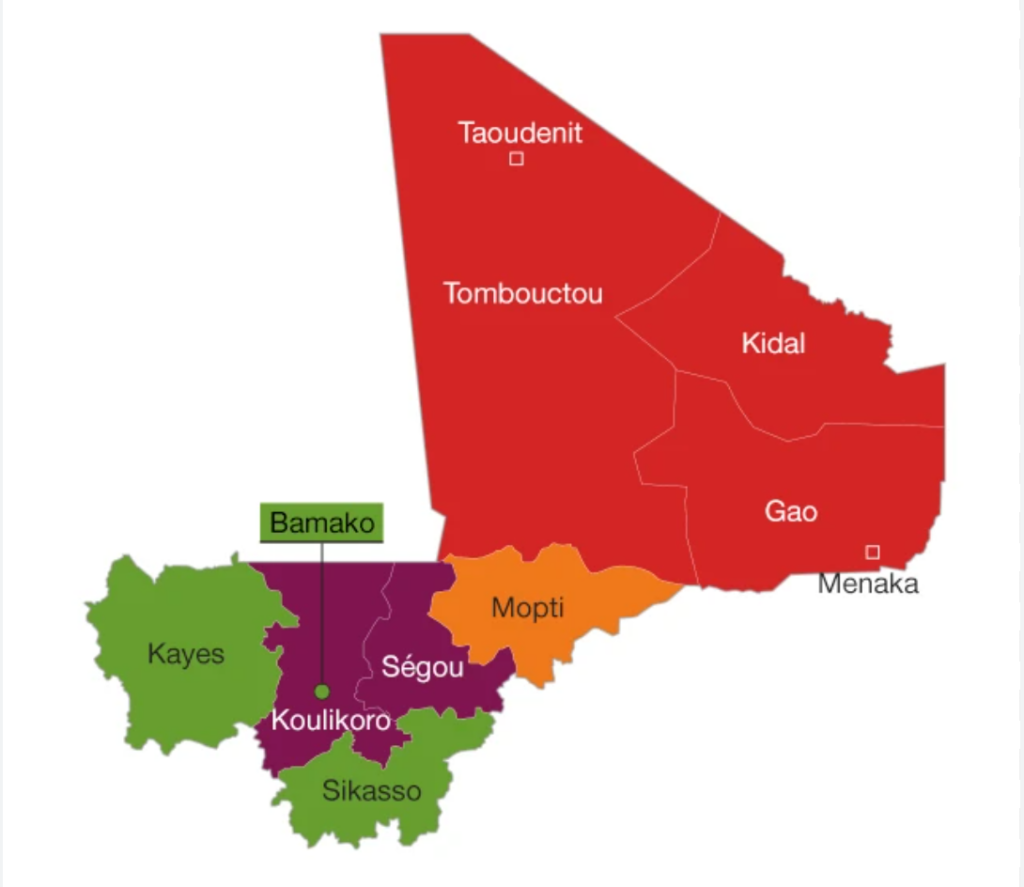
The first breakthrough came on July 24, when a massive convoy of fuel tankers made its way into Bamako. Navigating through the Kayes region, these vehicles outmaneuvered JNIM roadblocks and ambush points, delivering essential fuel without incident. The success of this operation underscores a tactical win in preserving Bamako’s infrastructure and daily operations.
A new west african military corridor takes shape
The following day, a game-changing shipment of Russian military hardware arrived in Bamako, transported via an unconventional route. The equipment, unloaded in Lomé (Togo) from the Russian cargo ship Mikhail Britnev, bypassed Guinea entirely, instead passing through Burkina Faso before entering Mali near Sikasso. This innovative logistics strategy marks the activation of a pivotal new west African supply corridor.
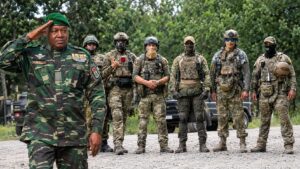
The delivery bolsters Mali’s armed forces (FAMa) and their Russian allies in Africa Corps with advanced weaponry, including:
- 3 BMP-2 infantry fighting vehicles
- 8 BMP-3 armored vehicles
- 14 mine-resistant ambush-protected (MRAP) vehicles
- 4 BTR-82 troop transports
- 2 anti-aircraft defense systems
- A substantial fleet of logistics trucks and tactical motorcycles
Central Mali’s brutal reality: highways become death traps
Yet beyond Bamako’s fortified borders, central Mali’s security situation remains dire. The RN16—a key transit route between Mopti and Gao—has become a hunting ground for JNIM, where convoys face relentless attacks.
On July 25 and 26, a joint FAMa/Africa Corps convoy en route from Sévaré to Gao was ambushed near Hombori. The jihadist group deployed a barrage of improvised explosive devices (IEDs) along the Wami-Agoufou stretch, destroying or severely damaging several vehicles. This assault exposed the group’s deep control over rural terrain and the ongoing challenges faced by government forces in securing secondary supply lines.
JNIM’s multifaceted offensive spreads chaos
The insurgency’s reach extends far beyond the Sévaré-Gao axis. On the same days, JNIM struck again:
- A targeted ambush on a FAMa convoy between Niafunké and Tonka
- A counteroffensive north of Niono on July 26, repelling an Africa Corps advance
These coordinated strikes highlight the group’s ability to exploit vulnerabilities across multiple fronts.
Kouakourou’s fall: a humanitarian catastrophe unfolds
The most glaring symbol of central Mali’s unraveling security is the loss of Kouakourou in the Djenné circle. On July 19, JNIM seized the local military camp, a strategic blow to Mali’s territorial control.
In response, the Malian army launched airstrikes on July 21, claiming to neutralize five terrorists and destroy a logistics vehicle. However, ground forces were unable to retake the town, leaving JNIM in full control and trapping civilians in a worsening humanitarian crisis.
Mass displacement and a region on the brink
With no military recapture in sight, thousands fled Kouakourou, abandoning homes and farmlands. This mass exodus exacerbates the already dire displacement crisis in Mopti, overwhelming neighboring communities with an influx of vulnerable families.
Can new weapons tip the scales?
Mali stands at a military crossroads. While Bamako’s resilience is reinforced by fresh alliances and advanced firepower, the JNIM insurgency continues to fracture the countryside, sever supply routes, and inflict suffering on rural populations. The question remains: will the new Russian-supplied arsenal shift the balance beyond urban strongholds? The coming weeks will reveal whether these logistical gains translate into lasting territorial victories for FAMa and Africa Corps.