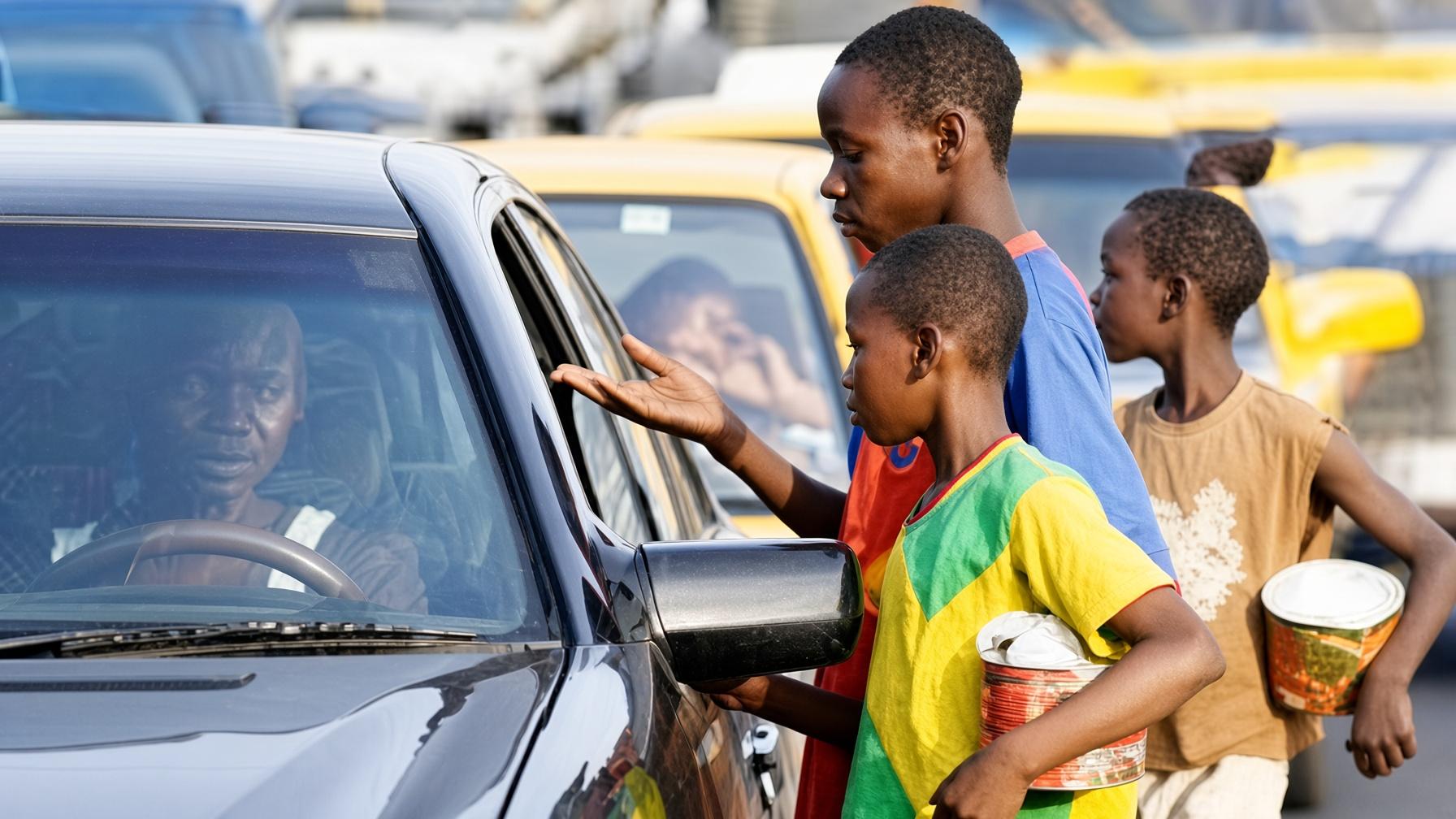
Bamako’s streets have become battlegrounds where desperation and systemic failure collide. At major intersections, outside government buildings, and near places of worship, children, the disabled, and the elderly daily extend their hands in a cycle of unaddressed suffering. Despite repeated vows from transitional authorities to curb this epidemic of street begging, the reality remains stark: Mali’s governance structures are buckling under the weight of a crisis they cannot control.
From marginal issue to urban catastrophe: how begging reshaped Bamako’s landscape
The transformation is impossible to ignore. What was once a sporadic presence at red lights has ballooned into a structural feature of urban life. Swarms of young children—many of them talibés sent by unregulated Quranic teachers or minors abandoned to their fate—dart between cars, risking their lives in the chaos of traffic. Their pleas for help echo through the city, a desperate soundtrack to the nation’s collapse.
Official campaigns vowing to remove children from the streets and strengthen social support have yielded little. When authorities intervene, they often lack the infrastructure, funding, or long-term vision to make a difference. Those rescued typically find themselves back on the pavements within hours, caught in a revolving door of failed interventions.
Governance failure: why the system is failing Mali’s most vulnerable
The roots of this crisis run deeper than policy announcements or public statements. They are embedded in decades of institutional decay and economic decline:
- Crumbling social services: Chronic underinvestment in education and social protection has left millions of families teetering on the edge of survival. Without access to free, quality schooling, poor households have little choice but to send children into the streets.
- Unchecked traditional education systems: Informal Quranic schools operate in legal gray zones. The exploitation of children—often disguised as religious obligation—proceeds unchallenged, shielded by weak enforcement and cultural sensitivities that paralyze action.
- Misplaced national priorities: While security expenditures and institutional maintenance consume the bulk of the budget, allocations for human development and poverty alleviation remain pitifully small.
- Institutional rot: Social programs, whether funded domestically or by international partners, drown in bureaucratic inefficiency and corruption. Funds meant for the most vulnerable vanish into opaque systems, leaving beneficiaries with empty promises.
A ticking time bomb for Mali’s security and cohesion
The consequences of this inertia extend far beyond public image. A generation of impoverished, illiterate children—abandoned by the state and preyed upon by predators—poses a grave threat to national security. Recruitment into criminal networks and armed groups is not a distant risk; it is an accelerating reality.
Without decisive reforms, Mali risks entrenching a cycle of despair that erodes public trust and fuels instability. The street begging epidemic is not just a humanitarian stain; it is a glaring indictment of a broken social contract between leaders and the people they are sworn to protect. The time for symbolic gestures has passed. Real action—rooted in accountability, transparency, and sustained investment—is the only path forward.