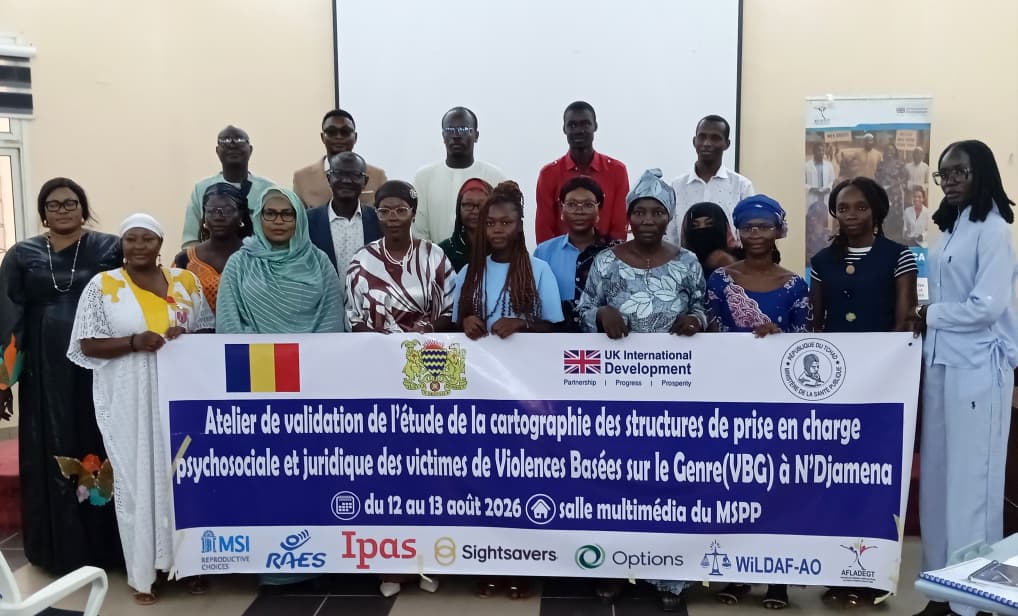
The Association of Feminist Leaders for Access to Rights and Gender Equity in Chad (AFLADEGT) is set to host a two-day validation workshop on August 12-13, 2026, in N’Djamena. The event will focus on reviewing a newly conducted study that maps out legal and psychosocial assistance services for survivors of gender-based violence (GBV). This initiative is part of the WISH 2-WACA project, designed to enhance victim referral pathways and strengthen coordination among service providers.
Key stakeholders converge to refine GBV support service mapping
Participants, including government officials from relevant ministries, civil society representatives, technical and financial partners, and specialized agencies, will gather to assess and enrich the findings of the GBV service mapping study. The workshop aims to identify gaps and propose actionable recommendations to improve victim support systems.
AFLADEGT emphasizes the mapping tool’s transformative role
At the workshop’s opening, AFLADEGT President Wouténé Mélissa highlighted the critical role of this mapping exercise. She described it not merely as a document but as a strategic instrument for guiding victims to appropriate services, coordinating care efforts, and advocating for policy reforms.
« Survivors of gender-based violence deserve swift access to the right support—whether legal, psychosocial, or medical. They need clear pathways to assistance and responsive care, » Mélissa emphasized.
The study reveals significant challenges in service coverage, victim awareness, referral mechanisms, and resource allocation. These findings underscore the urgent need for targeted interventions to bolster existing services, streamline referral processes, and secure additional funding.
Government acknowledges GBV as a rights violation
Dr. Kadidja Amadaye Abgrene, Director of Reproductive Health, underscored the severe impact of GBV on human dignity and fundamental rights. She acknowledged government efforts to address the issue, including legal reforms and the establishment of integrated multisectoral service centers.
However, she noted persistent barriers, particularly in legal and judicial support. Data indicates that fewer than 11% of identified survivors receive effective legal assistance. Challenges such as reliance on out-of-court settlements, lack of awareness, and fragmented referral systems continue to hinder progress.
Mapping uncovers disparities in service accessibility
The N’Djamena-based mapping study also exposed disparities in service distribution across districts. Insufficient confidential and secure spaces for victims, as well as shortages in human and material resources, further exacerbate the crisis. Dr. Abgrene stressed that these findings must guide public policy decisions to improve victim orientation, enhance inter-sectoral coordination, and address systemic weaknesses.