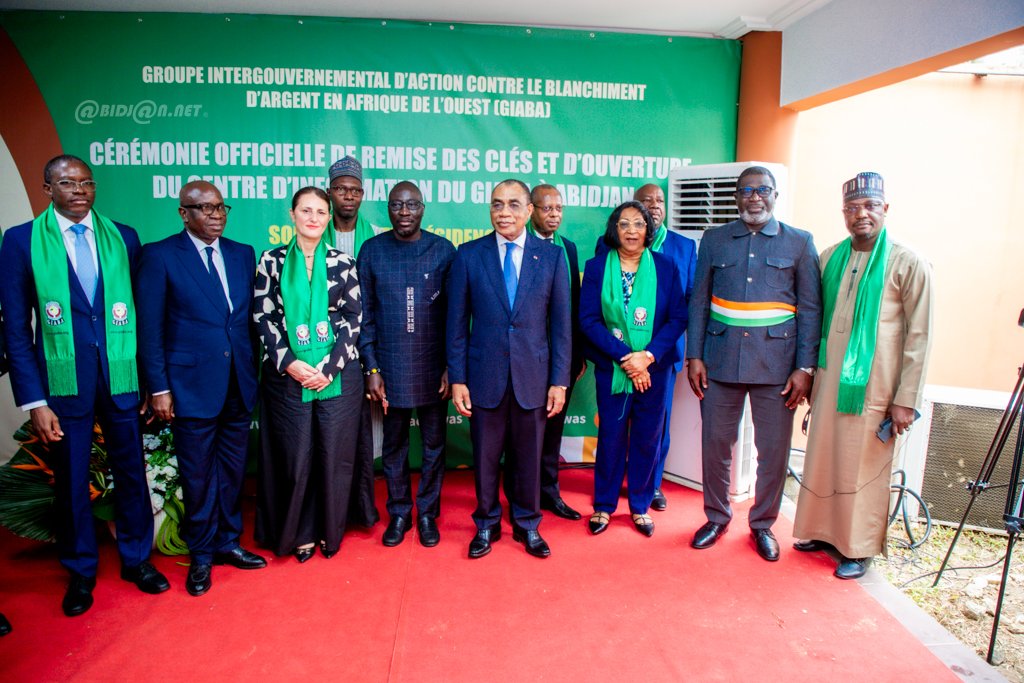
The Ivory Coast’s Minister of Economy, Finance and Budget, Adama Coulibaly, officially inaugurated the newly handed-over GIABA Information Centre in Cocody this past Wednesday, marking a pivotal step in regional efforts to curb financial crime. The facility, provided by the Ivorian government under the Headquarters Agreement, strengthens collaboration across West Africa in combating money laundering and terrorist financing.
From decision to reality: a decade of regional commitment
The initiative traces back to a 2010 decision by the ECOWAS Council of Ministers, which approved the creation of two information centres: one in Lagos, Nigeria, serving English-speaking members, and another in Abidjan, Côte d’Ivoire, supporting French and Portuguese-speaking states. The Abidjan centre opened in 2015 following the signing of a Headquarters Agreement between Côte d’Ivoire and GIABA during the 44th ECOWAS Summit in Yamoussoukro.
Modern threats demand coordinated action
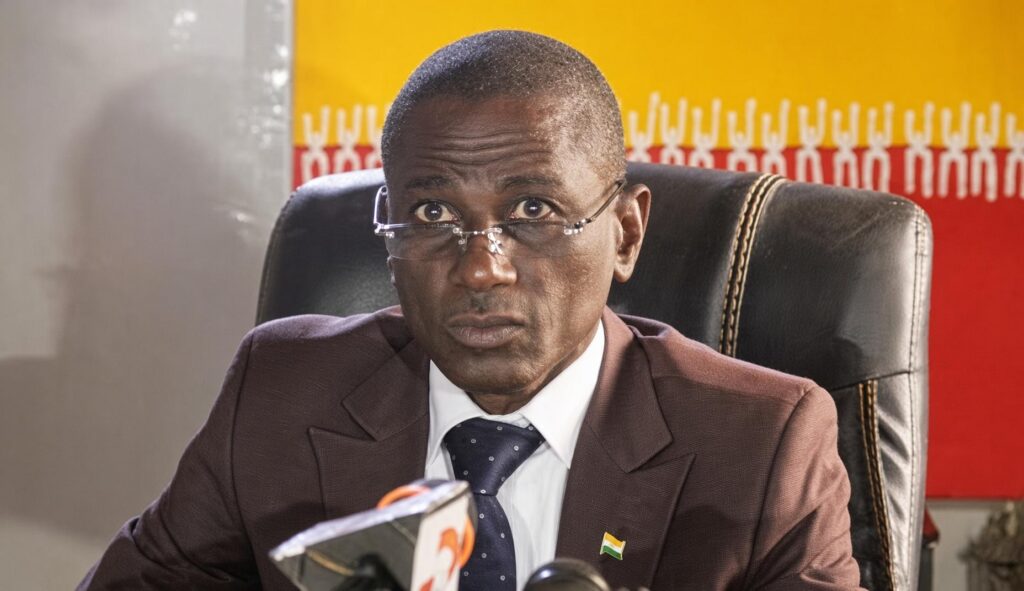
Speaking at the ceremony, Minister Coulibaly highlighted the growing sophistication of money laundering and terrorist financing schemes, emphasizing that no single nation can tackle these challenges alone. He called for pooled expertise, shared intelligence, and unified strategies to effectively dismantle illicit financial networks across the region.
The new centre is designed as a regional hub for awareness-raising, capacity-building, research, documentation, and communication, serving all ECOWAS member states and partners in the wider West African community.
GIABA’s outgoing leader underscores long-term impact
Edwin W. Harris Jr., GIABA’s Director General, reflected on the centre’s achievements since 2015. Under his leadership, the facility has hosted public forums, youth engagement events, regional public speaking competitions, and tailored training sessions for journalists, religious leaders, civil society organizations, and media professionals. It has also supported mutual evaluation processes to assess member states’ compliance with anti-money laundering standards.
A new chapter for regional expertise
The expanded facilities position the Abidjan centre as a strategic asset for French and Portuguese-speaking ECOWAS members. Harris described it as a future hub for knowledge exchange, innovation, and cooperation in the fight against illicit financial flows. He urged public administrations, financial institutions, supervisory bodies, universities, research centres, media outlets, civil society groups, and technical partners to actively engage with the centre’s programmes and training initiatives.
Empowering the next generation
Special emphasis will be placed on youth, students, researchers, and young professionals. The goal is to cultivate a generation committed to integrity, transparency, and economic progress in West Africa. A key innovation in the upgraded centre is a Computer-Based Training (CBT) facility, offering specialized modules for a wide range of users—from regulators and financial institutions to judges, investigators, academics, and students.
These programmes will be certified, helping to professionalize regional expertise in detecting and preventing financial crimes. The timing of the inauguration, just days before Harris’s mandate concludes on 31 August 2026, underscores the commitment to leaving behind a sustainable tool for cooperation, information sharing, and skill development in the ongoing battle against money laundering and terrorist financing.