Sahel power play: geopolitical shifts spark intense debate across the region
In the past week, a flurry of diplomatic and military maneuvers from Benghazi to Paris has thrust Niger into the spotlight as a critical battleground for influence in the Sahel. The rapid succession of high-level meetings and agreements suggests that the country is no longer just a passive player in regional security dynamics, but a central node in a rapidly evolving geopolitical chessboard where old alliances fray and new ones take shape.
From unexpected visits to strategic partnerships, the moves by regional heavyweights—Libya’s eastern forces, Algeria, France, and even the United Arab Emirates—are sparking public debate about what comes next for Niger and the wider Sahel. As these countries recalibrate their strategies, the fallout is leaving observers to question whether these developments signal deeper shifts in power or merely temporary realignments in a volatile landscape.
Benghazi and Niamey: forging new security ties
On November 1, 2026, Niger’s Prime Minister Ali Mahaman Lamine Zeine traveled to Benghazi on a visit that has since been described by analysts as a turning point in regional relations. During the trip, he met with Saddam Haftar, the vice-commander general of the Libyan National Army under Field Marshal Khalifa Haftar, and signed a strategic cooperation protocol. While the details remain undisclosed, the agreement clearly signals Niamey’s intent to diversify its security and political ties amid growing uncertainty in the Sahel.
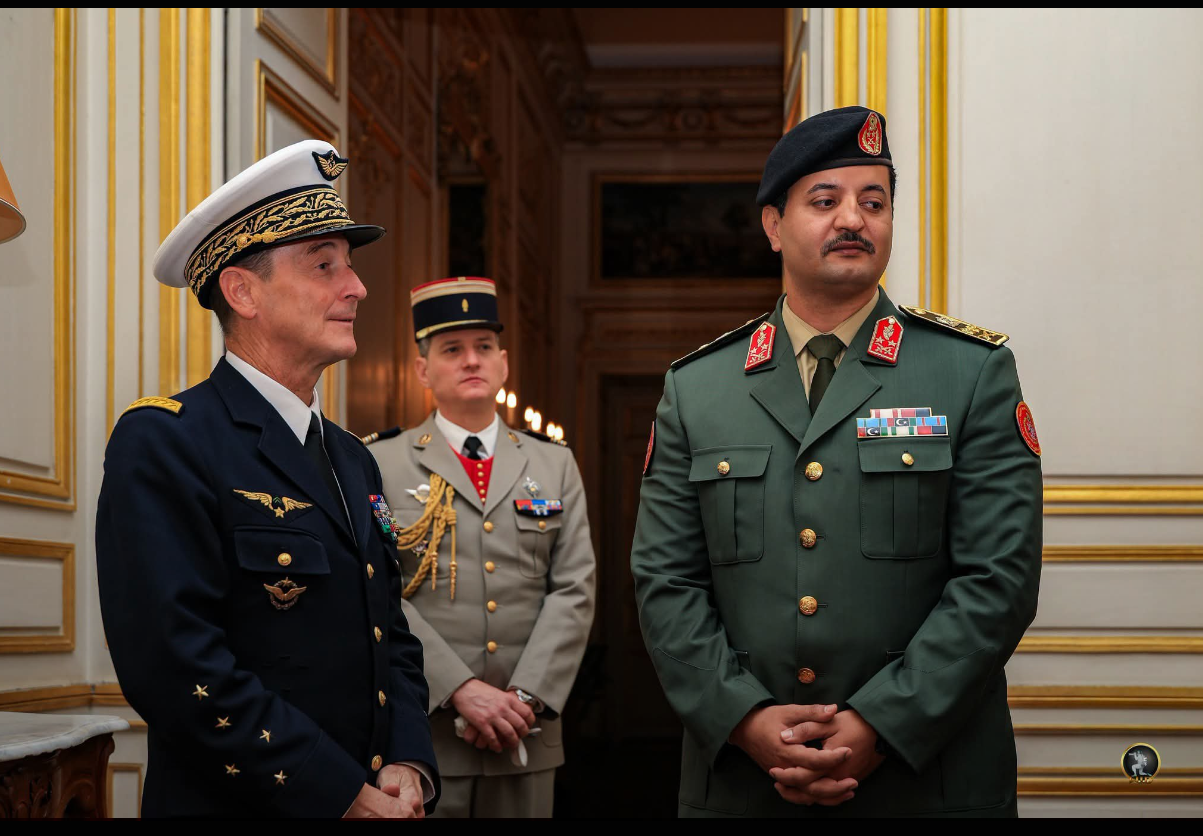
Two days later, the momentum continued. Libyan Chief of Staff General Khaled Haftar arrived in Paris for talks with his French counterpart, General Fabien Mandon. The meeting reportedly focused on bolstering military cooperation, enhancing security coordination, and sharing operational expertise—topics that underscore France’s ongoing, though diminished, role in the region.
The timing of these back-to-back developments—Benghazi strengthening ties with Niamey while eastern Libyan officials engage with Paris—hints at a possible convergence of interests. Whether this reflects a coordinated strategy remains uncertain, but it’s clear that the Sahel is now being viewed through multiple diplomatic and military lenses, with Niger squarely in the center.
Algeria’s diplomatic surge: reclaiming lost ground in the Sahel
Amid this shifting landscape, Algeria has intensified its diplomatic offensive. On November 3, Algerian State Minister for Foreign Affairs Ahmed Attaf traveled to N’Djamena as a special envoy of President Abdelmadjid Tebboune. He delivered a written message to Chadian President Mahamat Idriss Déby Itno, reaffirming Algeria’s commitment to deepening bilateral ties and addressing shared security challenges.
The meeting took place against a backdrop of rising tensions between Niger and Chad, with Niamey alleging—without public proof—Chadian involvement, allegedly backed by France, in destabilization efforts. For its part, N’Djamena has been working to restore military and diplomatic relations with Paris after a 2024 defense agreement breakdown. Algeria, however, sees an opportunity to assert itself as a stabilizing force in the region and prevent external actors from reshaping Sahelian dynamics without its input.
The timing of Algeria’s outreach is no coincidence. With Libya’s eastern faction expanding influence southward toward Niger and the Fezzan, Algeria is positioning itself as a key player in securing the Sahel-Sahara borderlands—territories vital not just for security, but for energy corridors, trade routes, and population movements.
UAE and Haftar: a convergence that alarms Algiers
The United Arab Emirates has long been a close partner of the Haftar camp in Libya, providing political and military backing that has solidified eastern Libya’s position as a regional power broker. While the scope of current UAE engagement remains unclear, its historical ties to Haftar raise concerns in Algiers.
For Algeria, Libya’s stability is not just a regional issue—it’s a national security imperative. The expansion of Haftar’s influence through southern Libya and into corridors connecting to Niger introduces new risks: unchecked foreign military presence, expanded trafficking networks, and the potential for proxy conflicts to spill across borders. When Benghazi strengthens its ties with Niamey, it’s not just about cooperation—it’s a potential step toward consolidating a southern axis that could shift the regional balance in ways Algeria opposes.
Morocco and Algeria: rivalry spills beyond the Maghreb
The Maghreb’s long-standing rivalry between Algeria and Morocco has taken on a continental dimension. Since diplomatic relations collapsed in August 2021 over the Western Sahara issue, the two countries have pursued divergent strategies across Africa. Morocco has expanded its partnerships in the Sahel, while Algeria seeks to preserve its traditional influence in the region.Observers note that Khaled Haftar’s visit to Morocco from October 11–15, where he met with General Mohammed Berrid, Inspector General of the Royal Moroccan Armed Forces, did not go unnoticed in Algiers. The convergence of Rabat, Abu Dhabi, and eastern Libyan authorities has fueled speculation about emerging alliances that could reshape regional dynamics.
This isn’t necessarily a formal bloc, but a network of relationships whose interests may align on key issues—particularly security and energy transit. Algeria, wary of encirclement, has responded by deepening its own engagements, including through military agreements with Niger.
Niger: from crisis state to geopolitical linchpin
Geography alone makes Niger a prize: positioned at the crossroads of Algeria, Libya, Chad, and Mali, the country sits astride strategic corridors linking the Maghreb to sub-Saharan Africa. Its energy resources add another layer of interest. When Algeria’s Parliament approved the deployment of military forces to Niger on October 25, it marked a significant shift in Algiers’ security posture and signaled Niamey’s growing importance in regional power calculations.
Niger is no longer just a country grappling with insecurity. It has become a pivot in a broader contest for influence—one where alliances are fluid, partnerships are diversified, and traditional patrons like France are recalibrating their roles. The multiplicity of channels Niamey is engaging—Libya to the north, Algeria to the west, and maintaining discreet links with Paris—reflects a deliberate strategy to avoid dependency on any single actor.
What remains uncertain is whether this diversification will lead to greater stability or further entangle Niger in a web of competing interests. One thing is clear: the Sahel is no longer just a battleground against armed groups. It is now a theater where nations compete for control of routes, resources, and political influence. And in this new chapter, Niger stands at the heart of the storm.
What comes next: public debate and unanswered questions
As these developments unfold, voices across the Sahel and beyond are asking critical questions: Will these shifting alliances lead to greater regional cooperation or deeper fragmentation? Can Niger navigate the competing ambitions of Algeria, Libya, Morocco, France, and the UAE without becoming a pawn in a larger game? And what role, if any, remains for traditional partners in a region where new players are rapidly gaining ground?
One thing is certain: the fallout from these recent maneuvers will define the Sahel’s geopolitical landscape for years to come. Niger, once a bystander in regional power plays, is now at the nexus of decisions that will shape the future of the entire region.