In a decisive move that has ignited widespread discussion, Guinea’s government has removed 22 public officials and security personnel from their posts, accusing them of involvement in illegal gold mining and environmental violations. The unprecedented action, announced via presidential decree, comes as President Mamadi Doumbouya inaugurates the country’s first gold refinery, signaling a dual push to tighten oversight of the mining sector while accelerating local value creation from mineral resources.
Who are the officials removed and what do they face?
The sanctions target a cross-section of administrators and security personnel operating in Guinea’s gold-rich Upper Guinea region, particularly around Siguiri—a region long plagued by unregulated artisanal mining. Among those removed is Colonel Fayimba Mara, the regional prefect in Siguiri, along with several interim prefects, police captains, military commanders, and sub-prefects.
Specific individuals include:
- Captain Mohamed Lamine Keita, acting prefect of Kintinian
- Captain Sory Camara, acting prefect of Siguirini
- Commandant Fodé Isaac Camara, sub-prefect of Niagassola
- Lieutenant-Colonel Pépé Doualamou, sub-prefect of Bankon
- Naman Kourouma, sub-prefect of Kiniébakoura
- Abou Kanté, sub-prefect of Norassoba
- Richard Yaradouno, sub-prefect of Naboun
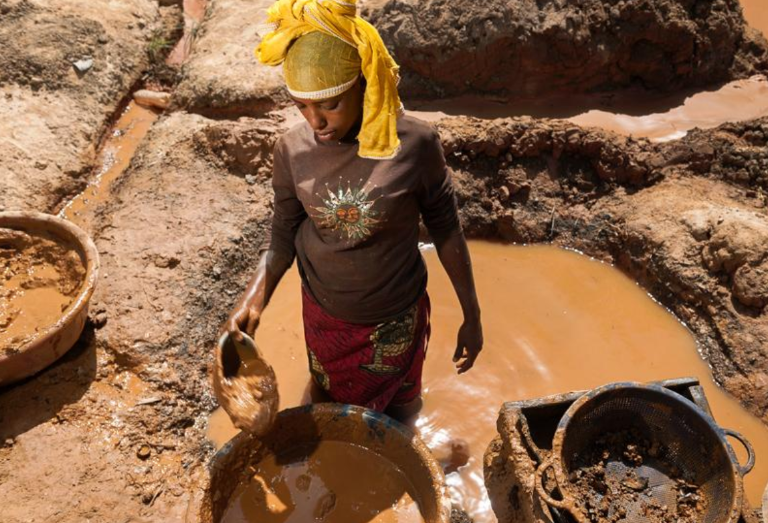
All are alleged to have enabled or participated in illegal gold extraction and associated environmental destruction, including deforestation, water contamination, and soil degradation—actions that threaten both ecological stability and local livelihoods.
Why now? The dual agenda behind Guinea’s latest move
The timing of these dismissals is not coincidental. Just two days prior, on November 1, 2026, President Doumbouya officially opened the Nimba Gold Refinery in Conakry—a facility hailed as the first of its kind in Guinea. Positioned within the Cité de l’Air industrial zone, the refinery is seen as a cornerstone of the nation’s bid to transition from raw mineral exports to high-value domestic processing.
This strategic pairing—of punitive action against corrupt officials and investment in industrial infrastructure—reflects a broader policy agenda aimed at asserting economic sovereignty. By combining stricter enforcement with local processing capabilities, authorities hope to curb illegal mining while capturing more revenue within Guinea’s borders.
Environmental and social stakes rise with mining crackdown
Critics warn that while the crackdown sends a strong message, its long-term success hinges on more than just removals. The environmental damage from unregulated gold extraction has already reshaped ecosystems in Siguiri and neighboring areas. Cyanide and mercury use in clandestine operations has poisoned rivers, while soil erosion has devastated farmland. These impacts disproportionately affect rural communities, many of whom rely on agriculture and fishing for survival.
Local health risks have also surged, with reports of respiratory illnesses and contaminated water supplies in mining hotspots. The government’s response must now address not only enforcement gaps but also reparative measures to restore affected environments and support vulnerable populations.
Who will enforce the new rules? A multi-agency response
The presidential decree places responsibility for implementation across multiple ministries, including:
- Territorial Administration and Decentralization
- National Defense
- Public Security and Civil Protection
- Justice and Human Rights
- Social Protection and Employment
- Public Service Modernization
This coordinated approach reflects the complex nature of regulating artisanal and small-scale mining, which often blurs lines between legal and illegal operations. It also raises questions about coordination, transparency, and accountability—key challenges that will determine whether the crackdown leads to lasting change.
What comes next? Questions over implementation and justice
As the dust settles on the dismissals, key questions remain unanswered:
- How will authorities identify and dismantle the networks supporting illegal gold mining?
- Will the new refinery reduce incentives for smuggling by offering fair market prices to local miners?
- What legal consequences await the officials removed—will their cases be handled administratively or escalated to criminal prosecution?
- How will environmental restoration be funded and monitored across contaminated sites?
Public opinion remains divided. Some see the move as a bold step toward governance reform; others view it cautiously, noting that past crackdowns on illegal mining have often yielded only temporary results. What is clear is that Guinea’s gold sector now stands at a crossroads—between short-term enforcement and long-term transformation.
From raw resource to refined wealth: a national vision
The inauguration of the Nimba Gold Refinery is more than a symbolic event—it represents a strategic pivot. By processing gold locally before export, Guinea aims to keep more of its mineral wealth within the country and create skilled jobs in high-value industries.
This aligns with the broader Simandou 2040 initiative, which seeks to industrialize the country and ensure that its natural resources serve national development rather than fleeting profits. However, realizing this vision will require overcoming entrenched practices—corruption, weak oversight, and illicit supply chains—that have long undermined formal mining sectors.
Will Guinea’s gold sector finally turn the page?
The coming months will be critical. The removal of corrupt officials, the launch of the refinery, and the multi-agency enforcement plan all signal a new direction. But rhetoric must be met with results. For Guinea to emerge as a responsible gold producer—one that balances economic growth with ecological and social responsibility—the next chapter will need more than decrees and ceremonies. It will require persistent action, transparent oversight, and unwavering commitment to the communities most affected by mining.