Aftermath of the illegal refinery bust: what’s next for Nigeria’s oil sector?
The unearthing of a massive clandestine crude oil processing facility in Nigeria’s Ogun State has ignited a firestorm of debate over the country’s faltering grip on its hydrocarbon wealth. Operated by foreign nationals, the illegal refinery not only exposes glaring regulatory gaps but also threatens Nigeria’s economic sovereignty and environmental security.
The discovery underscores a growing crisis: if authorities are losing control over their most lucrative resource, what safeguards are in place to prevent further exploitation?
The hidden infrastructure: what investigators found
During a raid conducted by Nigeria’s Economic and Financial Crimes Commission (EFCC), authorities seized an illicit industrial complex spanning over three hectares in Ogere, Ogun State. The sprawling site featured an array of unauthorized equipment, including underground storage tanks, heating systems, separation devices, and cooling installations.
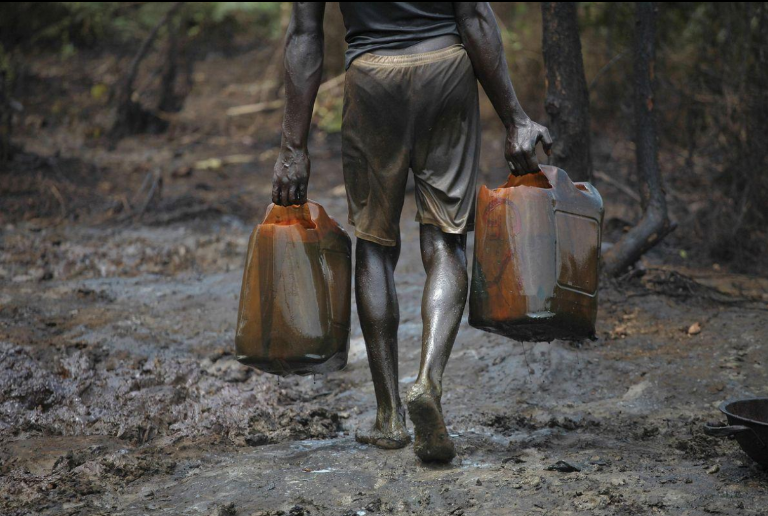
One of the largest tanks recovered had a capacity of 90,000 liters—raising concerns about the scale of operations. Investigators believe the facility processed so-called “black sludge,” a thick residue of crude oil, sourced primarily from Warri in Delta State and Port Harcourt in Rivers State.
Through rudimentary refining methods such as heating and chemical separation, this hazardous material was allegedly converted into what operatives sold as diesel, known locally as Automotive Gas Oil (AGO). The entire operation reportedly lacked any legal authorization, and by the time officials arrived, the site had been abandoned—leaving no suspects in custody.
Supply chains, financing, and the shadow economy
Behind the surface of this illegal operation lies a sophisticated web of logistics: the procurement of raw materials, long-distance transport, storage, and distribution. Officials are now forced to ask critical questions. Who supplied the crude residues? Who funded the equipment and infrastructure? And most importantly—who bought the refined fuel?
Tracing the financial and logistical trail is essential to uncovering the full extent of the network. Investigators are also probing whether local actors facilitated the scheme. While no institutional complicity has been confirmed, the scale of the operation suggests possible collusion within administrative or security networks.
Without answers, there’s a real risk that this case may only be the tip of a much larger, deeply rooted illicit industry.
Environmental and economic fallout: threats to Nigeria’s future
The environmental cost of such clandestine refining is severe. Open-air processing of crude residues releases toxic fumes, contaminates soil, and poisons water sources. The absence of industrial safeguards increases the risk of fires, explosions, and long-term health hazards for nearby communities.
Economically, the impact is just as damaging. Illegal refineries operate outside the tax system, depriving the government of vital revenue. They also undercut legitimate businesses, creating an uneven playing field where compliance comes at a cost and non-compliance goes unpunished.Perhaps most alarming is the quality of the output. Without standardized refining or quality control, the fuel produced can damage vehicles and industrial machinery, posing safety risks across Nigeria’s transport and energy sectors.
China’s widening shadow in Nigeria’s oil industry
The attribution of this facility to Chinese nationals has reignited scrutiny of Beijing’s expanding economic footprint in Africa. From mining to infrastructure, Chinese enterprises and expatriates are active in nearly every major sector in Nigeria. This case, however, is not about national policy—it’s about enforcement.
While the individuals involved may be acting independently, the incident highlights a critical weakness in Nigeria’s oversight of foreign economic activities. The government must ensure that illegal operations are dismantled regardless of nationality, and that foreign investment does not become a Trojan horse for resource theft.
The sovereignty question: can Nigeria protect its oil wealth?
The dismantling of this refinery is more than a law enforcement success—it’s a national test of control. Nigeria sits atop vast oil reserves, yet the persistence of illegal refineries paints a troubling picture: one of systemic failure in regulation, border control, and economic governance.
To reclaim authority, officials must go beyond arrests and seizures. They need to identify the masterminds, trace financial flows, and dismantle the entire supply chain. It’s not just about chasing down a few operators—it’s about restoring faith in the state’s ability to manage and benefit from its own resources.
In a world where natural wealth should translate into national power, Nigeria’s latest crisis is a stark reminder: without ironclad control, sovereignty remains an illusion.