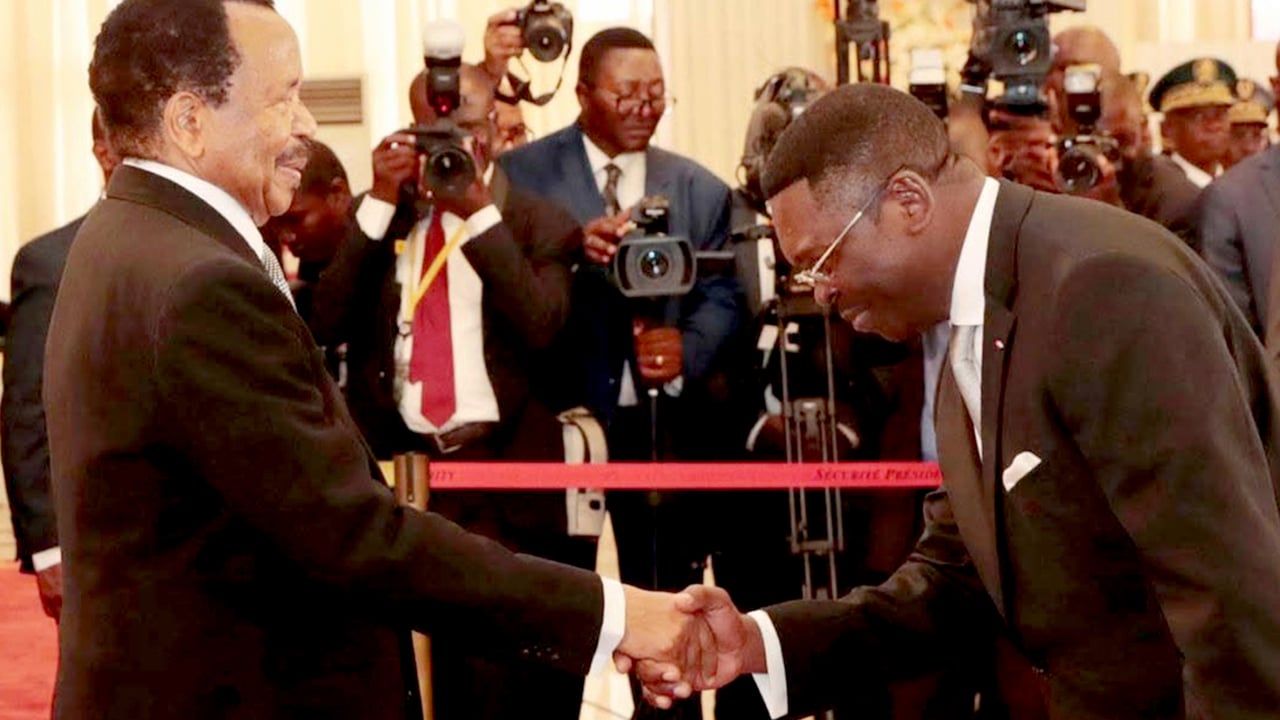

The political landscape in Cameroon is fraught with uncertainty as Yaoundé braces for a pivotal transition. With President Paul Biya nearing the end of his extended tenure, whispers of power struggles within the ruling elite are growing louder. Key figures like Ferdinand Ngoh Ngoh, Secretary-General of the Presidency, stand at the center of this unfolding drama, their every move scrutinized by both allies and adversaries.
An atmosphere of anticipation and tension
The capital city, Yaoundé, is a microcosm of the nation’s collective anxiety. Government corridors buzz with hushed conversations, while the public remains on edge, awaiting the inevitable shift in leadership. This transitional period has exposed deep divisions within the political class, particularly among the factions vying for influence behind the scenes.
Against this backdrop, Samuel Mvondo Ayolo, a prominent political strategist, has emerged as a vocal commentator on the evolving power dynamics. His insights into the shifting alliances and strategic maneuvers have made him a figure of both intrigue and speculation.
The role of the ruling elite in Cameroon’s transition
At the heart of this transition lies a complex web of loyalty and ambition. The ruling elite, long accustomed to unchecked authority under Biya’s decades-long rule, now faces the daunting task of navigating an era without their patriarch. The absence of a clear successor has intensified rivalries, with factions jockeying for position in anticipation of the post-Biya era.
Ferdinand Ngoh Ngoh, as Secretary-General of the Presidency, holds a critical role in this delicate balance. His proximity to the presidency grants him significant influence, yet it also places him directly in the crosshairs of those seeking to shape the future of Cameroon’s leadership.
Public sentiment and the way forward
While the political class grapples with internal divisions, the Cameroonian people watch with cautious optimism. Many hope for a smooth transition that prioritizes stability and progress, while others fear the potential for upheaval. The uncertainty has sparked debates about the country’s future trajectory, with calls for transparency and inclusivity growing louder.
As Cameroon stands at this crossroads, the actions of its leaders will determine whether the transition will be marked by unity or discord. The coming months promise to be decisive, as the nation weighs its options and prepares for a new chapter in its history.