Unanswered questions on foreign military deployment in Togo
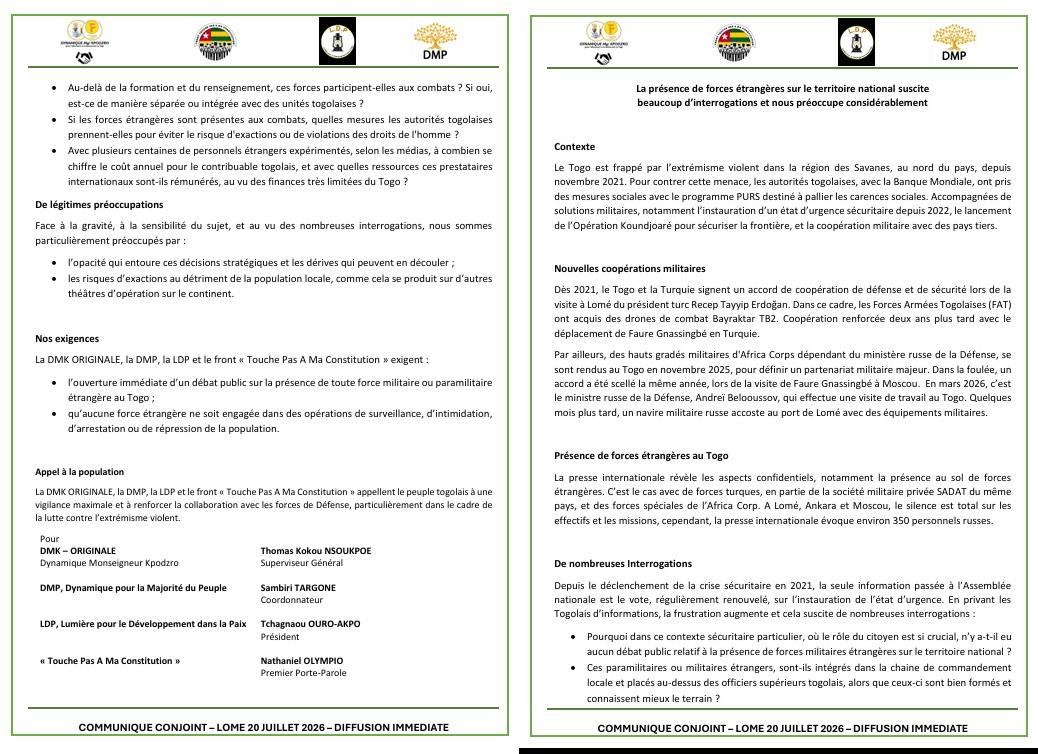
In any democracy, matters of national defense are inherently shrouded in confidentiality. Critical operations, intelligence gathering, and strategic alliances cannot be fully disclosed to the public. Yet blanket secrecy, especially when prolonged, often breeds suspicion rather than trust. In Togo, whispers about the presence of foreign military personnel—particularly from Russia and Turkey—have intensified, raising pressing questions that demand clear responses from authorities.
The specter of protection amid political unrest
While defense cooperation is not inherently problematic, the opacity surrounding these arrangements has fueled deeper concerns. Critics argue that the deployment of foreign troops reflects a growing unease within the administration of President Faure Gnassingbé. Persistent allegations of poor governance, economic strain, and institutional repression have heightened fears of political instability—whether through popular uprising or internal dissent. In this context, the arrival of foreign military partners is increasingly viewed not as a shield for national security, but as a safeguard for an embattled regime determined to cling to power at all costs.
Unclear mandates and legal ambiguities
The precise roles of these foreign personnel remain a mystery. Are they present to train local forces, gather intelligence, provide strategic advice, or maintain military equipment? Could their duties extend to protecting state officials during high-profile events? Without official clarification, speculation thrives. Another critical question concerns their operational involvement: Do they participate directly in domestic security operations alongside Togolese troops, or are their activities confined to technical support? The distinction is vital for understanding the nature of Togo’s agreements with these partners.
Legal accountability also remains unresolved. Nations hosting foreign military personnel typically establish binding frameworks outlining their rights, obligations, and oversight mechanisms. What legal provisions govern these individuals in Togo? What safeguards prevent abuse and ensure compliance with national laws and international commitments? The absence of transparent answers only compounds public distrust.
The financial burden of secrecy
Cost is another flashpoint. How many foreign personnel are stationed in Togo? How long will their missions last? What financial burden do they impose on the state budget—or is their deployment financed through bilateral or multilateral agreements? Taxpayers, who fund public policies, deserve clarity on these expenditures. While defense partnerships can strengthen national security—especially in a region grappling with terrorism—the lack of financial transparency only fuels skepticism.
Transparency as the foundation of trust
Public trust hinges on openness. When governments disclose the objectives, legal frameworks, and operational details of military collaborations, they curb rumors and misinformation. In a region plagued by political instability and shifting security alliances, credible communication is essential. Authorities can—and should—provide enough information to clarify the purpose of these partnerships, the safeguards in place, and the responsibilities of all parties involved.
Secrecy in defense matters is not inherently wrong, but it cannot be a substitute for accountability. When foreign military presence raises as many questions as it answers—and appears intertwined with efforts to consolidate power—it is the government’s duty to address these concerns. In a democracy, silence is not a sustainable communication strategy; it inevitably gives way to doubt.